
Rideshare Wrongful Death Claims in Texas: When an Uber or Lyft Crash Turns Fatal

When someone dies in a crash involving an Uber or Lyft vehicle, the family faces two things at once: the loss itself and a set of questions most people have never had to consider. Who was driving? Was a passenger on board? Whose insurance applies? Is the rideshare company involved, or only the driver? The answers can affect how a claim is evaluated, and the companies and insurers involved start working through them almost immediately.
Before I became an attorney, I spent over a decade as an insurance adjuster handling high-exposure casualty claims. Later, I defended insureds at Rymer, Echols, and Nelson-Archer. In both roles, I saw how a fatal-injury claim is evaluated from the inside, including how quickly carriers work out which policy applies and who else might share responsibility. This article explains how Texas wrongful death law may apply when the crash involves a rideshare vehicle.
This article is general educational information about Texas law. It is not legal advice, and it does not create an attorney-client relationship. Every case depends on its own facts.
How Texas Wrongful Death Law Applies to a Fatal Rideshare Crash
A rideshare crash is still a crash, and Texas wrongful death law applies to it the way it applies to other fatal accidents. Wrongful death claims in Texas arise under Chapter 71 of the Texas Civil Practice and Remedies Code. Under Section 71.002, an action for actual damages may be brought when a death is caused by another person’s wrongful act, neglect, carelessness, unskillfulness, or default.
Under Section 71.004, a wrongful death action is for the exclusive benefit of the surviving spouse, children, and parents of the deceased.
What makes a rideshare case different is not the legal foundation. It is the set of people and policies surrounding it. A fatal rideshare crash can involve:
- The rideshare driver, who may or may not have been at fault
- Another driver whose conduct caused the crash
- The rideshare company, in limited circumstances
- Several insurers, each with its own view of the facts
- Passengers, pedestrians, or occupants of other vehicles, any of whom may be the person who died
Because the person who died may have been a passenger, a driver in another car, a pedestrian, or a cyclist, the family’s position can look quite different from case to case. A passenger’s family may be dealing with the driver’s coverage and the company’s coverage together. A family whose loved one was in another vehicle may be dealing with a rideshare driver whose app status is in dispute.
A fatal crash can also give rise to a separate claim that continues the injury claim the person had before death. That claim is addressed in our article on survival actions versus wrongful death claims in Texas. Both claims may be evaluated together, though they are legally distinct. Our wrongful death page explains how the firm approaches these cases generally.
Which Insurance Period Determines the Available Coverage
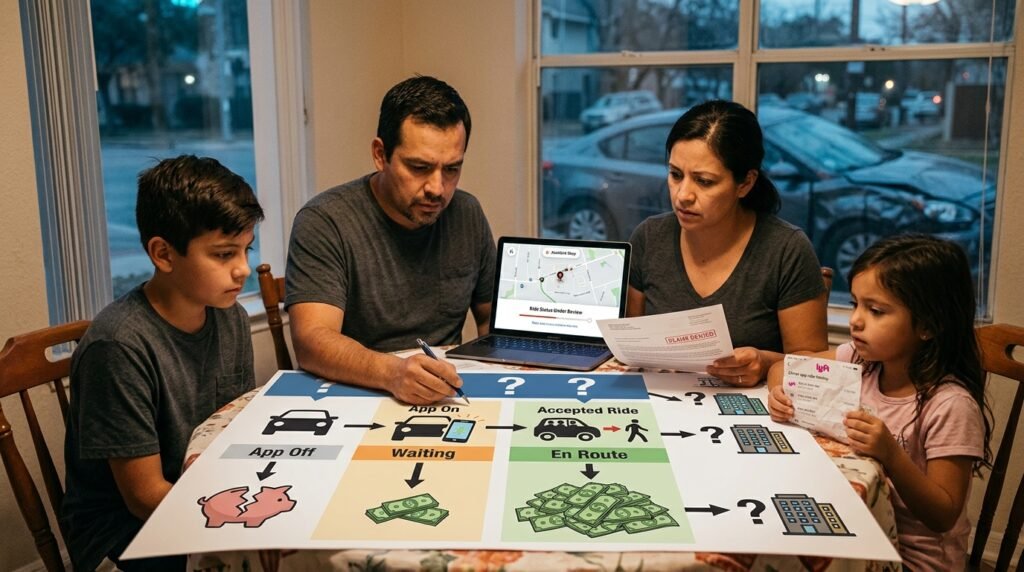
In rideshare cases, the insurance that applies generally depends on what the driver was doing at the time of the crash. The industry divides a driver’s time into periods based on the app’s status: app off, app on and waiting for a request, ride accepted and heading to the passenger, and passenger on board. Each period can bring a different carrier and a different amount of coverage.
Texas regulates transportation network companies under Chapter 1954 of the Texas Insurance Code. When a driver is logged in and available for ride requests but has not accepted a prearranged ride, the applicable policy must generally provide at least $50,000 per person and $100,000 per incident for bodily injury or death, plus $25,000 for property damage. Once a driver is engaged in a prearranged ride, Texas law generally requires the transportation network company to maintain at least $1 million in primary liability coverage for death, bodily injury, and property damage.
For a family, this has real consequences:
- The period can change who pays: A crash that happens while the driver is carrying a passenger may involve different insurance than one that happens while the driver is waiting for a request. The difference may affect how much coverage is available to a claim.
- Insurers may disagree about which period applied: Carriers have an interest in placing a crash in the period that leaves them with the least responsibility. The driver’s app status at the time of impact can become a central dispute.
- The evidence is often held by the company: App and trip records generally sit with the rideshare company, not the family. They may need to be requested through formal processes, and records can become harder to obtain with time.
We explain the full framework in our cornerstone guide to rideshare insurance periods in Texas. For company-specific discussions, see our articles on Uber accident insurance coverage in Texas and Lyft accident insurance coverage in Texas.
In my years on the claims side, one of the first things a carrier worked out on any serious loss was which policy was on the hook. Families are rarely told that this process is happening, which is one reason it helps to understand it from the start.
Claims Against the Rideshare Driver vs. the Company Itself
Families often ask whether they can bring a claim against Uber or Lyft directly. The answer depends on the facts, and it is not always yes.
- Claims against the driver: If the rideshare driver’s negligence caused the crash, the claim generally begins with the driver and the insurance that covers the driver at the time. That might be coverage connected to the rideshare company, the driver’s personal auto policy, or both, depending on the period and the policy language.
- Claims against the company: Rideshare companies often describe their drivers as independent contractors rather than employees, and that characterization can affect how responsibility is analyzed. In some situations, a claim may be directed at the company based on its own conduct, such as how a driver was screened or retained. Our article on the Texas rideshare negligent hiring claim explains that theory. Whether a company-level claim is viable depends on the evidence, and it is not appropriate in every case.
- Claims against others: If someone other than the rideshare driver caused the crash, the claim may be directed at that person and their insurer instead. That scenario is discussed in the next section.
A family should not assume a company-level claim exists, and should not assume it does not. It requires a careful review of what happened, who was responsible, and what the evidence can show. Where a rideshare company’s own conduct is genuinely at issue, I am looking for the same things I once looked for as an adjuster: what the company knew, what records exist, and what a fair evaluation would require.
When a Third Vehicle, Not the Rideshare Driver, Caused the Fatal Crash
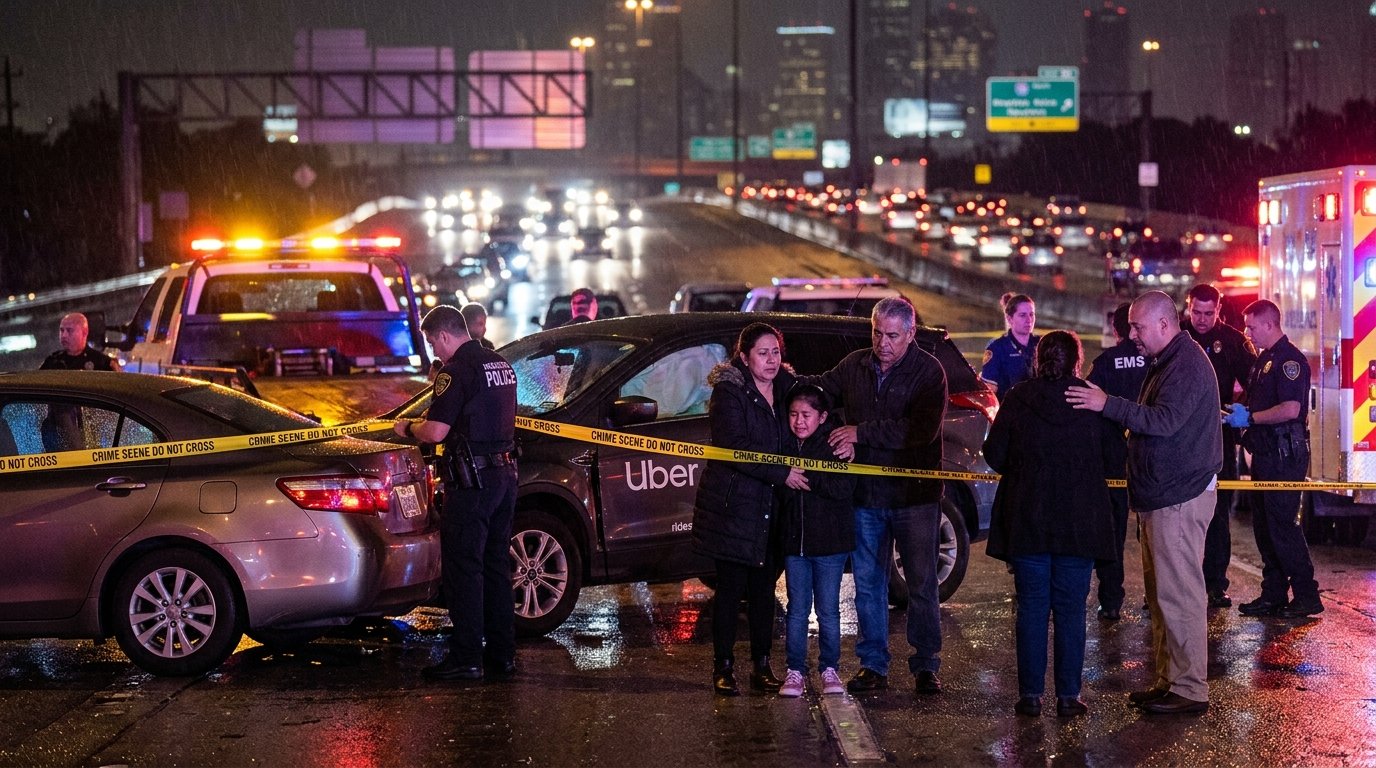
Many fatal rideshare crashes are not caused by the rideshare driver at all. A driver on I-10, I-45, or Highway 288 may be struck by another vehicle that ran a light, drifted across lanes, or was traveling too fast. The rideshare vehicle, its passenger, and the driver may all be victims.
When a third vehicle caused the crash, the liability picture shifts:
- The at-fault driver’s insurance is typically the starting point for a claim: If that driver was carrying limited coverage, the question of what other coverage might apply can become important.
- Rideshare-related coverage may still matter: Depending on the period, coverage connected to the rideshare vehicle may be relevant to a passenger’s family or to the driver’s family.
- Your own coverage may come into play: Underinsured motorist coverage can matter in a fatal crash when the at-fault driver’s coverage is limited. Our article on the Texas UIM wrongful death claim explains how that coverage may apply.
- Other parties may be involved: A commercial truck, a delivery vehicle, or a company vehicle can bring additional defendants and additional insurance.
Third-party scenarios also arise when the person who died was not in the rideshare vehicle at all, such as a pedestrian or the occupant of another car struck by a rideshare driver. Our article on third-party claims when hit by a rideshare driver in Texas addresses that situation.
Texas also follows a modified comparative negligence rule. An injured person can recover damages even if they share some of the fault for an accident, as long as they are not more than 50 percent responsible. Compensation is reduced by the percentage of fault assigned to the injured person, and a person found 51 percent or more at fault cannot recover. In a wrongful death case, insurers may raise arguments about the conduct of the person who died, such as speed, lane position, or seat belt use. How fault is divided depends on the evidence.
What Surviving Spouses, Children, and Parents Can Recover Under Texas Law
Under Section 71.004 of the Texas Civil Practice and Remedies Code, a wrongful death action is for the exclusive benefit of the surviving spouse, children, and parents of the deceased. These claims are about the losses the family members suffer because of the death, which is different from the harm the person experienced before dying.
Depending on the facts and the evidence, damages in a Texas wrongful death case may include:
- Loss of financial support, care, maintenance, services, advice, and counsel the deceased would reasonably have provided
- Loss of companionship and society
- Mental anguish
- Loss of inheritance, meaning the present value of assets the deceased would reasonably have added to the estate and left to the beneficiary at natural death
A separate estate claim may also exist. The survival claim belongs to the estate rather than to the family directly, and it may address the deceased person’s own losses before death, such as medical expenses, conscious pain and mental anguish, and funeral and burial expenses.
A few other points are important:
- Wrongful death recoveries are protected from the deceased’s debts: Under Section 71.011, damages recovered in a wrongful death action are not subject to the debts of the deceased.
- Recovery depends on the evidence: What a family can realistically pursue depends on the facts, the proof of the family’s losses, and the insurance coverage and other assets involved.
- Outcomes cannot be predicted or promised: No attorney can guarantee a result in a wrongful death case, and families should be wary of anyone who does.
Families sometimes ask how the claim works when the person who died was an adult child or when the case is expected to end in a settlement rather than a trial. Our articles on damages when an adult child dies in Texas and wrongful death settlement versus trial in Texas address those questions. Newer technology can add its own wrinkles, which we discuss in our article on autonomous vehicle wrongful death claims in Texas.
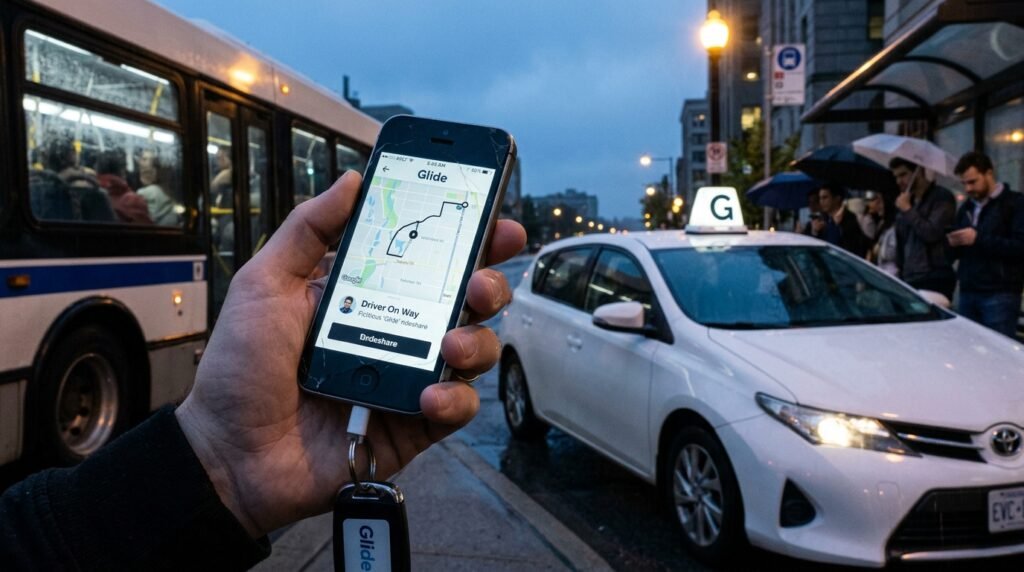
Why Rideshare Companies Move Quickly to Limit Their Own Exposure
Rideshare companies and their insurers are experienced at responding to serious crashes. In general terms, a company that learns of a fatal crash may begin gathering its own records, assessing its exposure, and considering how its coverage applies. That is a normal part of how businesses and carriers operate, but families should understand that it is happening while they are still grieving.
From my years as an adjuster, I can describe the general pattern of what carriers tend to do in serious cases:
- They collect and preserve their own information early: Carriers typically begin building their file quickly, including statements and records.
- They may contact family members: An adjuster may call soon after the crash and ask for a recorded statement. What a family member says in that call can later be used in evaluating the claim.
- They look for ways to reduce their share: That can include questioning which period applied, whether the driver was an independent contractor, or whether the person who died shares responsibility.
- They may point to other parties: Each insurer has reason to argue that someone else’s policy should respond.
None of this means every company or adjuster acts in bad faith, and I would not describe any particular company that way. It simply reflects that insurers evaluate fatal claims from the first day, and families usually do not know the process has begun.
Timing matters on the family’s side as well. Under Section 16.003(b) of the Texas Civil Practice and Remedies Code, an action for injury resulting in death must generally be brought within two years after the cause of action accrues, which is generally the date of death. If a government entity is involved in some way, such as a publicly owned vehicle or a roadway condition, written notice within six months is generally required under the Texas Tort Claims Act, which is much shorter than the two-year period. Evidence such as app data, dashcam footage, and vehicle data can also become harder to obtain with time. A family does not need to resolve every question before reaching out, but waiting can make some questions harder to answer.
Frequently Asked Questions
How does wrongful death law apply to a fatal rideshare crash?
Wrongful death claims in Texas arise under Chapter 71 of the Texas Civil Practice and Remedies Code. The claim addresses a death caused by another person’s wrongful act, neglect, carelessness, unskillfulness, or default. Under Section 71.004, the action is for the exclusive benefit of the surviving spouse, children, and parents. A rideshare crash adds questions about insurance, app status, and which parties may be responsible, but the legal foundation is the same.
Which insurance period determines available coverage?
It depends on the driver’s app status at the time of the crash: app off, app on and waiting for a request, ride accepted and heading to the passenger, or passenger on board. Each period can involve different coverage. App and trip records, which are often held by the rideshare company, can help establish which period applied. An attorney can review the policies and records for a specific crash.
Can a family sue the rideshare company itself?
Sometimes, depending on the facts. Rideshare companies often treat drivers as independent contractors, which can affect the analysis. A claim against the company may be possible in some situations, such as those involving the company’s own conduct, but it is not available in every case. Whether it is viable depends on the evidence.
What if a third vehicle caused the fatal crash?
The claim may be directed at the at-fault driver and that driver’s insurer. Rideshare-related coverage may still matter depending on the period, and a family’s own coverage, such as underinsured motorist coverage, may need to be considered if the at-fault driver’s coverage is limited.
What damages can a family recover?
Texas law allows the surviving spouse, children, and parents to bring a wrongful death claim for their own losses caused by the death. Depending on the evidence, those losses may include lost financial support, loss of companionship and society, mental anguish, and loss of inheritance. A separate survival claim may address the harm the person experienced before dying. What is realistically available depends on the evidence, the coverage involved, and the facts of the case, and no result can be guaranteed.
This article is for general educational purposes and is not legal advice, and reading it does not create an attorney-client relationship. Every fatal rideshare crash and wrongful death case turns on its own facts, and outcomes cannot be guaranteed. Insurance coverage and potential liability may depend on the driver’s status at the time of the crash and the specific policies and circumstances involved. Families who have lost a loved one in a rideshare crash can reach Herrera PLLC through the contact page or by calling 832-891-3210 to schedule a free, confidential consultation and discuss the available options.
Jonathan Herrera, J.D.
Jonathan Herrera is the founder of Herrera PLLC in Houston, Texas. He holds a J.D. from South Texas College of Law Houston and has over a decade of experience as an insurance adjuster. He previously practiced insurance defense at Rymer, Echols, and Nelson-Archer. He is a member of the Houston Trial Lawyers Association, the Texas Trial Lawyers Association, and the American Association for Justice.