
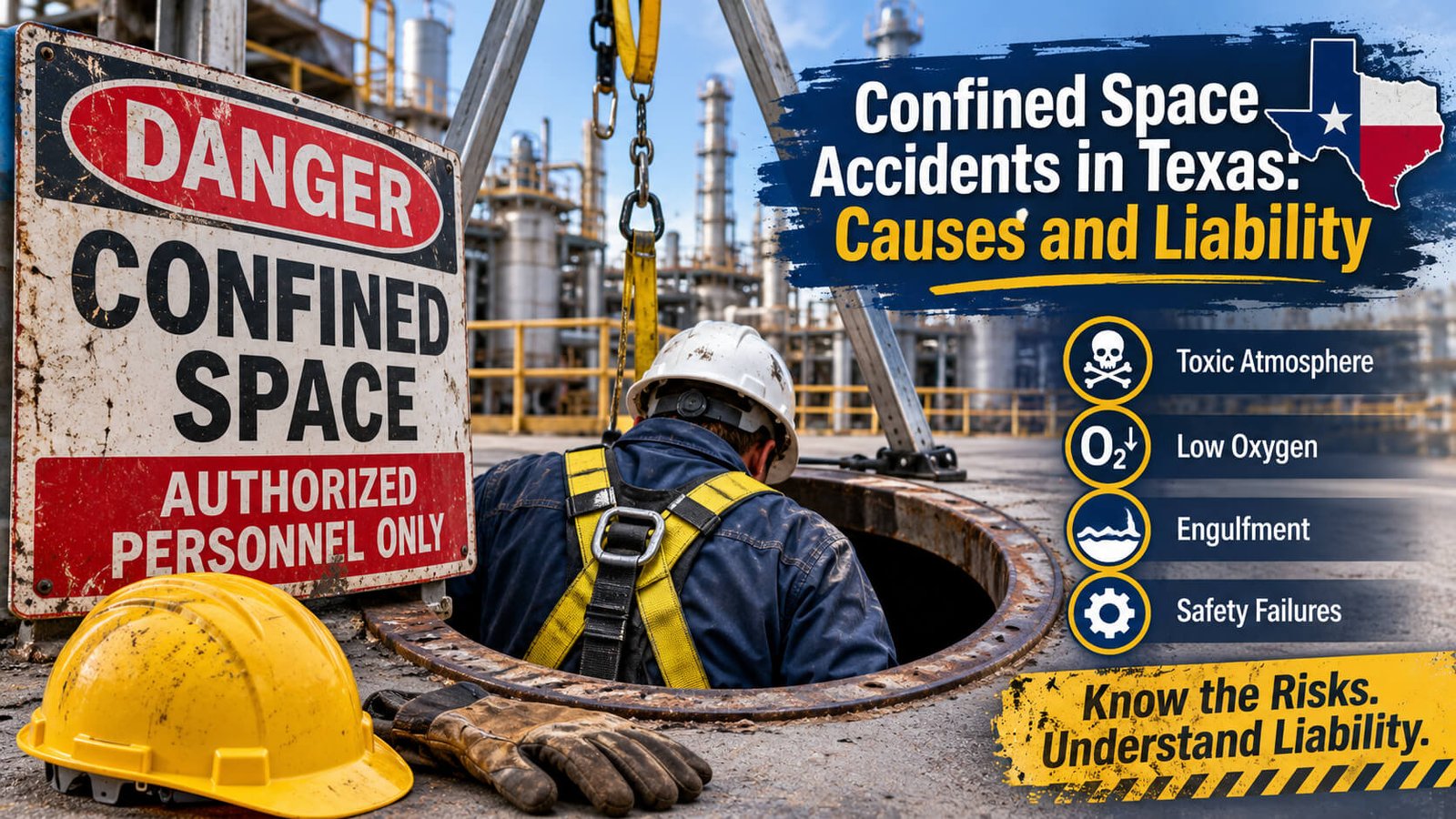

A confined space is an area large enough for a worker to enter, with limited ways in and out, that was not designed for continuous occupancy. A confined-space accident in Texas can involve more than a dangerous tank or a missed warning. It may reflect failures in hazard assessment, atmospheric testing, isolation, communication, or rescue planning. OSHA establishes requirements for these operations, but whether a safety failure supports an injury claim depends on the responsible party’s legal duty, the cause of the injury, and applicable Texas law.
For workers and families, understanding liability begins with separating two questions: what made the space unsafe, and which companies had legally enforceable responsibilities. These issues connect confined-space injuries to the broader investigation involved in construction and industrial accident claims.
What Qualifies as a Confined Space at a Texas Worksite?
Under OSHA’s construction standard, a confined space meets three conditions:
- It is large enough and configured so an employee can bodily enter it.
- It has limited or restricted means of entry and exit.
- It is not designed for continuous employee occupancy.
Tanks, vessels, manholes, pits, vaults, silos, and similar structures may qualify, depending on their actual configuration. A space does not have to be completely enclosed: ladders, slippery surfaces, or other conditions that impede movement can restrict entry or escape.
The applicable standard also matters. OSHA’s construction confined-space rules appear in 29 CFR Part 1926, Subpart AA. Section 1910.146 governs permit-required confined spaces in general industry and expressly excludes construction. The work being performed, not simply the facility’s name, helps determine which requirements apply, so work at a refinery or plant may fall under either standard depending on what the crew is doing. Texas has no OSHA-approved state plan for private-sector employers, so federal OSHA enforces these rules here.
When a Confined Space Requires an Entry Permit
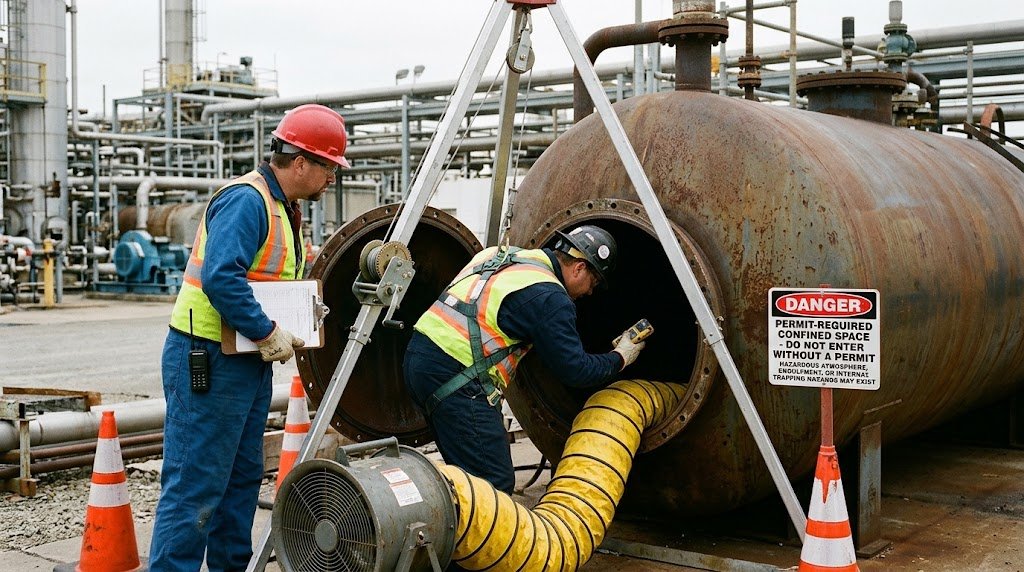
Not every confined space is permit-required. A confined space becomes a permit space when it has at least one of these characteristics:
- An actual or potential hazardous atmosphere.
- Material capable of engulfing an entrant.
- An internal shape that could trap or asphyxiate someone.
- Another recognized serious safety or health hazard.
An industrial tank entry accident may therefore involve permit-space requirements even when the tank appears empty. The classification addresses potential hazards, not just visible conditions at the opening. OSHA also considers entry to occur as soon as any part of a person’s body crosses the plane of the opening.
Limited alternatives exist. Under the construction rule, alternate entry procedures require documented conditions, including that the only hazard is an atmospheric one and that continuous forced-air ventilation alone can maintain safe conditions. Installing a fan does not, by itself, remove permit-space obligations.
Common Hazards: Toxic Atmospheres, Oxygen Deficiency, and Engulfment
Atmospheric hazards can prevent a worker from escaping without assistance. OSHA’s definition includes oxygen concentrations below 19.5% or above 23.5%, flammable gas, vapor, or mist above 10% of its lower flammable limit, dangerous concentrations of toxic substances, and other immediately dangerous atmospheres.
Other hazards can be equally serious:
- Engulfment by liquids or flowable solids.
- Unexpected mechanical movement or release of electrical, hydraulic, or pneumatic energy.
- Temperature extremes or dangerous chemical contact.
- Interior surfaces that trap a worker.
- Restricted exits that complicate evacuation or rescue.
These risks can overlap. A hazardous atmosphere may incapacitate an entrant while the space’s configuration prevents easy removal. Houston-area petrochemical facilities, industrial plants, and utility infrastructure make confined-space work routine in this region, and Gulf Coast heat and humidity can add to temperature-related hazards. Related questions about gas exposure, equipment, and contractor responsibilities also arise in oilfield and refinery accident cases.
OSHA Requirements for Hazard Assessment, Testing, and Safe Entry
For construction work covered by Subpart AA, each employer must ensure that a competent person identifies confined spaces where employees it directs may work and determines which are permit spaces. That evaluation must occur before work begins and include testing as necessary.
When employees will enter a permit space, the entry employer generally must implement a written permit-space program. Its responsibilities include evaluating hazards, specifying acceptable entry conditions, isolating hazards, preventing unauthorized entry, and providing necessary equipment without charging employees.
Atmospheric testing follows a defined order: oxygen first, combustible gases and vapors second, and toxic gases and vapors third. The construction rule generally requires continuous atmospheric monitoring unless the employer demonstrates that periodic monitoring is sufficient. When periodic monitoring is used, it must be frequent enough to verify acceptable conditions throughout entry.
Testing is therefore not merely a box checked before work starts. A confined-space construction injury investigation may examine whether monitoring continued, whether the equipment addressed the relevant hazards, and whether changing conditions received an appropriate response.
The Importance of Ventilation, Attendants, and Emergency Rescue Planning
Ventilation is one safeguard, not a substitute for the entire entry program. OSHA requires appropriate measures to control atmospheric hazards, verify acceptable conditions, and address ventilation failure. Physical hazards, including unexpected energy or material releases, require their own isolation measures.
Under a permit-space program, at least one attendant must remain outside during authorized entry. The attendant’s responsibilities include monitoring entrants, maintaining communication, recognizing dangerous conditions, and summoning assistance. Duties that interfere with protecting entrants are prohibited.
Rescue planning must address the particular space and its hazards. Under Section 1926.1211, employers must evaluate a rescue service’s response capability, equipment, and proficiency. Merely identifying an emergency number does not establish that evaluation. Non-entry rescue is required unless retrieval equipment would increase the overall risk of entry or would not contribute to the rescue.
A failed rescue plan can compound an initial incident. OSHA accordingly requires procedures that prevent unauthorized rescue attempts, alongside arrangements for rescuing entrants and providing emergency assistance.
Who May Be Responsible for Confined Space Safety Failures?
Responsibility can extend across several companies, but OSHA obligations and Texas civil liability are not identical.
Employers, hosts, and controlling contractors
Construction rules assign communication and coordination duties to host employers, controlling contractors, and entry employers. Available information about known permit spaces, hazards, and precautions must pass among the relevant parties. Coordination is also required when other work could foreseeably create a hazard inside the space.
For example, a hypothetical incident could involve one contractor entering a vessel while another performs work that introduces a hazard. The investigation would examine each company’s activities, knowledge, and assigned responsibilities. These overlapping roles are discussed further in Herrera PLLC’s article on multi-employer construction site liability in Texas.
Workers’ compensation and third-party claims
Texas is unusual because most private employers may choose whether to carry workers’ compensation coverage. Employers that do are called subscribers. Under Texas Labor Code Section 408.001, workers’ compensation is generally a covered employee’s exclusive remedy against the subscribing employer for a work-related injury, subject to exceptions. One exception allows a surviving spouse or heirs of the body to seek exemplary damages when an employee’s death was caused by the employer’s intentional act or omission or gross negligence. Claims against independently responsible third parties may remain possible, although some contractor arrangements can extend exclusive-remedy protection beyond the direct employer, such as when a general contractor provides coverage for a subcontractor’s employees under Section 406.123.
Separate workers’ compensation deadlines also apply. Texas generally requires an injured employee to notify the employer within 30 days of the injury and to file a claim with the Texas Department of Insurance, Division of Workers’ Compensation within one year.
A nonsubscribing employer faces different rules. Section 406.033 limits certain defenses in employee negligence actions, but the worker must still establish negligence. Herrera PLLC explains these distinctions in its discussion of construction injury claims beyond workers’ compensation.
Property owners and other companies
A property owner is not automatically liable because an accident happened on its premises. When Chapter 95 of the Civil Practice and Remedies Code applies, Section 95.003 requires that the owner exercised or retained control over the manner of the work and had actual knowledge of the danger and failed to adequately warn.
Other contractors, maintenance providers, or equipment manufacturers may warrant investigation when their conduct or products contributed. The firm’s explanation of who may be sued after a Texas oilfield accident explores these separate relationships. When the space belongs to a city, county, or state agency, such as a municipal manhole or sewer, special notice requirements can apply, and written notice may be due within six months.
When OSHA Violations May Support an Injury Claim
Confined-space safety violations do not automatically prove a Texas injury claim. The Occupational Safety and Health Act does not itself give injured workers a right to sue over OSHA violations. Applicable standards, inspection records, and the underlying facts may help explain what precautions were missing, but admissibility and legal significance depend on the case. A civil claim still requires an appropriate legal basis and evidence connecting the defendant’s conduct to the injury.
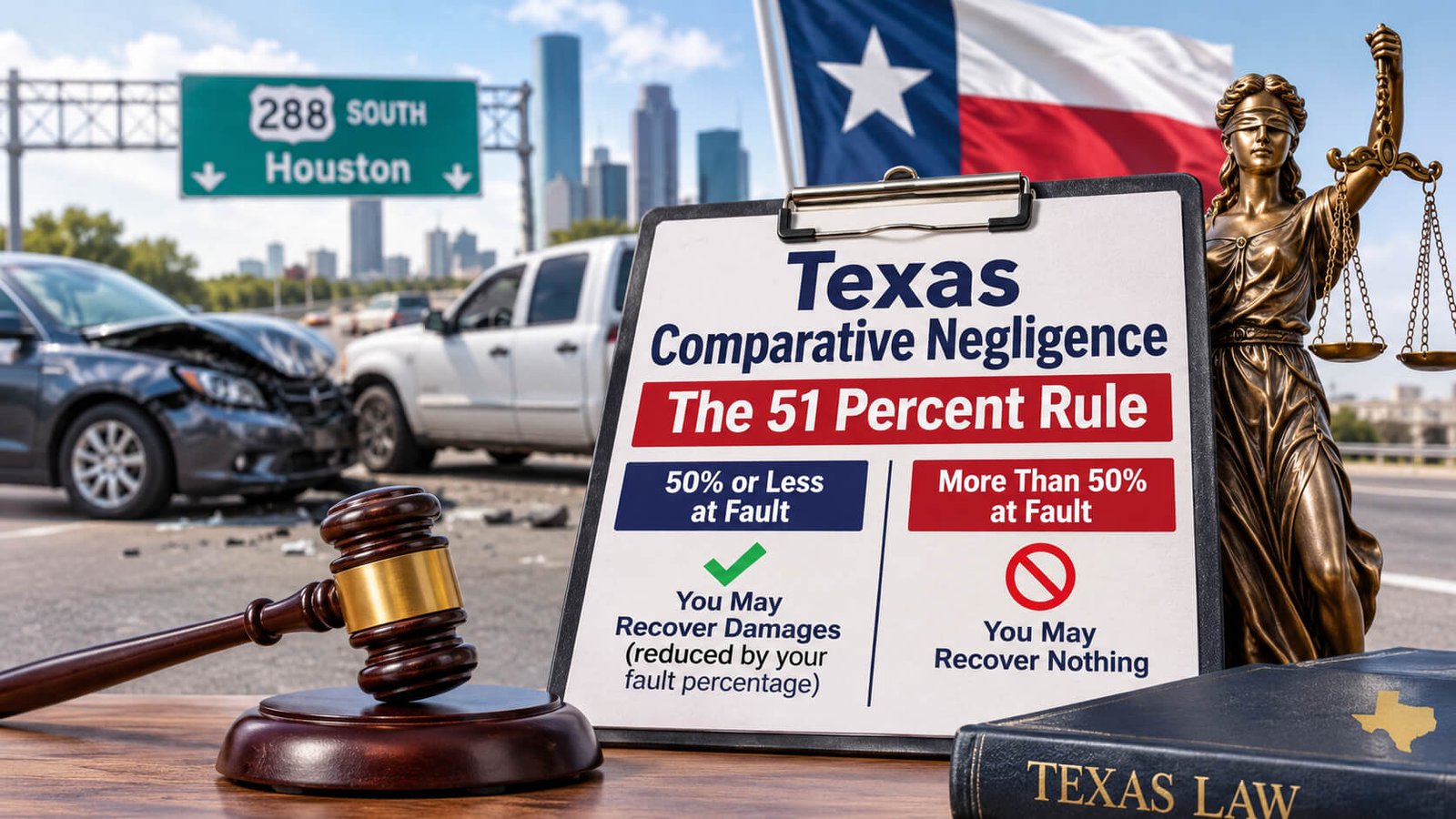
Where Chapter 33 of the Civil Practice and Remedies Code applies, a claimant found more than 50% responsible cannot recover; otherwise, damages are reduced by the claimant’s percentage (Section 33.001). That framework should not be applied indiscriminately to nonsubscriber employer claims, which involve different statutory rules.
Texas generally imposes a two-year limitations period for personal injury claims, ordinarily measured from accrual, and two years from death for wrongful death claims. Exceptions and separate claim requirements can affect particular cases.
Evidence That Can Help Establish What Went Wrong
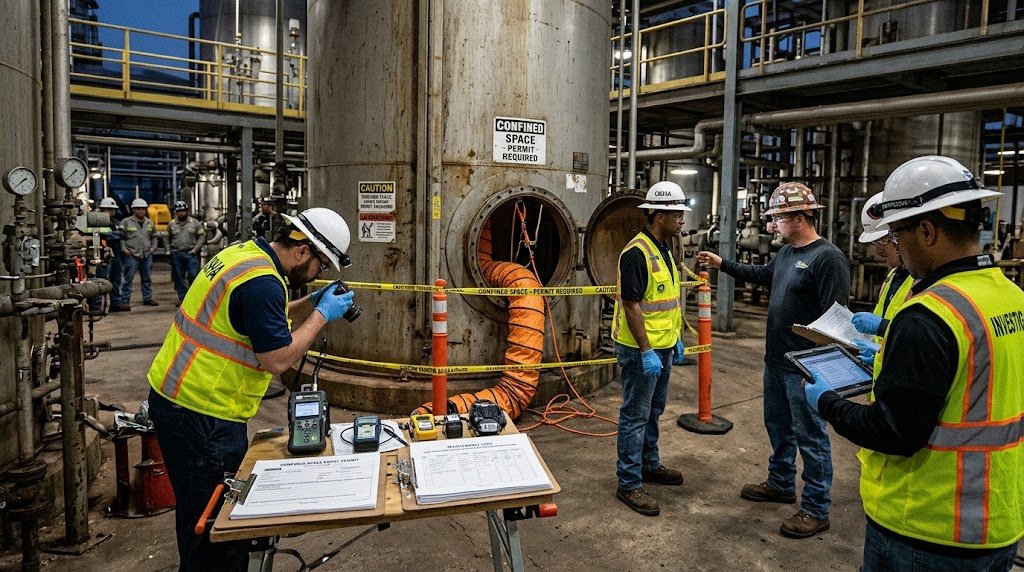
Employers must report a work-related fatality to OSHA within eight hours and an in-patient hospitalization within 24 hours, which can create an official record of the incident. A confined-space investigation may also examine several connected categories of evidence:
- Entry permits, hazard assessments, and written programs.
- Atmospheric readings, alarm histories, and instrument maintenance records.
- Ventilation, isolation, and equipment records.
- Training documents and attendant assignments.
- Rescue plans, service evaluations, and response records.
- Contracts, communications, photographs, witness accounts, and OSHA materials.
Together, these materials can help reconstruct the entry conditions, identify who knew about a hazard, and determine whether safeguards functioned as intended. Physical evidence and electronic records can change or disappear as work resumes.
When an incident proves fatal, wrongful death representation involves additional questions about eligible beneficiaries and losses. The firm’s article on Texas construction-site wrongful death claims explains how those claims may intersect with workplace coverage.
Frequently Asked Questions
What qualifies as a confined space under OSHA?
For construction, it must allow bodily entry, restrict entry or exit, and not be designed for continuous employee occupancy. Its size alone does not determine classification.
Does OSHA require a permit for every confined space?
No. Permit-space classification depends on specified serious hazards. Alternate procedures and reclassification are available only when the applicable regulatory conditions are satisfied.
What are common hazards of confined-space work?
Hazards include toxic or flammable atmospheres, oxygen deficiency or enrichment, engulfment, hazardous energy, entrapment, and restricted escape.
Who may be responsible for a confined-space accident?
Potential responsibility depends on each company’s duty, conduct, control, and contribution to the injury, together with workers’ compensation protections and other Texas rules.
What evidence should be preserved after a confined-space injury?
Relevant materials can include permits, monitoring data, equipment, training records, rescue documentation, contracts, communications, and scene evidence. Their importance depends on the incident’s circumstances.
This article is for general educational purposes and is not legal advice or a substitute for advice about a specific situation. Confined-space injury claims depend on the circumstances of the incident, the working conditions, the nature of the injuries, and the available evidence. Workers and families affected by a serious confined-space injury are welcome to call Herrera PLLC at 832-891-3210, email jherrera@jh-lawpllc.com, or reach out through the contact page to schedule a free, confidential consultation.
Jonathan Herrera, J.D.
Jonathan Herrera is the founder of Herrera PLLC in Houston, Texas. He spent more than a decade working as an insurance adjuster handling high-exposure casualty and property claims, founded the multi-state adjusting firm JH Claims LLC, and practiced insurance defense at Rymer, Echols, and Nelson-Archer before opening his own firm representing injury victims, policyholders, and businesses.