
Injured in an Uber Accident in Houston? Here’s Which Insurance Policy Actually Covers You

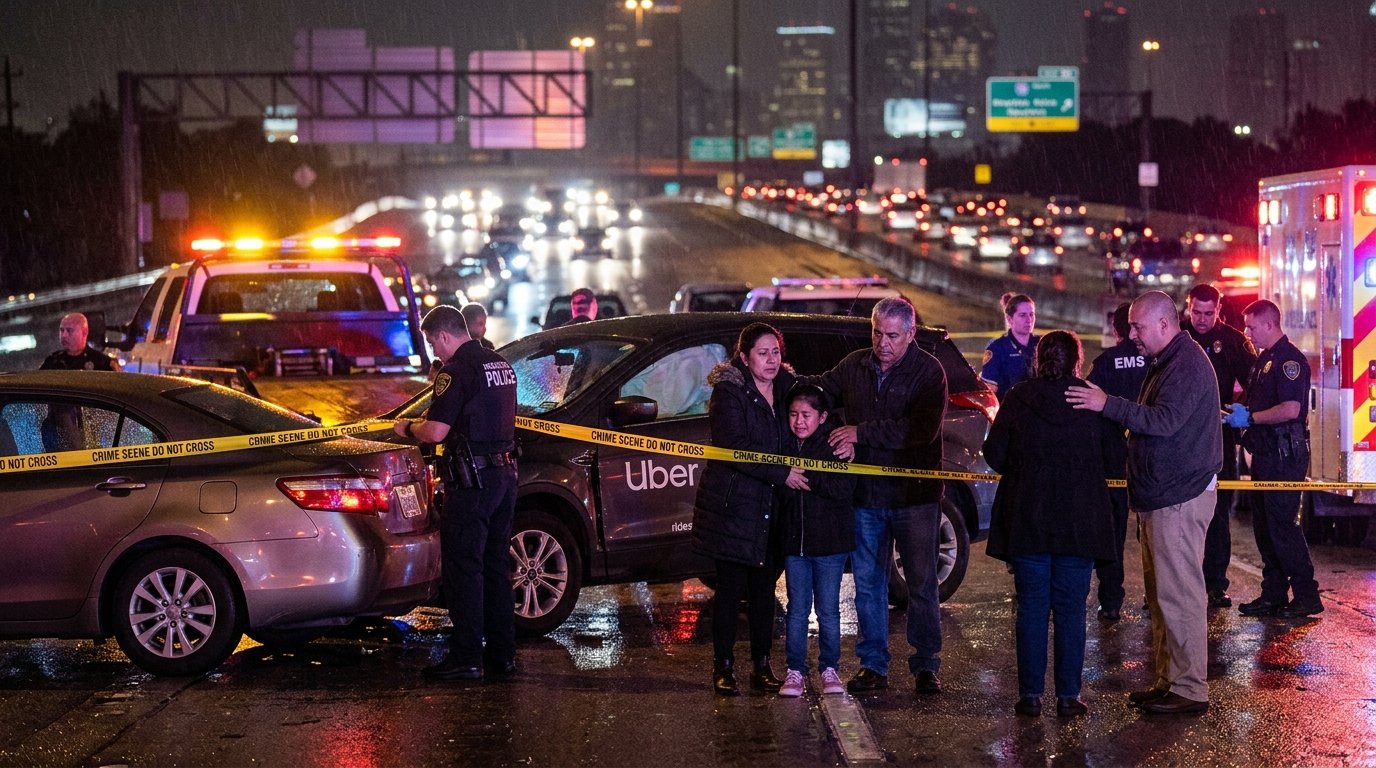
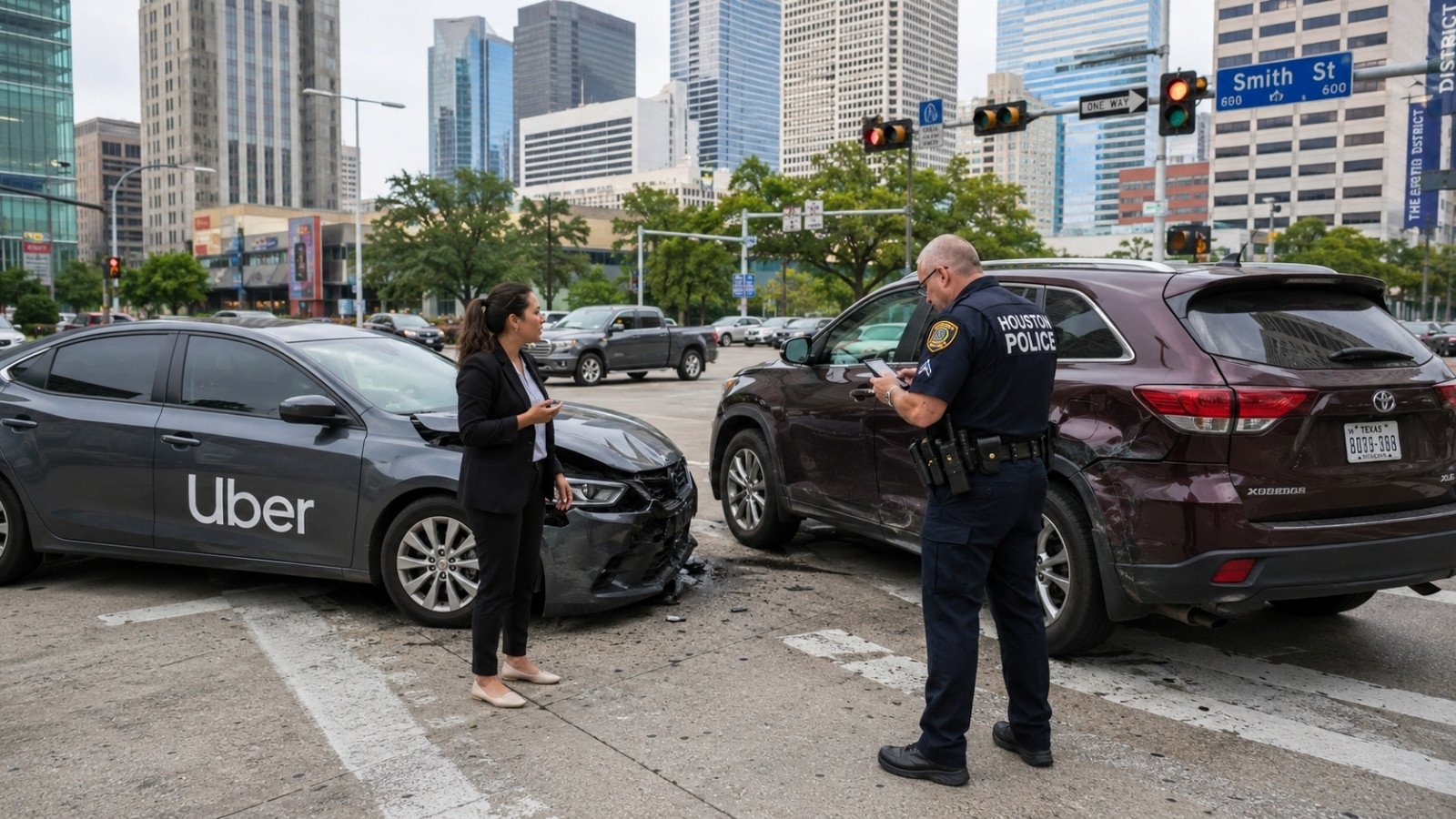
The moment after an Uber crash, the questions come fast. Whose insurance pays for this? Does it matter that the driver hadn’t picked anyone up yet? Why is Uber’s claims team saying their policy doesn’t apply?
The answer to almost every one of these questions comes down to a single fact: what the driver’s app showed at the exact moment of impact. Texas law ties insurance coverage directly to the driver’s status on the rideshare platform, and understanding that framework is the difference between knowing what your claim is actually worth and accepting whatever number a claims adjuster offers first.
The Legal Framework: Texas Insurance Code Chapter 1954
Uber and Lyft are regulated in Texas as transportation network companies, or TNCs, under Texas Occupations Code Chapter 2402 and Texas Insurance Code Chapter 1954. Chapter 1954 specifically sets the insurance requirements that apply to TNC drivers, and it ties those requirements directly to the driver’s status on the company’s digital network at the time of a crash.
Jonathan Herrera spent over a decade evaluating high-exposure casualty claims as a licensed insurance adjuster before becoming an attorney. That background includes understanding how layered, status-dependent insurance frameworks like this one are assessed internally by claims teams, which directly informs how rideshare accident claims should be evaluated.
Period 0: App Completely Off
When the rideshare app is off and the driver is using the vehicle for purely personal purposes, no TNC coverage applies at all. Only the driver’s personal automobile insurance policy is in play, the same as it would be for any other Texas motorist.
This period matters less for the purposes of this guide, since by definition it does not involve an active rideshare trip. But it is worth knowing as the baseline against which the other three periods are measured: it is the only period where Uber or Lyft’s insurance framework plays no role whatsoever.
Period 1: App On, Waiting for a Ride Request
This is where the most significant coverage disputes arise, and it deserves the most careful explanation, because the common understanding of how this period works is frequently wrong.
When a driver has the app open and is logged in, available to accept a ride, but has not yet accepted one, Texas Insurance Code Section 1954.052 requires contingent coverage of at least $50,000 per person, $100,000 per accident for bodily injury, and $25,000 for property damage. This coverage is provided either by the TNC’s policy or by a policy meeting these requirements, and it applies during this waiting period.
Here is the detail that matters most and is frequently misstated: this coverage is not contingent on the driver’s personal insurer denying the claim first. Texas Insurance Code Section 1954.055 states this directly: coverage under a policy maintained by the transportation network company is not contingent on the TNC driver’s personal automobile insurer initially denying a claim. This means that, as a matter of Texas law, the TNC’s Period 1 coverage and the driver’s personal policy can both potentially apply, and the TNC’s obligation does not wait for the personal insurer to act first.
In practice, however, coverage disputes in Period 1 still happen frequently, for a different reason than a strict contingency requirement. Many personal auto insurance policies contain exclusions for commercial or livery use, meaning the moment a driver logs into a rideshare app, their personal policy may exclude coverage for that activity entirely, regardless of whether a ride has been accepted. Texas law expressly permits insurers to include these exclusions. When this happens, the injured party is often left navigating a dispute over whether the TNC’s $50,000/$100,000/$25,000 coverage applies, while the driver’s own insurer points to the commercial use exclusion to deny responsibility. This is the practical source of most Period 1 disputes: not a statutory contingency requirement, but the interaction between commercial use exclusions in personal policies and the comparatively modest coverage limits required during this waiting period.
These lower limits, $50,000 per person and $100,000 per accident, can be insufficient to cover the full scope of a serious injury, which is precisely why correctly identifying this period and understanding what coverage actually applies matters so much.
Periods 2 and 3: Ride Accepted Through Drop-Off
Once a driver accepts a ride request, Texas Insurance Code Section 1954.053 requires the TNC to maintain a minimum of $1 million in liability coverage. This requirement applies continuously from the moment the driver accepts the ride and begins traveling to the pickup location (commonly referred to as Period 2), through the entire duration of the trip with the passenger in the vehicle (Period 3), until the ride concludes.
This is a substantial difference in available coverage compared to Period 1, twenty times the per-accident bodily injury limit. For passengers in the vehicle, other motorists struck by the rideshare vehicle, and pedestrians injured during this window, Uber’s full commercial policy is the applicable coverage, and it is meant to apply regardless of who else might be at fault, subject to the standard determination of liability.
How to Prove Which Period Was Active at the Moment of Impact
Because the difference between periods translates directly into a difference of hundreds of thousands of dollars in available coverage, establishing exactly which period applied at the moment of the crash is one of the most consequential factual questions in any rideshare accident case.
The single most valuable piece of evidence is a screenshot of the rideshare app taken as close to the time of the crash as possible, showing the driver’s status, any trip details, and timestamps. If you were a passenger, your own app screen showing the active trip is direct evidence of Period 3. If you were a pedestrian or another motorist, the rideshare driver’s own app screen, if it can be observed and documented at the scene, is similarly valuable.
Beyond a screenshot, the rideshare company’s own internal trip and GPS data is typically the authoritative record of the driver’s status at any given moment, including precise timestamps for when a ride was requested, accepted, and completed. This data exists on Uber’s servers regardless of what is visible on a phone screen at the scene, and it is generally obtainable through the formal legal process, though it is not something a claimant or attorney can typically access without that process.
Police reports, witness statements about whether the driver mentioned having a passenger or being en route to a pickup, and the driver’s own statements at the scene can also provide corroborating evidence of which period applied, though these are generally considered secondary to the app and trip data itself.
Why a Recorded Statement Before Legal Consultation Is a Risk
In the aftermath of a rideshare crash, it is common to be contacted by an insurance representative, sometimes from the rideshare company’s insurer, sometimes from the driver’s personal insurer, and sometimes from both, each potentially with an interest in characterizing the crash as falling within the other party’s coverage period.
A recorded statement given before the specific period and applicable coverage have been clearly established carries particular risk in rideshare cases. A statement that imprecisely describes the driver’s app status, made casually or without full information, can be used later to support whichever coverage period is least favorable to the party requesting the statement. Given that the difference between periods can mean a sixfold or greater difference in available coverage, the stakes attached to how that status is described are unusually high in this specific category of case.
The Negligent Hiring Pathway: When Uber Itself May Be Directly Liable
Uber and Lyft classify their drivers as independent contractors under Texas Occupations Code Section 2402.114, a classification the companies maintain specifically because it generally shields them from vicarious liability for a driver’s negligent driving. However, Texas law creates a separate and distinct pathway to hold the rideshare company itself directly accountable: negligent hiring.
Texas Occupations Code Chapter 2402, the statewide regulatory framework for transportation network companies, originates from House Bill 100, enacted by the 85th Texas Legislature and effective May 29, 2017. This is a different statute than the one governing the insurance coverage periods discussed earlier in this guide; that framework, Texas Insurance Code Chapter 1954, originates from a separate and earlier bill, House Bill 1733, enacted in 2015. Chapter 2402 requires transportation network companies to conduct background checks on drivers before granting platform access, and to repeat criminal background checks periodically thereafter.
According to the Texas Department of Licensing and Regulation, the state agency responsible for administering TNC permits, this background check must include a local, state, and national criminal background check using a commercial multistate database, as well as a check of the national sex offender public website.
The statute establishes specific disqualifying criteria under Section 2402.107, including certain felony convictions, DWI convictions within the preceding seven years, and more than three qualifying moving violations within the preceding three years.
When a rideshare company allows a driver with a disqualifying history onto the platform, or fails to remove a driver after learning of disqualifying conduct, an injured party may have a direct negligence claim against the company itself, separate and apart from any claim against the driver or any insurance coverage period analysis. This is a fundamentally different legal theory than the coverage period framework: it does not depend on what period was active at the time of the crash, because it is based on the company’s own conduct in screening and retaining the driver, not on the driver’s actions during the specific trip.
Establishing a negligent hiring claim requires demonstrating that the driver’s background contained disqualifying information that a proper background check would have, or did, reveal, and that the company nonetheless granted or maintained platform access. This typically requires obtaining the driver’s background check records and platform history through formal legal process, since this information is not publicly available.
What This Means for a Houston Rideshare Accident Claim
Houston’s rideshare market is large and continuously active, and crashes involving Uber and Lyft drivers happen regularly across the city, from downtown and Midtown to the airport corridors and suburban areas. Every one of these crashes raises the same threshold question: what period was active, and what coverage applies as a result.
Understanding this framework before engaging with any insurance representative, whether the rideshare company’s insurer, the driver’s personal insurer, or both, is the foundation for a properly evaluated rideshare injury claim. The serious injury practice at Herrera PLLC approaches rideshare cases with the understanding that the coverage period analysis and the negligent hiring pathway are often both worth examining, since they represent independent avenues to a fair recovery.
Frequently Asked Questions About Houston Uber Accident Insurance Coverage
Does Uber’s insurance cover me if their driver caused my accident in Texas?
It depends on the driver’s app status at the moment of the crash. If the app was completely off, only the driver’s personal insurance applies, with no TNC coverage. If the driver was logged in and waiting for a ride request, Texas Insurance Code Section 1954.052 requires contingent coverage of at least $50,000 per person and $100,000 per accident. If the driver had accepted a ride or had a passenger in the vehicle, Uber’s full $1 million commercial liability policy under Section 1954.053 applies. Identifying which period was active is the central question in determining what coverage is available.
What happens if a Houston Uber driver was logged into the app but had not accepted a ride when they hit me?
This is Period 1 under Texas Insurance Code Chapter 1954, and it requires contingent coverage of at least $50,000 per person, $100,000 per accident for bodily injury, and $25,000 for property damage. This TNC coverage is not legally contingent on the driver’s personal insurer denying the claim first, though in practice, disputes commonly arise because many personal auto policies exclude coverage for commercial or rideshare activity once the driver is logged into the app, regardless of whether a ride has been accepted.
How do I prove what status the Uber driver was in on the app at the moment of my accident in Texas?
The most direct evidence is a screenshot of the rideshare app taken as close to the time of the crash as possible. Beyond that, the rideshare company’s own internal trip and GPS data is typically the authoritative record of a driver’s status and is generally obtainable through formal legal process. Police reports and witness statements can provide corroborating, though secondary, evidence of which period applied.
Can I sue Uber directly, not just the driver, for my injuries in Texas?
In certain circumstances, yes. While Uber and Lyft classify drivers as independent contractors to limit vicarious liability for a driver’s negligent driving, Texas Occupations Code Chapter 2402, established under House Bill 100 in 2017, requires TNCs to conduct background checks on drivers and establishes disqualifying criteria under Section 2402.107. When a company allows a driver with disqualifying history onto the platform or fails to remove a driver after learning of disqualifying conduct, an injured party may have a direct negligent hiring claim against the company itself, independent of the coverage period analysis.
What should I do immediately at the scene of a Houston Uber accident to protect my injury claim?
Documenting the rideshare app’s status with a screenshot as close to the time of the crash as possible is one of the most valuable steps, since this evidence is often difficult to recreate later. Beyond that, the general steps that apply to any serious crash, seeking medical attention, documenting the scene, and obtaining contact and insurance information, all remain relevant. Given the layered insurance structure and the stakes attached to how the crash and the driver’s status are described, the timing and content of any recorded statement to an insurance representative is also a significant consideration in rideshare cases specifically.
Understanding the Coverage Before You Need It
The gap between Period 1’s $50,000 per-person limit and Periods 2 and 3’s $1 million commercial policy is not a technicality. It is, in many serious injury cases, the difference between a claim that can fully address the harm caused and one that cannot. Compounding the coverage period analysis is a separate and independent pathway, the negligent hiring claim against the rideshare company itself, that exists regardless of which period applied.
For anyone injured in a Houston rideshare accident who is uncertain which coverage applies or who has been told by an insurer that coverage does not apply, speaking with an attorney who understands how these layered insurance frameworks are evaluated is a meaningful step toward understanding the full scope of what coverage exists.
Jonathan Herrera, J.D. is a Houston-based attorney who represents seriously injured Texans, including rideshare accident victims, across the state. Before practicing law, he spent over a decade as a licensed insurance adjuster managing high-exposure casualty claims for carriers and third-party administrators across multiple states. He is the founder of Herrera PLLC and a member of the Texas Trial Lawyers Association and the American Association for Justice.