
Wrongful Death Claims Involving Autonomous Vehicles: Uncharted Legal Territory in Texas

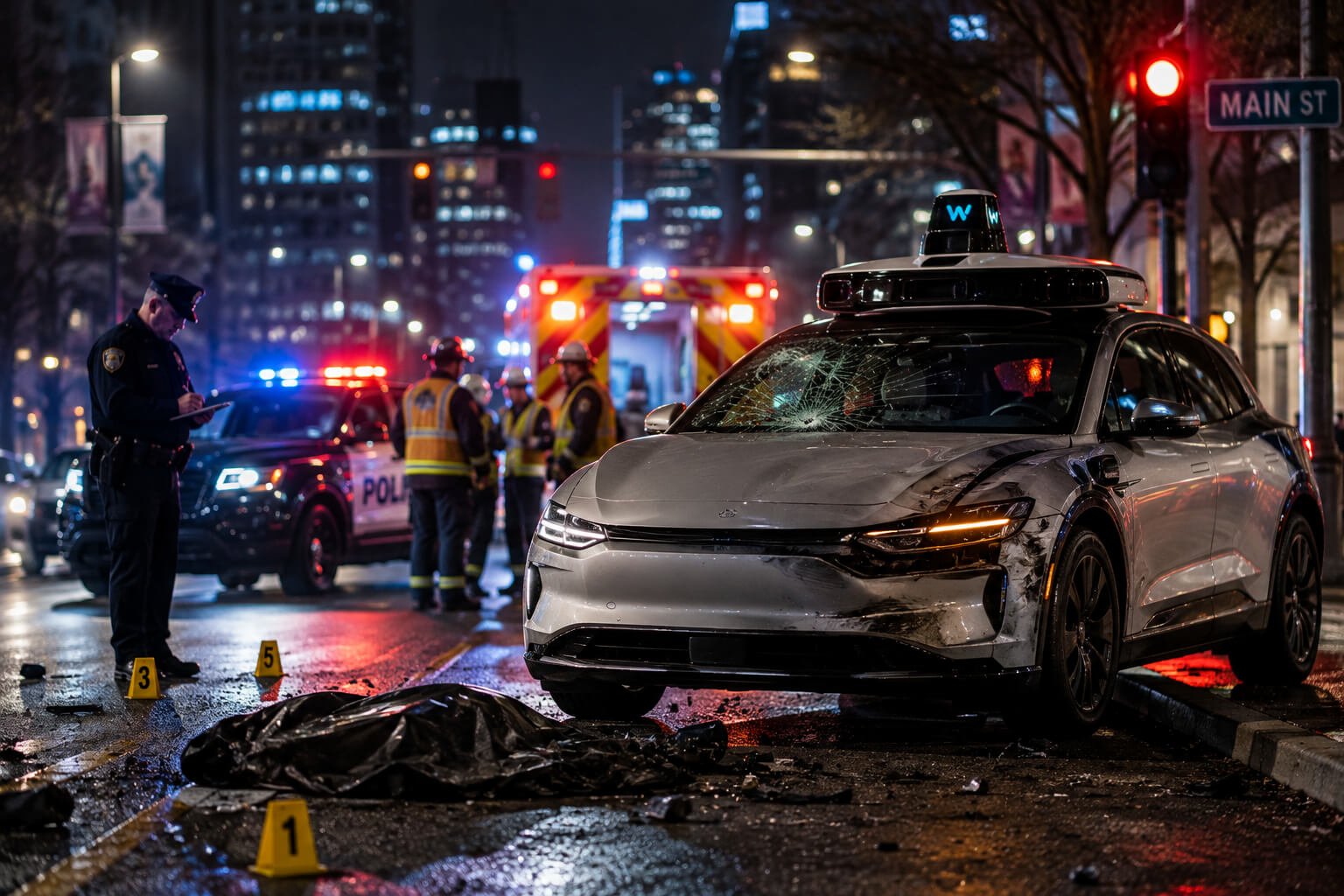
Robotaxi service has expanded rapidly across Texas over the past year, with fully autonomous rides now operating in Houston alongside Dallas, San Antonio, and Austin. As these fleets grow, so does the likelihood that a fatal crash will eventually involve a vehicle with no human being behind the wheel. When that happens, families are left navigating a legal landscape that Texas law was not originally written to address, and that has not yet been fully tested in Texas courts.
Under Texas law, a wrongful death claim allows certain surviving family members to seek damages when a person’s death was caused by another party’s wrongful act, neglect, carelessness, unskillfulness, or default.
At Herrera PLLC, Jonathan Herrera brings a background evaluating complex, high-exposure casualty claims as a former insurance adjuster to serious and catastrophic injury matters, including cases involving new and evolving liability questions. This article looks at how Texas’s existing wrongful death framework is likely to apply to autonomous vehicle fatalities, what makes these cases different from a typical car accident claim, and why they generally take longer to resolve.
How Texas Wrongful Death Law Applies When There Is No Human Driver
Texas wrongful death claims are governed by Chapter 71 of the Texas Civil Practice and Remedies Code. Under Section 71.002, a person or company is liable for a death caused by a wrongful act, neglect, carelessness, unskillfulness, or default, and Section 71.003 generally requires that the deceased person would have had a valid claim for the injury had they survived. Nothing in this framework requires that a human being was physically operating a vehicle at the time of the crash. The relevant question is whose conduct, whether that of a vehicle manufacturer, a software developer, a fleet operator, or another party, caused the fatal harm.
What is genuinely new is how that question gets answered when the “driver” is an automated driving system rather than a person. Traditional negligence claims are built around evaluating a human driver’s choices: speed, attention, reaction time, and judgment. An autonomous vehicle fatality instead requires evaluating the design, testing, and deployment decisions made by a company, which is a different kind of factual and legal inquiry, and one Texas courts are still working through as these cases begin to arise.
Product Liability as the Primary Theory in an AV Fatality
Because there is no human driver whose individual conduct can be evaluated in the traditional sense, product liability theories are often expected to play a central role in an autonomous vehicle fatality case. Texas product liability law is governed by Chapter 82 of the Texas Civil Practice and Remedies Code, which allows claims against manufacturers and sellers for harm caused by a defective product, whether framed as a design defect, a manufacturing defect, or a marketing or failure-to-warn defect. For a design defect claim specifically, Section 82.005 requires the claimant to prove that a safer alternative design existed and was economically and technologically feasible at the time.
Applied to an autonomous vehicle, this could mean scrutinizing the automated driving system’s software and decision-making logic, the sensors and hardware it relies on, and whether reasonable design alternatives existed that would have prevented or reduced the risk that led to the fatal crash. At the same time, ordinary negligence theories have not disappeared from these cases. A fleet operator’s maintenance practices, a remote assistance provider’s response to a flagged situation, or another driver’s conduct in a multi-vehicle crash can all still be relevant, often alongside a product liability claim rather than one. Which theory or combination of theories applies to a specific crash depends heavily on the facts, and is a determination an attorney makes after investigating the incident.
Preserving Sensor, Software, and Remote Assistance Data
Autonomous vehicles generate an enormous amount of data that does not exist in a typical car accident: sensor logs from cameras, radar, and lidar, software decision records showing what the system detected and how it responded, and, where a remote monitoring or assistance system is involved, records of any human intervention or oversight. Texas Transportation Code Chapter 545, Subchapter J, which governs the operation of automated motor vehicles in this state, requires vehicles operating with the automated driving system engaged to be equipped with a recording device capable of capturing data such as speed, direction, location, and braking and steering performance.
This data is central to reconstructing what happened in a fatal crash, but it is also held by the company that built or operates the vehicle, not by the family of the person who died. Much of it can be difficult to obtain without formal legal process, and some of it may be overwritten or lost if it is not preserved quickly. In a case like this, sending prompt legal notice to preserve this data is often one of the most time-sensitive steps an attorney can take, since preservation procedures vary by manufacturer and operator.
Multiple Potentially Responsible Parties in an AV Death Case
Autonomous vehicle fatalities frequently involve more than one company with a potential role in what happened. Depending on how the specific vehicle and service are structured, this can include the vehicle manufacturer, the company that developed the automated driving system software (which is not always the same company that built the vehicle itself), the fleet operator managing and maintaining the vehicle, a remote assistance or monitoring provider, and, in a multi-vehicle crash, another driver or company involved in the collision. Identifying every party with a potential role, the insurance coverage or self-insurance that may apply, and the available sources of recovery is a central part of building a claim in this type of case.
Damages Available to Surviving Family Members Under Texas Law
Under Section 71.004 of the Texas Civil Practice and Remedies Code, a wrongful death action is brought for the exclusive benefit of the surviving spouse, children, and parents of the person who died. Texas law generally recognizes categories of damages in a wrongful death case that include pecuniary loss, such as lost income and financial support the family would have received, loss of companionship and society, and mental anguish experienced by the surviving family members. Where the death was caused by a willful act or omission or by gross negligence, Section 71.009 allows for the recovery of exemplary damages in addition to actual damages.
Texas generally imposes a two-year statute of limitations from the date of death in wrongful death cases, which applies regardless of whether the underlying theory is negligence, product liability, or some combination of the two.
Why These Cases Move Slower Than a Typical Wrongful Death Claim
Several factors tend to make autonomous vehicle wrongful death cases take longer than a conventional car accident claim. The legal theories involved are still being tested in courts around the country, with relatively little settled Texas precedent to rely on. Investigating the crash typically requires technical experts capable of analyzing proprietary sensor and software data, which the responsible company may resist producing without formal discovery. Multiple companies, often represented by separate legal teams, may be involved as potential defendants. And Texas’s own regulatory framework for commercial autonomous vehicle operation is itself new: Senate Bill 2807 substantially rewrote Transportation Code Chapter 545, Subchapter J effective September 1, 2025, with related state rules and enforcement phased in during 2026, meaning even the regulatory backdrop against which these cases are evaluated is still developing.
None of this means a claim cannot be pursued successfully. It means these cases generally require more investigation, more technical expertise, and more patience than a typical car accident claim, and they benefit from an attorney who begins that investigation as early as possible.
Frequently Asked Questions
Who is liable when an autonomous vehicle causes a death?
Liability can potentially fall on the vehicle manufacturer, the automated driving system’s software developer, the company operating the vehicle fleet, a remote assistance provider, or another driver involved in the crash, depending on the specific facts. Texas courts have not yet developed extensive precedent addressing autonomous vehicle fatalities specifically, so these questions are evaluated case by case.
Is this a product liability case or a negligence case?
It can be either, or both. Product liability theories under Chapter 82 of the Texas Civil Practice and Remedies Code are often expected to play a central role because there is no human driver to evaluate in the traditional sense, but negligence theories against a fleet operator, maintenance provider, or another driver can also apply depending on what caused the crash.
What evidence needs to be preserved?
Sensor data, software decision logs, and records of any remote assistance or human oversight are typically central to reconstructing an autonomous vehicle crash. This data is generally held by the manufacturer or operator, and prompt legal action is often needed to preserve it before it is lost or overwritten.
Who can recover damages under Texas wrongful death law?
Under Section 71.004 of the Texas Civil Practice and Remedies Code, a wrongful death action is for the exclusive benefit of the surviving spouse, children, and parents of the person who died.
Why do AV wrongful death cases take longer?
These cases often involve unsettled legal theories, technically complex evidence controlled by the defendant companies, multiple potential defendants, and a state regulatory framework for autonomous vehicles that is itself still new and developing.
How long do I have to file an autonomous vehicle wrongful death claim in Texas?
Texas generally imposes a two-year statute of limitations for a wrongful death claim, measured from the date of death. The deadline can depend on the specific facts and legal theories involved, so families should have a potential claim evaluated as soon as possible.
This article is provided for general informational purposes and does not constitute legal advice. Autonomous vehicle liability law is a new and evolving area, and every case depends on its own specific facts. Reading this article does not create an attorney-client relationship with Herrera PLLC. If you lost a loved one in a crash involving an autonomous vehicle in Texas, Jonathan Herrera offers a free, confidential consultation to help you understand your options, with no fee unless a recovery is made. Call 832-891-3210 or visit the contact page to get started.
Jonathan Herrera, J.D. Jonathan Herrera is the founder of Herrera PLLC, a Houston, Texas law firm representing individuals in serious personal injury, insurance law, and civil litigation matters, including wrongful death claims. Before becoming an attorney, he spent over a decade as a licensed insurance adjuster handling high-exposure casualty claims before practicing insurance defense and founding Herrera PLLC.