
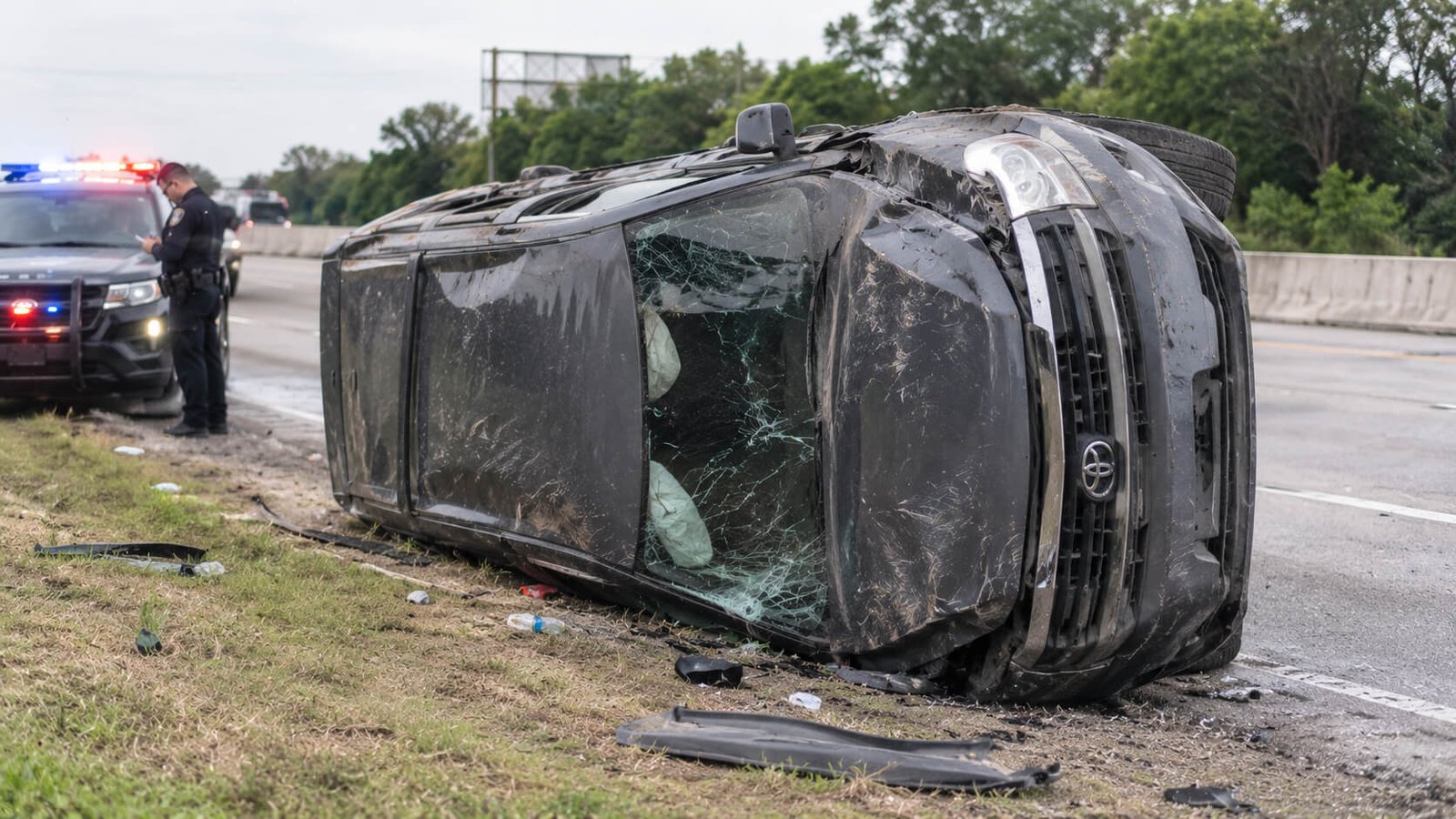

A rollover accident is a crash in which a vehicle turns onto its side or roof. It is one of the most violent things that can happen on a road. The vehicle’s weight, the force of the crash, and the strength of the structure around the occupants are all tested at once. People who might walk away from a fender-bender can suffer life-changing injuries when a vehicle ends up on its side or roof.
After a rollover, the question that matters most is why it happened. Sometimes the answer is a driver’s choice. Sometimes it is another motorist, the road itself, a failed tire, or a vehicle that did not protect the people inside it. This article explains how rollover crashes happen in Texas, how responsibility is evaluated, and how roof damage, restraint failures, and ejection can affect injuries. It is general information, not legal advice, and every crash turns on its own facts.
Common Causes of Vehicle Rollover Accidents in Texas
Rollovers rarely have a single cause. They usually begin when a vehicle is pushed past the point where it can stay upright. Common triggers include:
- Speed on curves and ramps. Highway interchanges and exit ramps are designed for certain speeds, and a vehicle that enters too fast can begin to lean and tip. The Houston area’s freeway system, including I-10, I-45, and Highway 288, has many curved ramps and connectors where this can come into play.
- Sudden steering. Drifting onto the shoulder and jerking the wheel back, or swerving to avoid a stopped car or debris, can send weight sideways.
- Tripping. A vehicle sliding sideways can catch a curb, soft ground, or a ditch and roll over it.
- Vehicle height and load. Taller vehicles such as SUVs, pickups, and vans sit higher and tip more easily, and heavy cargo or roof loads can make that worse. NHTSA’s 5-Star Safety Ratings include a rollover resistance rating that combines a measurement of how top-heavy a vehicle is with a driving maneuver test.
- Tire and equipment problems. A tire failure, worn brakes, or steering and suspension trouble can cause a driver to lose control.
- Wet pavement. Heavy Gulf Coast rain can leave standing water on roads, which can lead to hydroplaning and loss of control.
- Contact with another vehicle. Being clipped or forced off the road can start a roll even when the driver did nothing wrong.
Single-Vehicle vs. Multi-Vehicle Rollover Crashes
In a single-vehicle rollover, only one vehicle is involved. Insurers, and sometimes first impressions at the scene, assume the driver alone is to blame. But a single vehicle does not mean a single cause. The driver may have been forced off the road by another motorist who left the scene, or a tire may have failed. The road’s edge or surface may have contributed, or a vehicle component may not have performed as it should. When the responsible driver cannot be identified or lacks enough insurance, whether the injured person’s own uninsured or underinsured motorist coverage applies depends on the policy language and Texas law, which is where insurance coverage disputes can arise.
Passengers hurt in a single-vehicle rollover are generally not the people who caused it. They may have claims against the driver, other drivers, or other responsible parties, depending on what the evidence shows.
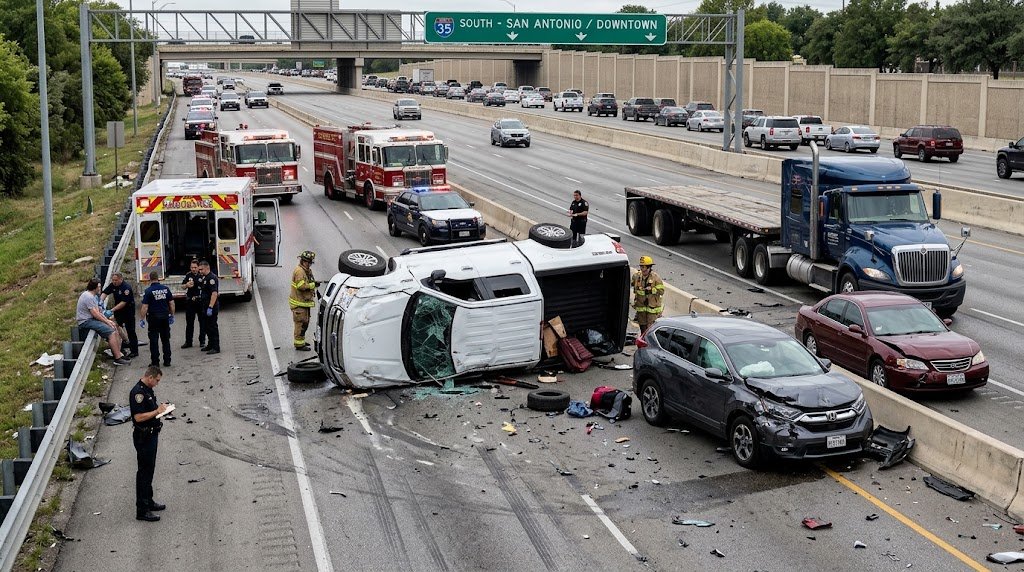
Multi-vehicle rollovers are often more complicated. One vehicle may strike another and cause it to roll, or a rolled vehicle may end up in the path of oncoming traffic. Fault can be divided among several drivers, and each one’s insurer may point at the others. The firm’s car accident page explains how serious crash claims are approached more generally.
When a large truck is involved, either because it rolled or because a rolling passenger vehicle struck it, additional issues arise. These are covered on the firm’s truck accidents pages, including truck rollover accidents and underride and override crashes.
How Speed, Road Conditions, and Driver Actions Can Contribute to a Rollover
Texas law does not only ask whether a driver stayed under the posted limit. Under Section 545.351 of the Texas Transportation Code, a driver may not drive at a speed greater than is reasonable and prudent under the circumstances then existing. The statute also requires drivers to account for actual and potential hazards. A speed that is legal on a dry, straight road can be unreasonable on a wet curve, in heavy traffic, or through a work zone.
In rollover cases, investigators look at how fast the vehicle was moving, whether there was hard steering or braking before the roll, and whether the driver was distracted, fatigued, or impaired. They also look at road conditions, such as wet pavement, loose gravel, an uneven shoulder, a drop-off at the edge of the pavement, or poor signage near a curve.
Claims involving a government-maintained roadway are subject to special rules. The Texas Tort Claims Act (Chapter 101 of the Civil Practice and Remedies Code) limits when a government entity can be sued and generally requires written notice of the claim within six months of the incident. Some city charters set shorter notice periods.
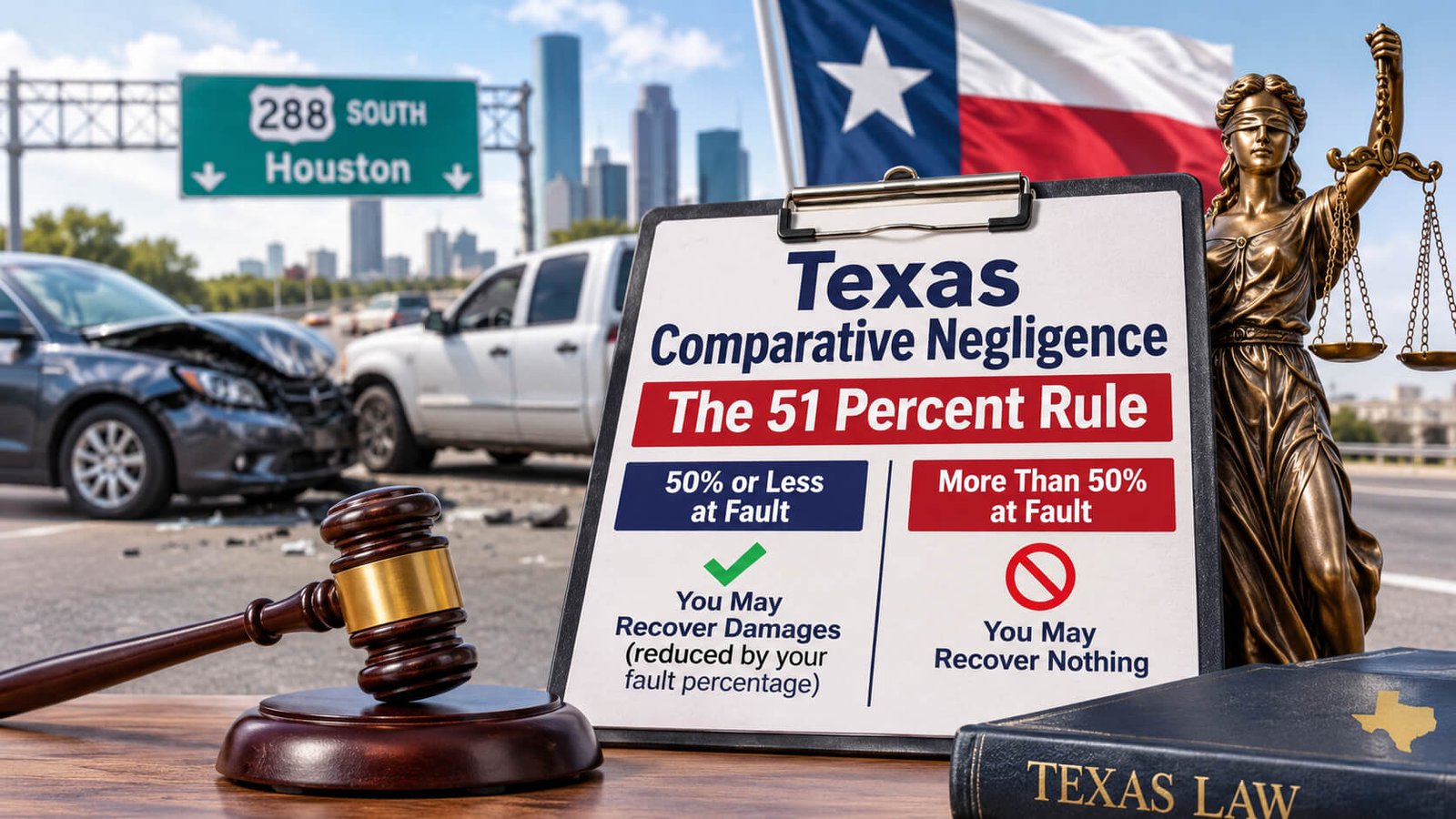
Fault does not have to be all or nothing. Texas uses a proportionate responsibility system in Chapter 33 of the Civil Practice and Remedies Code. An injured person who is found more than 50 percent responsible cannot recover damages. If that person’s share is 50 percent or less, recovery is reduced by their percentage of responsibility. Insurers often use this rule to argue that an injured driver caused the crash, which is why the evidence about speed, steering, road conditions, and vehicle performance matters. Having spent more than a decade as an insurance adjuster before becoming an attorney, Jonathan Herrera is familiar with how carriers assemble claim files and evaluate fault in cases like these.
When Vehicle Design or Equipment Defects May Worsen Rollover Injuries
Not every rollover is a driver-error case. A vehicle can affect both how likely a rollover is and how badly people are hurt. Federal safety standards set minimums for some of these features:
- Roof strength. Federal Motor Vehicle Safety Standard (FMVSS) 216a requires a roof to withstand a force of 3.0 times the vehicle’s unloaded weight for vehicles with a gross vehicle weight rating of 6,000 pounds or less. For vehicles over 6,000 pounds up to 10,000 pounds, the requirement is 1.5 times.
- Electronic stability control. FMVSS 126 requires electronic stability control on new passenger vehicles up to 10,000 pounds. After a phase-in, it applied to all covered vehicles manufactured on or after September 1, 2011. The technology is meant to help a driver keep control during a skid or sudden maneuver.
Meeting a federal standard does not mean a vehicle performed well in a particular crash. Section 82.008 of the Texas Civil Practice and Remedies Code creates a rebuttable presumption that a manufacturer is not liable when its product complied with mandatory federal safety standards, and defendants often raise it. Whether it applies, and whether it can be rebutted, depends on the facts.
Product liability claims in Texas also have their own requirements. Under Chapter 82, a person alleging a design defect must prove there was a safer alternative design and that the defect was a producing cause of the injury. A safer alternative design is one that, in reasonable probability, would have prevented or significantly reduced the risk of injury without substantially impairing the product’s usefulness, and that was economically and technologically feasible when the product left the manufacturer’s control. Texas courts have also said the product must be unreasonably dangerous as designed. These claims usually require engineering analysis and expert testimony.
Several physical facts can matter to a defect investigation:
- A roof that collapsed into the occupant space
- A seat belt that unlatched, locked improperly, or failed
- A door that opened during the crash
- An airbag that did not deploy as expected
- A tire or other component that failed before the vehicle left the road
Occupant ejection can be especially serious, and the question of why a person was thrown from the vehicle is part of the investigation. A defect that worsened injuries does not necessarily mean it caused the crash, and the reverse is also true. Both questions can be part of the same case.
Whether a vehicle is subject to a safety recall is another fact that is often checked. NHTSA’s recall lookup allows a search by vehicle identification number. A recall does not by itself prove anyone is liable, but it can be relevant information.
Deadlines apply. Texas generally allows two years to file a personal injury lawsuit under Section 16.003 of the Civil Practice and Remedies Code. Product liability claims are also subject to a statute of repose in Section 16.012, which generally bars claims brought more than 15 years after the product was sold, with some exceptions.
Evidence Needed to Investigate a Rollover Accident
Rollover cases can be won or lost on evidence that disappears quickly. Useful evidence can include:
- The vehicle itself. Rolled vehicles are often repaired, sold, or scrapped soon after a crash, which can make a later inspection of the roof, tires, seat belts, and door latches impossible. If the vehicle has an event data recorder, its data may also be lost or overwritten.
- The crash report. Texas peace officer crash reports (Form CR-3) are maintained by the Texas Department of Transportation. The TxDOT crash reports and records page explains how to request one, and TxDOT also publishes crash data and statistics.
- Scene evidence. Photos and video, tire marks, the curve and shoulder layout, lighting, signage, and weather.
- Witnesses. Other drivers, passengers, and first responders.
- Medical records. Records from the scene, the emergency room, and later treatment, which tie injuries to the crash.
- Maintenance and tire records. These can show whether a part had a history of problems.
Injuries and Damages in Serious Rollover Accident Claims
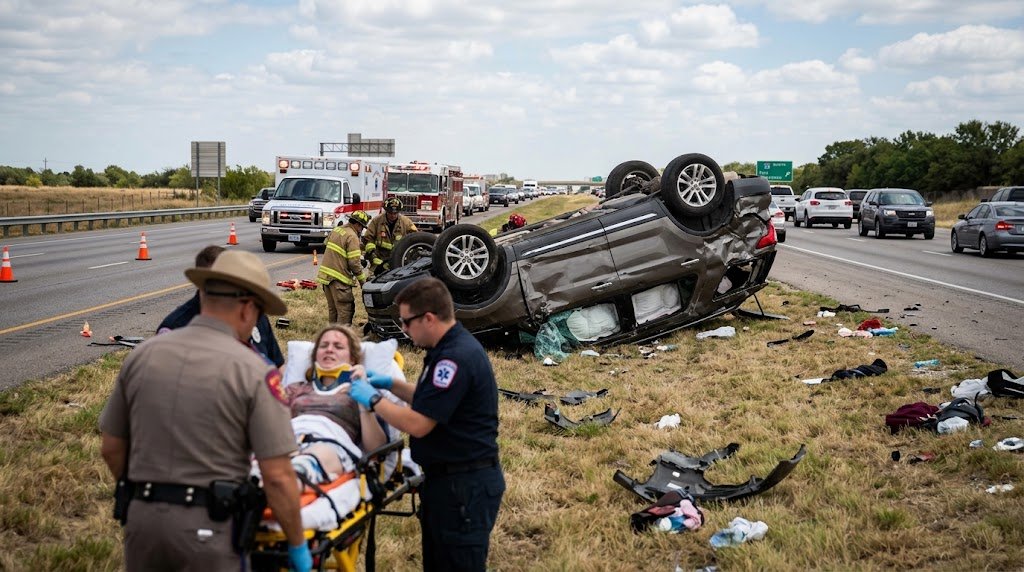
Rollover injuries are often severe. They include traumatic brain injuries, spinal cord injuries, broken bones, internal injuries, and crush injuries. Many require long-term care, and some lead to permanent disability.
Depending on the facts, compensation in a Texas injury claim can include past and future medical expenses, lost wages and lost earning capacity, pain and suffering, mental anguish, physical impairment, and disfigurement. In limited cases involving gross negligence, such as some drunk driving crashes, Texas law also allows exemplary damages. When someone dies in a rollover, the surviving spouse, children, and parents may be able to bring a wrongful death claim, generally within two years of the date of death. No lawyer can promise a result, but a careful evaluation of the long-term cost of an injury is central to any serious claim.
Frequently Asked Questions
What are the common causes of vehicle rollover accidents in Texas?
Common causes include excessive speed on curves or ramps, sudden steering, tripping on a curb or soft shoulder, tall or heavily loaded vehicles, tire or equipment failure, wet pavement, and contact from another vehicle. Many rollovers involve more than one factor.
Can I bring a claim after a single-vehicle rollover accident?
Possibly. A single-vehicle crash can still involve another driver who forced the vehicle off the road, a road condition, or a vehicle or tire defect. Passengers may also have claims. If the driver was mostly responsible, the claim may be limited, so the facts need to be reviewed.
Can a vehicle manufacturer be liable if a defect contributed to a rollover?
It can be, but Texas product liability claims have specific requirements. For a design defect, the claimant must prove a safer alternative design and that the defect was a producing cause of the injury. A manufacturer may also point to compliance with federal safety standards, which creates a rebuttable presumption under Texas law.
Who may be responsible for a rollover accident?
It depends on the evidence. A driver, another motorist, a vehicle or parts manufacturer, a maintenance provider, or a party responsible for the road may bear some responsibility. Texas allows fault to be shared, and an injured person’s own share reduces recovery.
What evidence should I preserve after a rollover crash?
Evidence commonly relied on in rollover cases includes the vehicle in its post-crash condition, photos and video, the crash report, witness information, medical records, and tire and maintenance records. The vehicle in particular can be lost if it is repaired, sold, or scrapped before an inspection.
This article is for general educational purposes and is not legal advice or a substitute for advice about a specific situation. Rollover accident claims depend on the circumstances of the crash, the cause of the rollover, the severity of the injuries, and the available evidence. Individuals and families affected by a serious rollover accident are welcome to call Herrera PLLC at 832-891-3210, email jherrera@jh-lawpllc.com, or reach out through the contact page to schedule a free, confidential consultation.
Jonathan Herrera, J.D.
Jonathan Herrera is the founder of Herrera PLLC in Houston, Texas. He spent more than a decade working as an insurance adjuster handling high-exposure casualty and property claims, founded the multi-state adjusting firm JH Claims LLC, and practiced insurance defense at Rymer, Echols, and Nelson-Archer before opening his own firm representing injury victims, policyholders, and businesses.