

In a typical car accident, the police report and witness statements are often the primary evidence available. A rideshare accident is different. Uber and Lyft generate a detailed digital record of exactly what the driver’s app was doing before, during, and after a crash, and that record can be some of the most objective evidence available in the case. It can also disappear quickly if it is not identified and preserved early.
Herrera PLLC investigates rideshare accident claims throughout Houston and across Texas, including the app and trip data that often proves what happened.
What Trip Data Uber and Lyft Actually Record
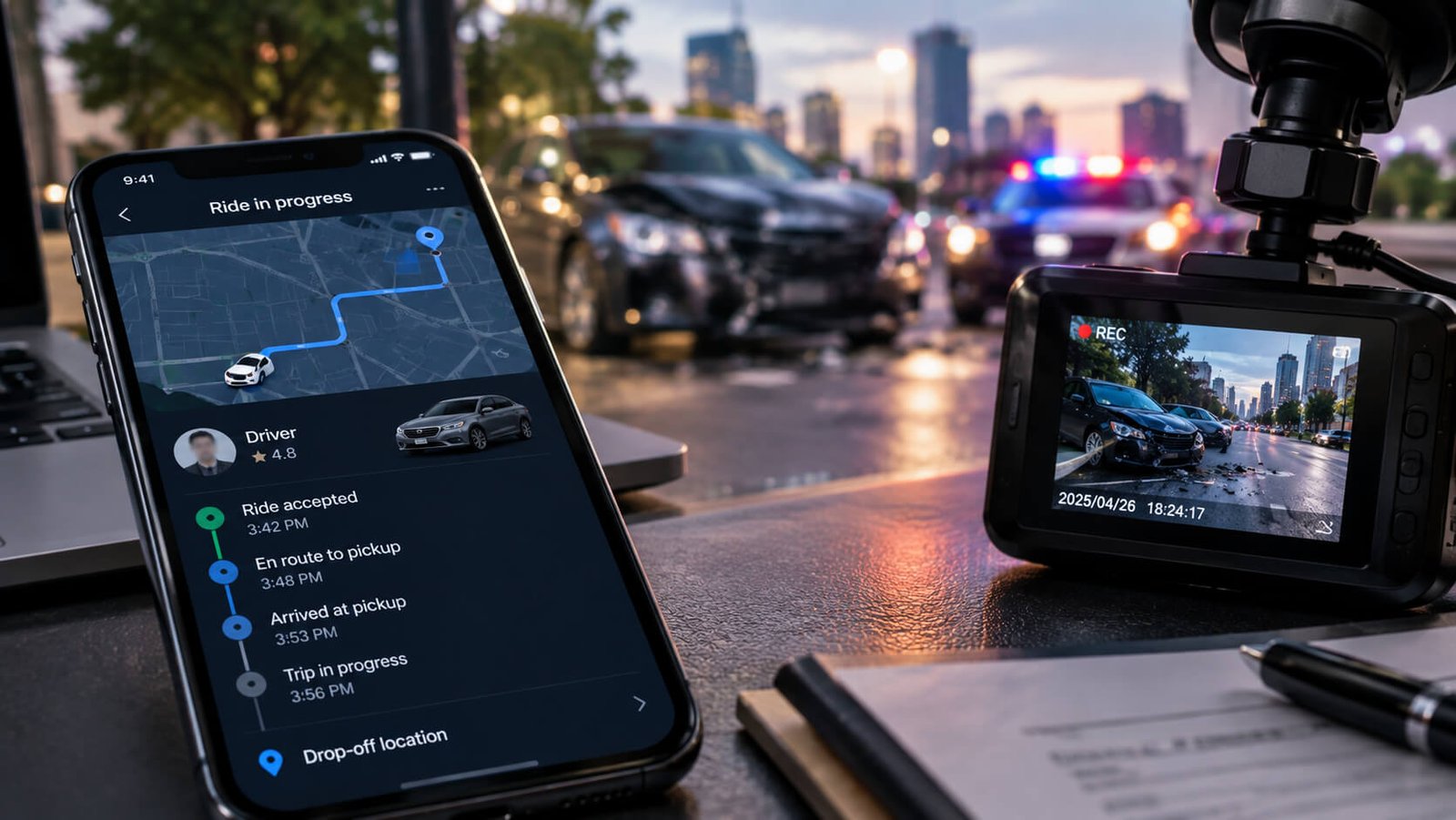
Rideshare companies collect a substantial amount of data every time a driver is logged into the app. This typically includes the driver’s login and logout times, whether a ride request was pending, accepted, or in progress at any given moment, the pickup and drop-off locations and times for an active ride, and the route the app’s navigation system directed the driver to take. Some of this data is visible to the driver and rider through the app’s trip history, but a more complete version is retained on the rideshare company’s own servers.
This data exists independently of what either driver remembers or what a responding officer wrote in a police report. Because it is generated automatically by the app itself, it tends to be more precise and harder to dispute than competing accounts of what happened, which is part of why it carries significant weight in evaluating a rideshare claim.
GPS, Speed, and Timestamp Data as Crash Reconstruction Evidence
Beyond the basic trip record, the rideshare app’s underlying GPS data can show the vehicle’s location, direction, and speed at intervals throughout the trip, often down to the moments immediately before a crash. This kind of timestamped location data can help establish how fast the vehicle was traveling, whether it was following the app’s suggested route, and where exactly it was positioned relative to the other vehicle, cyclist, or pedestrian involved.
This information can be especially useful when the parties disagree about basic facts like speed or point of impact. A driver’s own recollection of how fast they were going is not always reliable, and a police report based on that recollection may not fully capture what the vehicle’s own systems recorded. GPS and timestamp data from the app can help fill in these gaps with something closer to an objective record.
In-App Ride Status at the Moment of Impact
One of the most important pieces of app data in a rideshare case is the driver’s exact ride status at the moment of the crash: whether the app was off, the driver was logged in but without an accepted ride, or a ride was actively in progress. This status often determines which insurance coverage applies to the claim, since coverage levels change significantly between these periods under Texas law.
Establishing this status with precision usually requires the rideshare company’s own internal records rather than the driver’s account of what they remember. A driver may not recall, or may misstate, exactly when a ride request came in relative to a crash, but the app’s own timestamped data generally reflects the actual sequence of events.
Why This Data Needs to Be Requested or Subpoenaed Quickly
Rideshare companies do not retain all app and trip data indefinitely, and internal retention policies can result in certain records being deleted or becoming harder to access as time passes. Waiting weeks or months after a crash to request this information increases the risk that key data will no longer be available.
Texas Rule of Civil Procedure 202 allows a person to petition a court for a pre-suit deposition to investigate a potential claim before a lawsuit is filed, which can include obtaining documents and records relevant to that investigation. This procedural tool can be useful in a rideshare case where trip and app data held by the rideshare company needs to be identified and preserved before it is lost. Acting promptly after a rideshare-related crash is one of the most effective ways to make sure this evidence is still available when it is needed.
Dashcam and In-App Recording Features as Additional Evidence
Many rideshare drivers use dashcams, and some rideshare apps include their own audio or video recording features that can be activated during a trip. When available, this footage can provide a direct visual or audio record of the moments leading up to a crash, which can corroborate or contradict what the app’s GPS and trip data otherwise shows.
Dashcam footage is typically stored on the driver’s own device or a memory card rather than the rideshare company’s servers, which means it can be lost even more quickly than app data if the device is not preserved. Identifying whether a dashcam or in-app recording feature was in use, and requesting that footage promptly, is an important step alongside pursuing the company’s own trip records.
Building a Timeline That Insurers Cannot Easily Dispute
The real value of rideshare app data comes from combining it into a single, consistent timeline. GPS and speed data can establish where the vehicle was and how fast it was moving. Ride status data can establish which insurance coverage applies. Timestamps can establish the exact sequence of events leading up to the crash. Dashcam or in-app footage, when available, can corroborate what the data otherwise shows.
An insurer evaluating a claim has far less room to dispute basic facts when they are supported by the rideshare company’s own contemporaneous records rather than competing driver accounts. Building this kind of timeline generally requires promptly identifying what data exists, requesting or subpoenaing it before it can be lost, and organizing it in a way that presents a clear, well-documented account of what happened. Most personal injury claims arising from a rideshare-related crash in Texas are subject to a two-year statute of limitations. Car accident cases at Herrera PLLC are handled on a contingency fee basis, meaning there are no upfront attorney’s fees and no obligation to pay unless compensation is recovered.
Frequently Asked Questions
What trip data do Uber and Lyft record?
Rideshare companies typically record a driver’s login and logout times, ride request and acceptance data, pickup and drop-off locations and times, and the route suggested by the app’s navigation system, among other trip details.
How does app data help prove what happened?
App data, including GPS location, speed, and timestamps, can provide an objective record of the vehicle’s movements before a crash, which can help establish facts like speed and position that might otherwise depend on competing driver accounts.
Why does this evidence need to be requested quickly?
Rideshare companies do not retain all data indefinitely, and internal retention practices can result in records being deleted or becoming harder to obtain over time, making prompt action important.
Can I subpoena rideshare app data?
Depending on the circumstances, Texas Rule of Civil Procedure 202 allows a person to petition a court for a pre-suit deposition, which can include obtaining documents, to investigate a potential claim before a lawsuit is filed.
What other evidence supports a rideshare claim?
Dashcam footage, in-app recording features when activated, witness statements, and the police report can all support a rideshare claim alongside the company’s own app and trip data.
This article is for general informational purposes only and does not constitute legal advice, and the facts of any specific accident can change how Texas law applies. If you were involved in a rideshare-related accident and want to understand what evidence matters most, Herrera PLLC offers a free, confidential consultation with no obligation. Call 832-891-3210 or contact us online to discuss what happened.
Jonathan Herrera, J.D. is a Houston-based attorney and the founder of Herrera PLLC, representing individuals and families across Texas in serious injury, insurance law, and civil litigation matters. Before practicing law, he spent over a decade as a licensed insurance adjuster managing high-exposure casualty and property claims for carriers and third-party administrators across multiple states, and he later practiced insurance defense before founding Herrera PLLC. He is a member of the Texas Trial Lawyers Association and the American Association for Justice.