

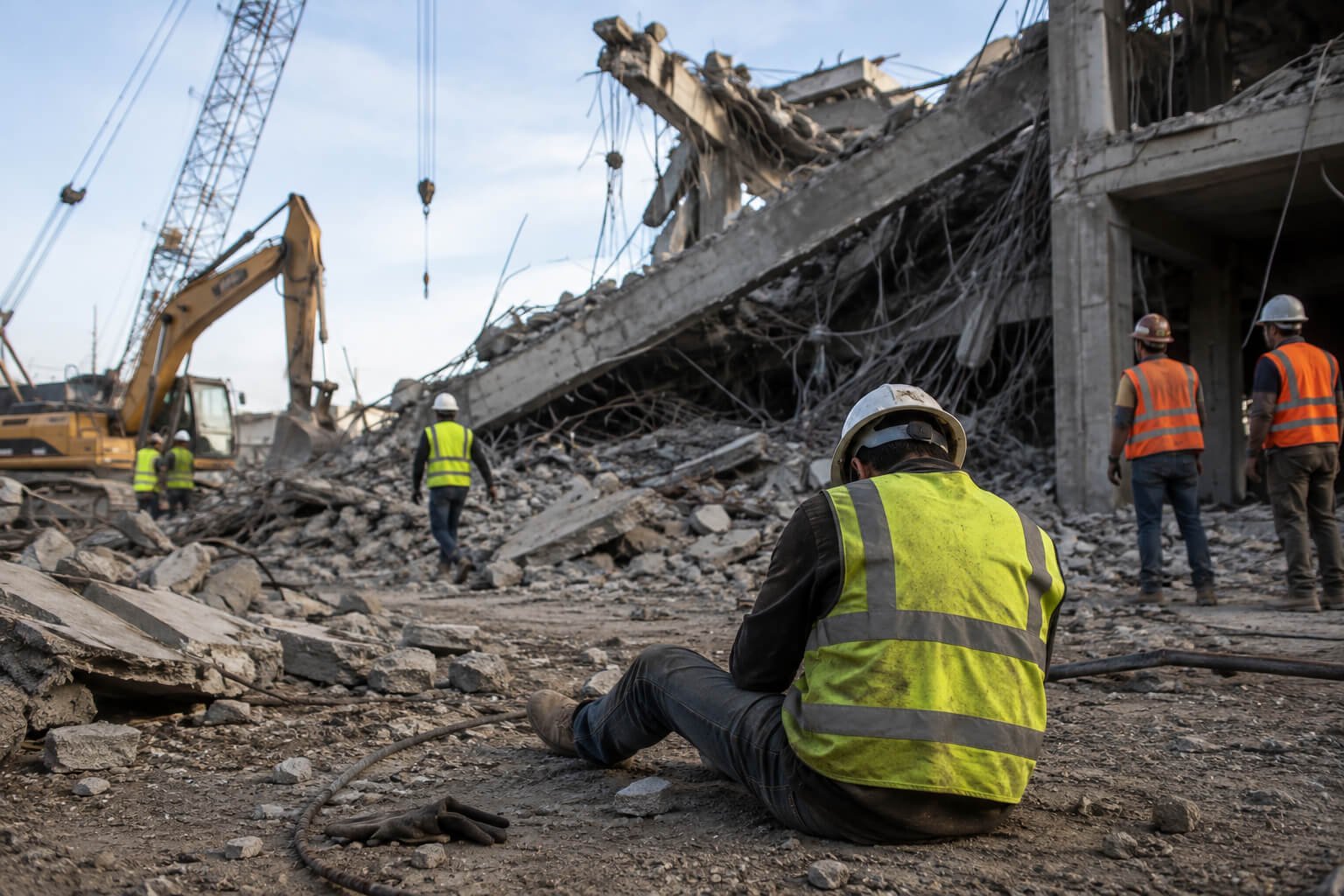

A demolition site is not the same hazard profile as a new build construction site. Instead of putting a structure together in a planned sequence, crews are taking one apart, often without full knowledge of how it was originally built, what’s inside the walls, or how the remaining structure will behave once key supports are removed. When that process goes wrong, workers and bystanders can be struck by falling debris, trapped under a collapsing floor or wall, or exposed to utility hazards that were never properly identified beforehand. Anyone searching for a Texas demolition accident lawyer after an incident like this is usually dealing with a claim that involves more moving parts, and more potentially responsible parties, than a standard job site injury. This is a particularly relevant issue in the Houston area, given the volume of active construction, renovation, and industrial demolition projects underway across the region at any given time.
Herrera PLLC represents workers and bystanders injured in demolition and structural collapse incidents throughout the Houston area and across Texas, including on the Construction & Industrial Accidents page of our practice. Below is an overview of how demolition work is regulated, what typically causes a collapse, and what an injured worker or family should know about building a claim.
OSHA’s Demolition Standard and the Pre-Demolition Engineering Survey Requirement
Demolition work falls under its own federal safety framework: OSHA’s Demolition standard, found at 29 CFR Part 1926, Subpart T. This is a separate set of rules from the general construction standards that apply to new build projects, and it reflects the fact that taking a structure apart carries different risks than putting one up.
A central requirement under Subpart T is the pre-demolition engineering survey. Before demolition begins, a competent person is required to survey the structure and evaluate the condition of the framing, floors, and walls, along with the possibility of unplanned collapse of any portion of the structure. That survey is meant to identify weakened supports, unstable sections, and other conditions that could make the demolition sequence dangerous if not accounted for in the plan. When a survey is skipped, rushed, or performed by someone who was not actually qualified to assess the structure, the demolition proceeds without the information the standard was designed to require, and that gap can become directly relevant to a later injury claim.
Common Causes: Unsafe Sequencing, Unsupported Structures, and Utility Hazards
Several recurring factors tend to show up in demolition and structural collapse cases. Unsafe sequencing is one of the most common. Demolition is supposed to proceed in a planned order, generally from the top of the structure down, with supporting elements removed only after the loads they carry have been addressed. When crews deviate from that sequence, whether to save time or because the plan was never adequately developed, load-bearing walls or floors can lose support before workers below or nearby are clear of the area.
Unsupported structures present a related risk. A wall or floor section that appears stable can be carrying load in ways that are not visible without an engineering assessment, and removing an adjacent element can trigger a collapse that was not anticipated by the crew on the ground. Utility hazards add another layer of risk unique to demolition. Gas lines, electrical conduits, and water lines are frequently embedded in structures scheduled for demolition, and failing to properly locate, shut off, or protect these lines before work begins can lead to explosions, electrocutions, or flooding that contributes to a structural failure.
Structural Collapse During Renovation or Partial Demolition
Not every collapse happens on a full teardown. Partial demolition and renovation projects, where only certain walls, floors, or sections of a building are removed while the rest of the structure remains occupied or in use, carry their own distinct risks. Removing a bearing wall on one floor of a building can affect the structural integrity of floors above or below it, particularly in older buildings where the original load path was never fully documented.
These projects can be more dangerous in some respects than a full demolition because the remaining structure is expected to keep standing under new load conditions that were not part of its original design. When a renovation or partial demolition project does not account for how removing one element will affect the rest of the building, the result can be a collapse that injures workers performing the renovation, workers in unrelated parts of the building, or members of the public nearby.
Engineering and Inspection Records as Evidence After a Collapse
After a demolition accident, the pre-demolition engineering survey, if one was performed, becomes one of the most important documents in evaluating what happened. It shows what a qualified person identified about the structure’s condition before work began, and it can be compared against how the demolition was actually sequenced and executed. If a survey was performed but its findings were ignored, that gap between what was known and what was done can be significant.
Other records that matter include the demolition plan itself, inspection reports from any point during the project, utility disconnection records, and daily job site logs. Having spent over a decade managing high-exposure casualty and property claims from the insurance carrier’s side, Jonathan Herrera understands how quickly this kind of documentation can be requested, reviewed, or in some cases lost track of after an incident, which is part of why early investigation matters in these cases.
Multiple Contractors and Subcontractor Liability on a Demolition Site
Demolition projects frequently involve a general contractor, a specialized demolition subcontractor, an engineering firm responsible for the pre-demolition survey, and separate trades handling utility disconnection. When a collapse occurs, more than one of these parties may share responsibility, depending on whether the survey was adequate, whether the demolition plan was followed, and whether each party met its own obligations under the plan and under OSHA’s requirements.
Depending on the facts, it may support claims against the demolition contractor, the general contractor responsible for coordinating the project, the engineering firm if one was retained but its findings were disregarded, or the property owner depending on their level of involvement and control over the project. Whether an injured worker can pursue a direct claim against their own employer, rather than against a third party on the site, often depends on the employer’s workers’ compensation status. Texas does not require most private employers to carry workers’ compensation coverage, and that status can affect which parties an injured worker is able to pursue directly.
Under Texas’s modified comparative negligence rule, an injured worker can still recover damages even if they are partially at fault for the incident, as long as they are not found more than 50 percent responsible, though any compensation is reduced by their assigned percentage of fault. In a multi-contractor demolition site, sorting out how fault is distributed among the parties involved is often one of the more involved parts of building a claim, and it typically requires reviewing contracts, subcontractor agreements, and each party’s actual role on site.
Building a Claim When Safety Surveys Were Skipped or Ignored
When a pre-demolition engineering survey was never performed, or when its findings were not incorporated into the actual demolition plan, that omission can be an important part of a broader liability case. Building this kind of claim generally starts with identifying every party involved in the demolition, requesting the engineering survey and demolition plan if they exist, and documenting the actual sequence of work through witness accounts and any available site records.
In Texas, most personal injury claims, including those arising from a demolition accident, are subject to a two-year statute of limitations running from the date of injury, and two years from the date of death in a wrongful death case. In cases involving a fatality, families may also have options under Texas’s wrongful death framework, which our Wrongful Death practice addresses in more detail.
Frequently Asked Questions
What does OSHA require before a demolition begins?
Under OSHA’s Demolition standard, 29 CFR Part 1926, Subpart T, a competent person is required to conduct an engineering survey of the structure before demolition begins, evaluating the condition of the framing and the possibility of unplanned collapse, so that the demolition can be planned around the structure’s actual condition.
What usually causes a structural collapse during demolition?
Structural collapses during demolition are commonly linked to unsafe sequencing, removal of load-bearing elements without properly accounting for the loads they carry, and utility hazards such as undetected gas or electrical lines. The specific cause depends heavily on the facts of each site.
What evidence matters after a demolition accident?
The pre-demolition engineering survey, the demolition plan, inspection reports, utility disconnection records, and job site logs are typically the most important documents. Comparing what these records show against how the work was actually carried out often reveals whether known risks were properly addressed.
Who can be liable on a multi-contractor demolition site?
Depending on the facts, liability may extend to the demolition subcontractor, the general contractor, an engineering firm if its survey findings were disregarded, or the property owner. Texas’s modified comparative negligence rule allows an injured worker to recover damages even with some shared fault, as long as they are not found more than 50 percent responsible.
How long do I have to file a claim after a demolition accident?
Most personal injury claims in Texas, including demolition accident claims, are subject to a two-year statute of limitations from the date of injury. Deadlines can vary depending on the parties involved and the specific facts, so it is worth confirming your timeline early.
This article is for general informational purposes only and does not constitute legal advice, and the facts of any specific demolition or collapse incident can change how Texas law applies. If you or a family member was injured in a demolition accident or structural collapse on a Texas job site, Herrera PLLC can review what happened and explain what options may be available. Call 832-891-3210 or contact us for a free, confidential consultation.
Jonathan Herrera, J.D. is a Houston-based attorney and the founder of Herrera PLLC, representing workers, families, and businesses across Texas in serious injury, insurance law, and civil litigation matters. Before practicing law, he spent over a decade as a licensed insurance adjuster managing high-exposure casualty and property claims, including construction and industrial incidents, for carriers and third-party administrators across multiple states, and he later practiced insurance defense before founding Herrera PLLC. He is a member of the Texas Trial Lawyers Association and the American Association for Justice.