
Non-Domiciled CDL Rules Are Tightening: What It Means for Texas Trucking Accident Claims

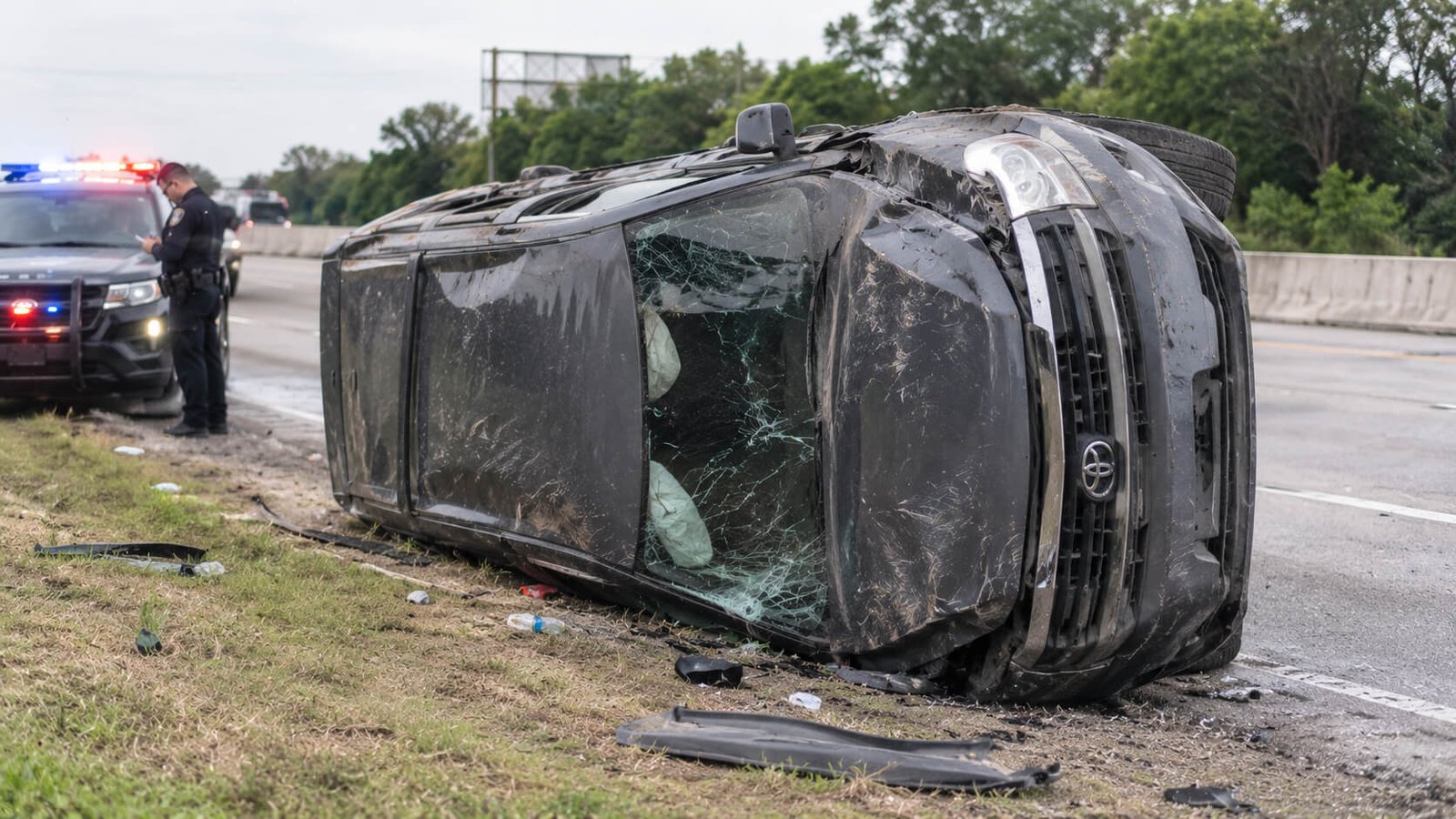
After a serious crash involving an 18-wheeler on I-10, I-45, or Highway 288, most people focus on the injuries and the truck. Far fewer ask the question that can matter just as much: was the person behind the wheel properly licensed, and did the trucking company verify it before putting that driver on the road?
A federal rule that took effect on March 16, 2026 has put one slice of that question in the spotlight. It narrows who can hold a non-domiciled commercial driver’s license, or CDL, and it changes what states must verify before issuing one. I spent over a decade as an insurance adjuster handling high-exposure casualty claims, including trucking incidents, and I later practiced insurance defense. I know how carriers document driver qualifications internally and how those records are reviewed after a crash. This article explains the rule, why it matters to injury claims, and how a carrier’s hiring and verification practices can come into play. It is general information, not advice about any particular crash.
What Changed Under the March 2026 Non-Domiciled CDL Final Rule
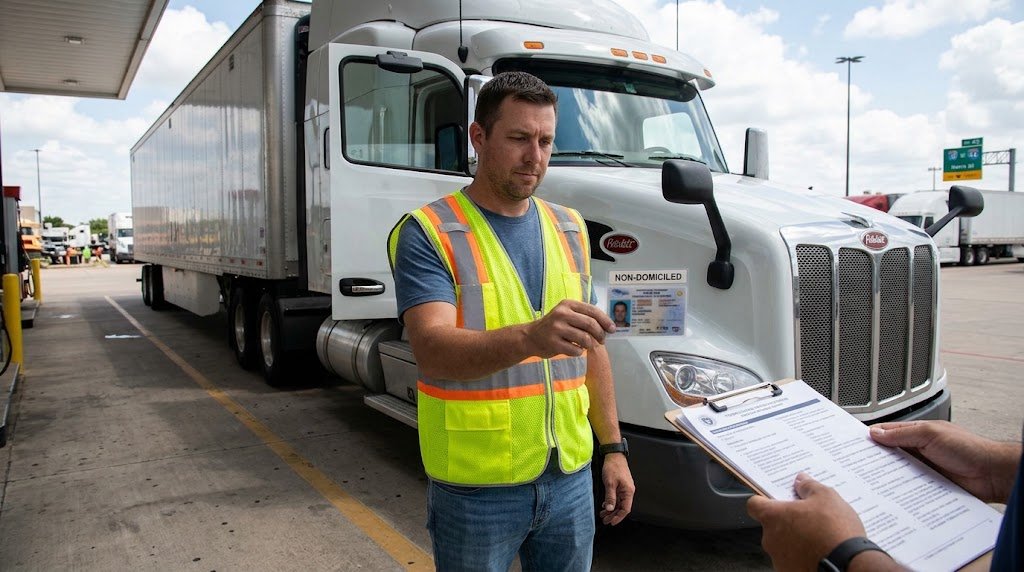
A non-domiciled CDL is a commercial license issued by a state to a driver who lives outside the United States or is otherwise domiciled in a foreign jurisdiction. U.S. citizens and lawful permanent residents domiciled in a state are eligible for a standard CDL if they meet the other requirements. The non-domiciled category is different, and it is the category the new rule tightened.
The Federal Motor Carrier Safety Administration (FMCSA) published the final rule on February 13, 2026, at 91 Federal Register 7044, and it took effect on March 16, 2026. It replaced an emergency interim rule issued in September 2025. According to FMCSA’s published FAQs, the key changes include:
- Narrower eligibility. Only applicants in certain employment-based nonimmigrant categories can obtain a non-domiciled commercial learner’s permit or CDL.
- Stricter document verification. States must verify “evidence of lawful immigration status,” a term defined in 49 CFR § 383.5, and must query the federal SAVE system. FMCSA’s guidance says a Form I-797C receipt notice cannot be relied on as evidence of status, and Employment Authorization Documents are no longer accepted.
- One-year maximum. The credential’s validity cannot exceed the Admit Until date or expiration date on the applicant’s I-94, or one year, whichever is sooner.
- Visible labeling. The word “non-domiciled” must appear conspicuously on the face of the credential.
- Downgrades. If a state learns from a federal agency that a holder no longer has qualifying status, the state must complete a downgrade within 30 days.
- In-person transactions. Reinstatements, duplicates, and similar transactions require the driver to appear in person.
The rule does not automatically cancel every existing credential. FMCSA’s guidance says a state is not required to revoke a credential that was properly issued under the rules in effect at the time, but any later renewal, transfer, upgrade, or duplicate must meet the new standards. FMCSA also strongly encourages states to audit non-domiciled credentials and revoke those that were not issued in compliance, including licenses issued for longer than the driver’s lawful presence. Trade press reports that Texas DPS has revoked more than 6,400 non-domiciled credentials under a corrective action plan required by FMCSA. The federal framework is at 49 CFR § 383.73, and the documentation rules are at 49 CFR § 383.71.
The final rule is also being challenged in federal court. A panel of the U.S. Court of Appeals for the D.C. Circuit declined to stay it, so it has remained in effect while the case proceeds, but a court ruling could change the picture. Because the rule and its guidance can change, FMCSA’s website is the best place to confirm the current status.
Which Visa Categories Now Qualify
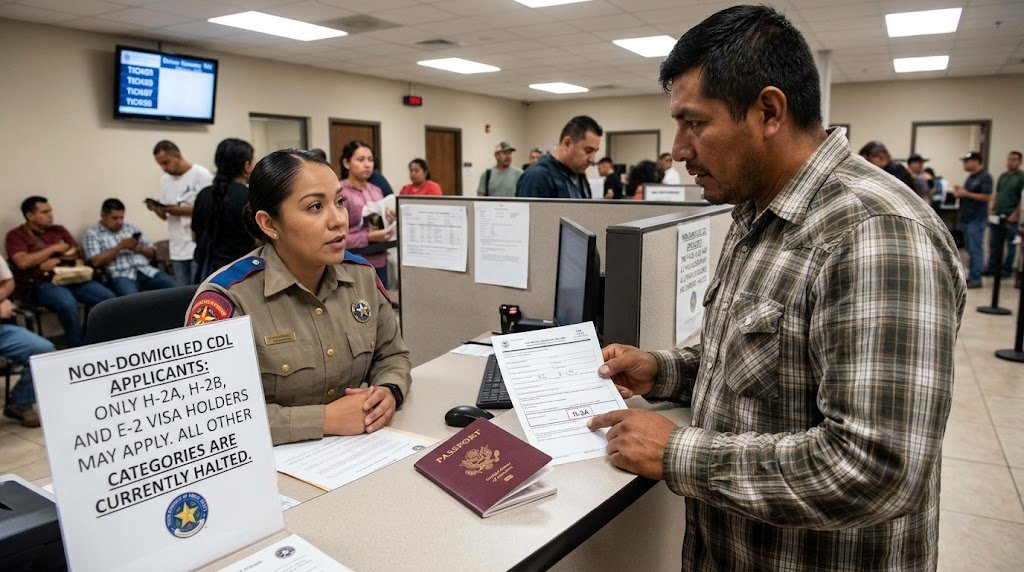
Under FMCSA’s FAQs, only drivers in lawful status in one of three categories can obtain a non-domiciled commercial learner’s permit or CDL:
- H-2A: temporary agricultural workers
- H-2B: temporary non-agricultural workers
- E-2: treaty investors
FMCSA states that no other immigration statuses are eligible. Texas DPS’s notice lists asylees, refugees, and DACA recipients among the groups affected by its halt in issuance.
Texas’s rollout has been staged. DPS halted non-domiciled issuance on September 29, 2025. As of DPS’s June 1, 2026 announcement, FMCSA had approved resuming issuance for H-2A applicants, and DPS said issuance for H-2B and E-2 applicants would be announced later. Applicants must appear in person with an unexpired foreign passport and a Form I-94 or I-797A showing the qualifying status. DPS describes these requirements on its announcement page and its non-domiciled CDL page, which show the current status. The complete federal guidance is in FMCSA’s final rule FAQs.
Nothing about a driver’s visa category says anything about how safely that person drives. The point for an injury claim is narrower: whether the credential was issued and maintained in compliance with the rules, and whether the carrier did its own required checking.
Why This Rule Exists and What Problem It Was Meant to Solve
The rule’s formal title is “Restoring Integrity to the Issuance of Non-Domiciled Commercial Drivers’ Licenses.” FMCSA’s guidance describes the problem in regulatory terms. States remain responsible for making sure only eligible individuals receive these credentials, and FMCSA’s FAQs state that its 2025 annual program review findings of state noncompliance on non-domiciled eligibility were not eliminated by the final rule. The guidance also describes licenses issued with expiration dates that outlasted the driver’s lawful presence, which FMCSA treats as noncompliant at the time of issuance.
In plain terms, the concern was verification: whether states were checking documents carefully and issuing credentials that matched the holder’s authorized stay. DPS has said it mailed notices to affected license holders in December 2025.
That is why the rule is relevant to injured people. Commercial driving is a safety-sensitive activity, and federal regulations place licensing and verification duties on both the state that issues the credential and the motor carrier that puts the driver on the road.
How an Improperly Issued CDL Becomes Evidence in a Crash Claim
It is worth being precise here, because this is easy to overstate. A licensing irregularity does not by itself prove that a crash was the carrier’s fault. A credential issued properly under the rules in effect at the time, and still unexpired, is not a violation. And even a defective credential does not establish causation unless the evidence connects the problem to what happened on the road.
What a licensing issue can do is open a line of inquiry. Under 49 CFR § 391.11, a motor carrier shall not require or permit a person to drive a commercial motor vehicle unless that person is qualified. A qualified driver must, among other things, hold a currently valid commercial driver’s license issued by only one state or jurisdiction, be able to read and speak English sufficiently to converse with the public, understand traffic signs, and make entries on reports and records, and not be disqualified under federal rules.
If the evidence shows that a driver’s credential was invalid, expired, mislabeled, or issued outside the rules, that may bear on whether the carrier met its own obligations. It may also bear on questions about the driver’s training, experience, and compliance with other regulations. Related issues, such as the driver’s language ability, are discussed on our page about truck driver English proficiency in Texas crash claims.
As an adjuster, I saw how often an apparently narrow paperwork problem turned out to be a symptom of a broader pattern in how a company screens and supervises its drivers. Whether that is true in any particular case depends entirely on the evidence.
Investigating a Carrier’s Driver Qualification and Hiring Practices
Federal regulations require motor carriers to build and keep a paper trail on each driver. That paper trail is where licensing questions are tested.
Under 49 CFR § 391.51, each carrier must maintain a driver qualification file for each driver it employs. The file must include the driver’s employment application, the motor vehicle record obtained from the licensing authority, the road test certificate or an accepted equivalent, the annual driving record inquiry and review note, and the medical examiner’s certificate. The file must be kept for as long as the driver is employed and for three years afterward, though certain items may be removed three years after execution.
Under 49 CFR § 391.23, a carrier must also:
- request the driver’s motor vehicle record covering the prior three years within 30 days of the date employment begins, and place a copy in the file;
- investigate the driver’s safety performance history with DOT-regulated employers during the preceding three years, or document good faith efforts to do so;
- For drivers who need a CDL, use the CDLIS motor vehicle record from the current licensing state to verify and document items such as the driver’s self-certified type of operation and medical certification status before allowing the driver to operate a commercial motor vehicle.
When a crash raises licensing questions, these records can show what the carrier actually asked, what it received, when it received it, and what it did with the answers. Gaps, late entries, or missing documents can matter. Other regulations may also be in play, including hours-of-service rules, which we discuss on our page about driver fatigue and hours of service, and broader federal trucking regulations in Houston accident claims.
Evidence like this can disappear. What trucking companies do in the days after a crash is a subject we cover in what trucking companies do after a Texas truck crash. For a broader look at how these cases move, see inside a truck accident claim.
Building a Negligent Hiring or Entrustment Claim
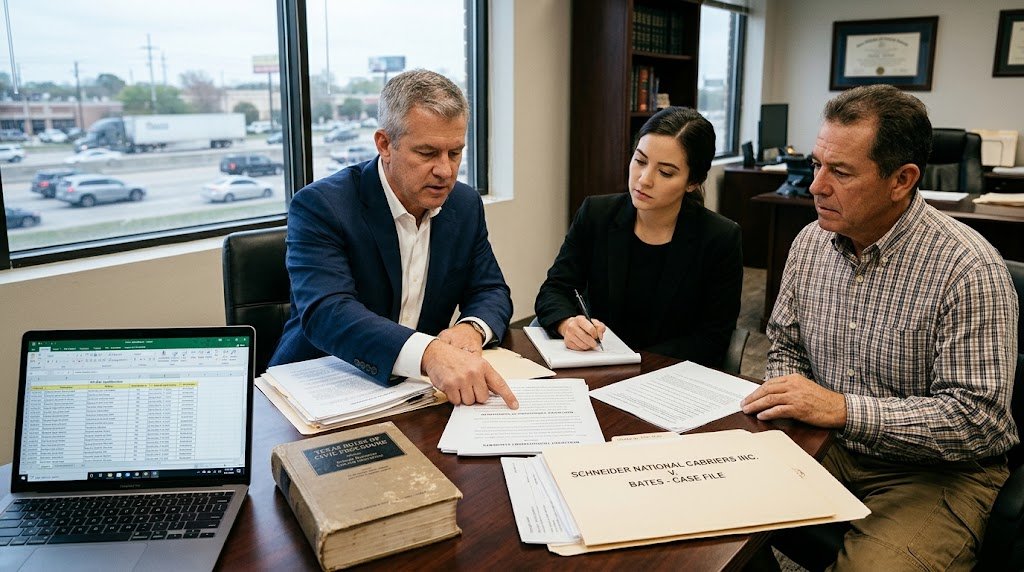
A claim against a trucking company can rest on more than what the driver did in the moment of the crash. A negligent hiring claim looks at the carrier’s own conduct: how it screened, qualified, and supervised the driver it chose. A negligent entrustment theory looks at whether the carrier let someone operate its vehicle when it knew or should have known there was a problem. Our page on negligent hiring in trucking cases explains how these theories fit into a trucking claim.
Texas courts describe negligent entrustment as having several parts: the vehicle was entrusted to a driver who was unlicensed, incompetent, or reckless; the owner knew or should have known of that; the driver was negligent on the occasion in question; and that negligence proximately caused the injury. The Texas Supreme Court discussed these requirements in Schneider National Carriers, Inc. v. Bates. Negligent hiring similarly asks whether the employer failed to use ordinary care in hiring a driver who posed an unreasonable risk of harm, and whether that failure contributed to the injury. In both theories, the evidence has to connect the problem to the crash.
In general terms, an investigation can involve:
- the driver qualification file and the motor vehicle record the carrier obtained;
- the credential itself, including its issue date, expiration date, and labeling;
- the carrier’s hiring policies and any records of who reviewed the driver’s documents;
- the driver’s training, road test, and prior safety history;
- crash data, electronic logs, and inspection records;
- and, where relevant, evidence of impairment, which is addressed on our page about truck driver DUI and DWI.
Texas also applies deadlines and fault rules that can affect these cases. In most personal injury cases, Texas imposes a two-year statute of limitations from the date of injury, and two years from the date of death in wrongful death cases. Under Texas’s modified comparative negligence rule, an injured person can recover damages even if partly at fault, provided that person is not more than 50% responsible, and any recovery is reduced by the person’s percentage of fault. Claims against government entities require written notice within six months. Because trucking carriers and their insurers often move quickly, understanding these rules early can matter. For practical first steps after a wreck, see what to do after a trucking accident in Houston.
Frequently Asked Questions
What is a non-domiciled CDL?
It is a commercial driver’s license or learner’s permit issued by a state to a driver who is domiciled in a foreign jurisdiction. Under the 2026 federal rule, the word “non-domiciled” must appear conspicuously on the face of the credential.
What changed under the 2026 federal rule?
The final rule, effective March 16, 2026, limits eligibility to specific employment-based visa categories, requires stricter document and SAVE verification, caps validity at one year or the end of authorized stay, whichever is sooner, and requires states to downgrade credentials when status is lost. The rule is being challenged in federal court, so its status can change.
Which visa holders can still get a non-domiciled CDL?
According to FMCSA, only H-2A, H-2B, and E-2 status holders. As of DPS’s June 1, 2026 announcement, Texas had resumed issuance for H-2A applicants, with H-2B and E-2 to be announced later. The DPS website shows the current status.
How does a licensing violation affect my accident claim?
It may be relevant evidence about whether the carrier met its duties to qualify and supervise the driver, but it does not by itself establish liability or causation. The outcome depends on the facts, and an attorney can evaluate the evidence in your situation.
What is negligent entrustment in Texas?
It is a theory that a vehicle owner or carrier allowed someone to operate a vehicle despite knowing, or having reason to know, that the driver was unlicensed, incompetent, or reckless. The plaintiff must also show the driver was negligent on the occasion in question and that the negligence caused the injury.
This article is for general educational purposes and is not legal advice or a substitute for advice about a specific situation. Truck accident claims can depend on driver qualifications, licensing records, driving logs, carrier documentation, and the circumstances of the crash. Individuals injured in commercial truck accidents are welcome to call Herrera PLLC at 832-891-3210, email jherrera@jh-lawpllc.com, or reach out through the contact page to schedule a free, confidential consultation.
Jonathan Herrera, J.D.
Jonathan Herrera is the founder of Herrera PLLC in Houston, Texas. He spent more than a decade working as an insurance adjuster, founded JH Claims LLC, and practiced insurance defense at Rymer, Echols, and Nelson-Archer before opening his own firm representing injury victims, policyholders, and businesses.