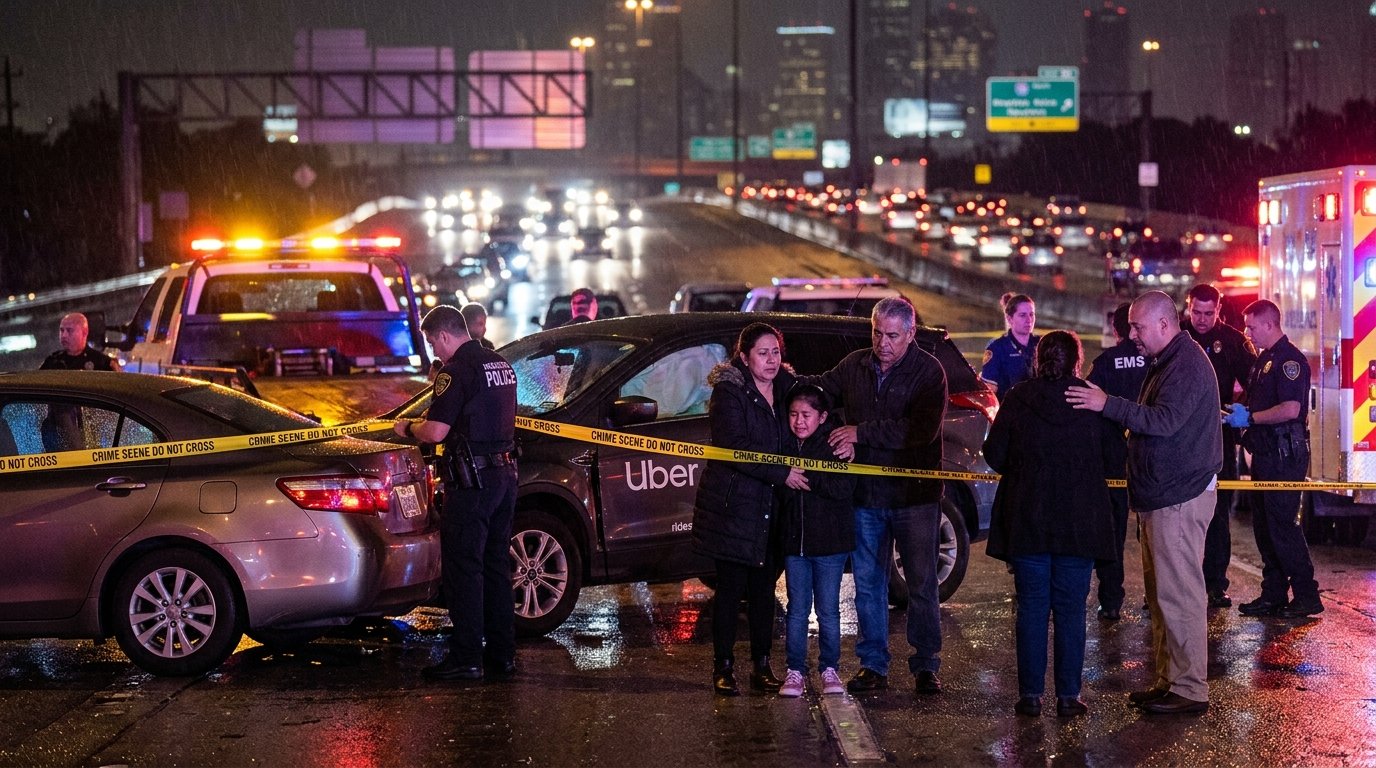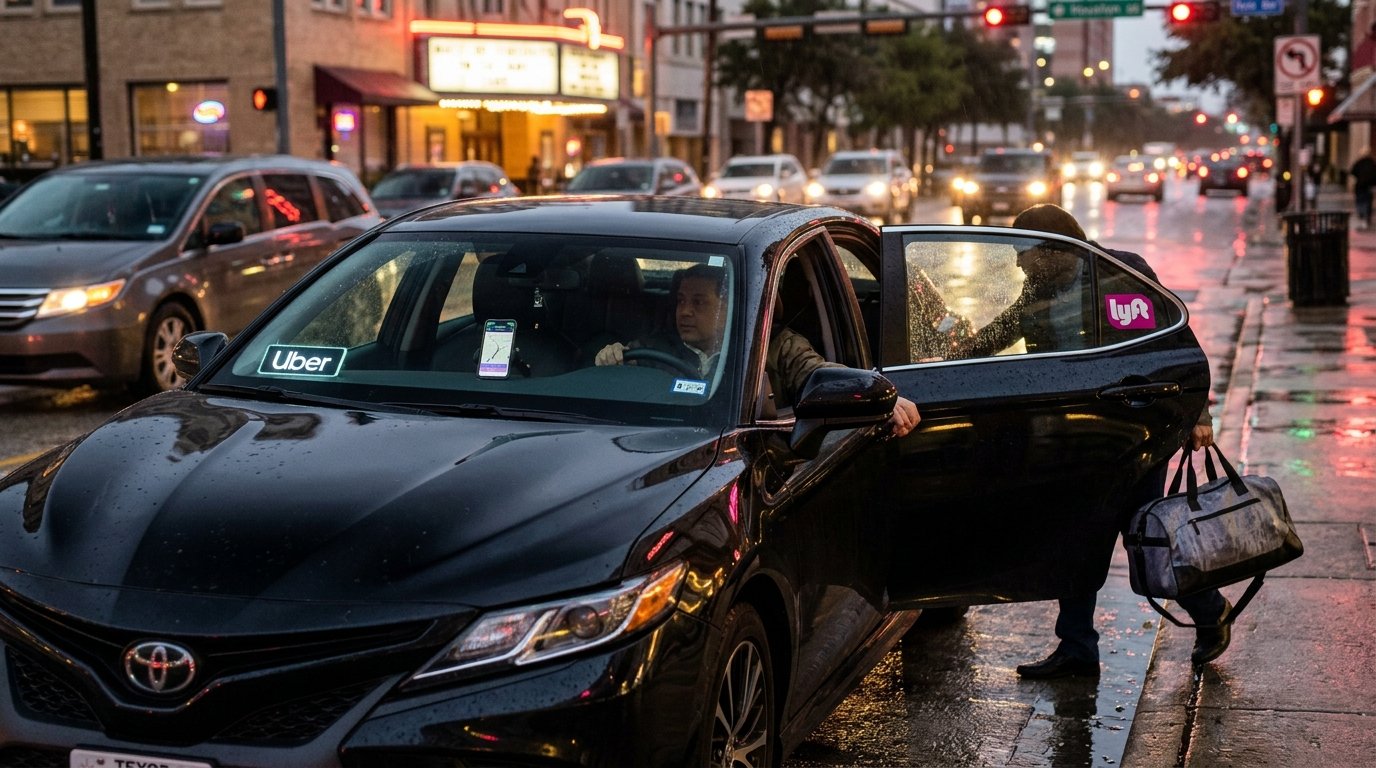

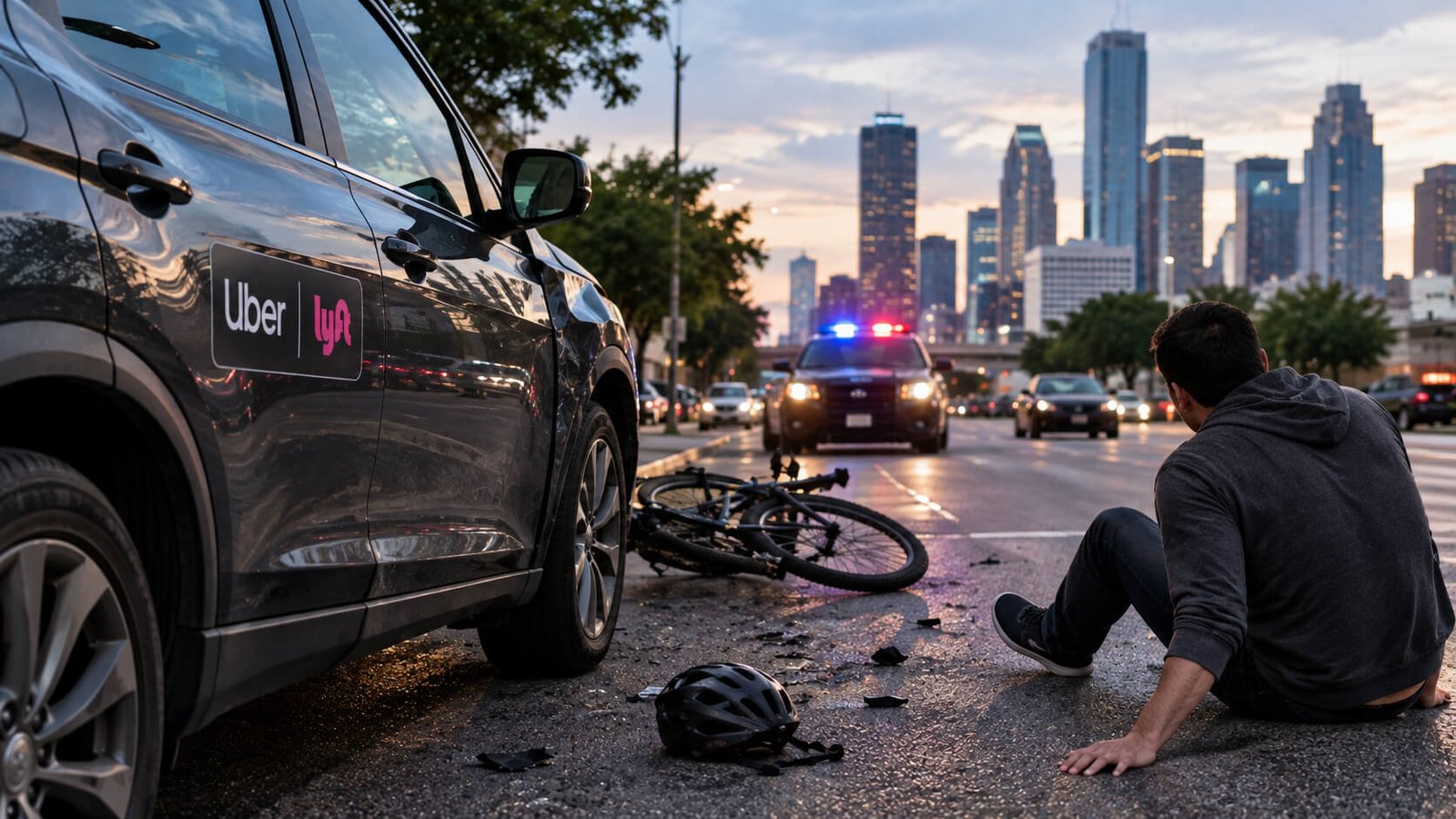

Most rideshare accident content online is written for the passenger sitting in the back seat or the driver logged into the app. But a large share of rideshare crashes involve someone who was never in the vehicle at all: another driver, a cyclist, or a pedestrian struck by an Uber or Lyft driver. These third-party claims work differently, largely because which insurance policy applies depends on exactly what the rideshare driver was doing on the app at the moment of the crash.
Herrera PLLC represents drivers, cyclists, and pedestrians hit by an Uber or Lyft driver throughout Houston and across Texas.
Why Third-Party Rideshare Claims Work Differently From Passenger Claims
A rideshare passenger is, by definition, inside the vehicle when a crash happens, and their claim usually centers on the coverage available during the ride itself. A third-party claimant, someone the rideshare driver hit while driving another vehicle, riding a bike, or walking, has to first figure out whether the rideshare driver was working for the app at all at the time of the crash, and if so, which stage of that work they were in.
This matters because Texas law does not treat a rideshare driver’s insurance coverage as a single, constant policy. Coverage changes depending on whether the driver is logged into the app, waiting for a fare, en route to a pickup, or actively transporting a rider. A third-party victim’s claim often depends on correctly identifying which of these periods applied when the crash occurred, since that determines which insurer, and how much coverage, is actually available.
Which of the Three Insurance Periods Applies to Your Crash
Texas Insurance Code Chapter 1954 sets out how rideshare driver insurance works, and it generally breaks down into three periods. The first is when the driver’s app is off entirely. If a driver caused a crash while not logged into the Uber or Lyft app, the rideshare company’s insurance generally does not apply, and the claim proceeds against the driver’s personal auto insurance like any other car accident.
The second period is when the driver is logged into the app and available to accept a ride, but has not yet accepted one. Under Section 1954.052 of the Texas Insurance Code, the driver’s insurance policy during this period must provide at least $50,000 for bodily injury or death per person, $100,000 per incident, and $25,000 for property damage, along with uninsured or underinsured motorist coverage and personal injury protection coverage where otherwise required under Texas law.
The third period covers the time from when a driver accepts a ride request through the end of that ride, including the drive to pick up the passenger. Under Section 1954.053, coverage during this period must provide a combined liability limit of at least $1 million for death, bodily injury, and property damage per incident, substantially more than what applies when the driver is simply logged in and waiting.
Filing a Claim When the App Was On but No Ride Was Accepted
If a rideshare driver caused a crash while logged into the app but before accepting a ride request, the applicable coverage limits under Section 1954.052 are considerably lower than what applies during an active ride. This period sometimes creates a coverage gap in practice: a driver’s personal auto policy may exclude coverage for any period the vehicle was being used for rideshare purposes, while the rideshare company’s own policy applies only the lower Section 1954.052 limits during this waiting period.
For a third-party claimant with serious injuries, this gap can mean the available coverage is significantly less than what would apply if the driver had already accepted a ride. Establishing exactly when the driver logged into the app relative to the time of the crash, generally through the rideshare company’s own trip and login data, is often a key part of properly valuing this type of claim.
Filing a Claim When a Ride Was Actively in Progress
When a rideshare driver has accepted a ride request, whether en route to the pickup or with a passenger already in the vehicle, the higher coverage limits under Section 1954.053 generally apply. This period offers third-party claimants access to a combined $1 million in liability coverage, which is often significant in cases involving serious injury.
Confirming that a ride was actually active at the time of the crash typically requires the rideshare company’s trip records, which show the exact timestamps of ride acceptance, pickup, and drop-off. These records are held by the rideshare company itself and are not something a claimant can obtain independently, which is one reason early legal involvement can matter in these cases.
Identifying the Right Insurer to Notify First
Because coverage depends on which period applied at the time of the crash, a third-party claimant may need to deal with more than one insurer before the right one is identified. This can include the rideshare driver’s personal auto insurer, the rideshare company’s own commercial policy, or both, depending on the circumstances. Notifying the wrong insurer first, or accepting an early explanation that “coverage doesn’t apply” without verifying which period governed the crash, can delay a legitimate claim.
Rideshare companies typically maintain records showing whether a driver’s app was on, whether a ride had been accepted, and the exact timing of the trip. Requesting this information promptly, and directing the claim to the correct insurer based on what it shows, is often necessary to avoid unnecessary delay.
Common Delay Tactics Rideshare Insurers Use Against Third-Party Claims
Insurance companies handling rideshare-related claims sometimes use the complexity of the multi-tiered coverage structure to their advantage. This can include initially denying that the driver was logged into the app at the time of the crash, disputing whether a ride had actually been accepted in order to apply the lower Section 1954.052 limits instead of the higher Section 1954.053 limits, or directing a third-party claimant back and forth between the driver’s personal insurer and the rideshare company’s insurer without resolving which one is actually responsible.
Having spent over a decade evaluating high-exposure claims from the insurance carrier’s side before becoming an attorney, Jonathan Herrera has seen how these layered coverage disputes can be used to slow down or undervalue a legitimate claim. A third-party claimant who was never inside the rideshare vehicle, and who may not have access to the driver’s app activity or trip data on their own, is often at a particular disadvantage without help identifying which coverage period actually applies. Most personal injury claims arising from a rideshare-related crash in Texas are subject to a two-year statute of limitations. Car accident cases at Herrera PLLC are handled on a contingency fee basis, meaning there are no upfront attorney’s fees and no obligation to pay unless compensation is recovered.
Frequently Asked Questions
What if I was hit by an Uber driver but was not a passenger?
You can still pursue a claim as a third party. The insurance available depends on what the rideshare driver was doing on the app at the time of the crash, so identifying the correct coverage period is an important first step.
Which insurance period applies to my crash?
Texas Insurance Code Chapter 1954 sets out three general periods: the app being off entirely, the driver being logged in but without an accepted ride, and an active prearranged ride from acceptance through drop-off. Each period carries different coverage requirements and limits.
Does it matter if the driver had a ride accepted?
Yes. Under Section 1954.053, a driver with an accepted ride must carry a combined $1 million in liability coverage, compared to the lower limits of $50,000, $100,000, and $25,000 required under Section 1954.052 when a driver is logged in but has not yet accepted a ride.
Who do I notify first about my claim?
This depends on which insurance period applied at the time of the crash, which may involve the driver’s personal auto insurer, the rideshare company’s insurer, or both. Rideshare trip and login records can help clarify which insurer is actually responsible.
Why do rideshare insurers delay third-party claims?
Insurers sometimes dispute whether the driver was logged into the app or whether a ride had been accepted, since this affects which coverage limits apply. This can result in a third-party claimant being directed between multiple insurers before the claim is properly addressed.
This article is for general informational purposes only and does not constitute legal advice, and the facts of any specific accident can change how Texas law applies. If you were hit by an Uber or Lyft driver in Texas, Herrera PLLC offers a free, confidential consultation with no obligation. Call 832-891-3210 or contact us online to discuss what happened.
Jonathan Herrera, J.D. is a Houston-based attorney and the founder of Herrera PLLC, representing individuals and families across Texas in serious injury, insurance law, and civil litigation matters. Before practicing law, he spent over a decade as a licensed insurance adjuster managing high-exposure casualty and property claims for carriers and third-party administrators across multiple states, and he later practiced insurance defense before founding Herrera PLLC. He is a member of the Texas Trial Lawyers Association and the American Association for Justice.