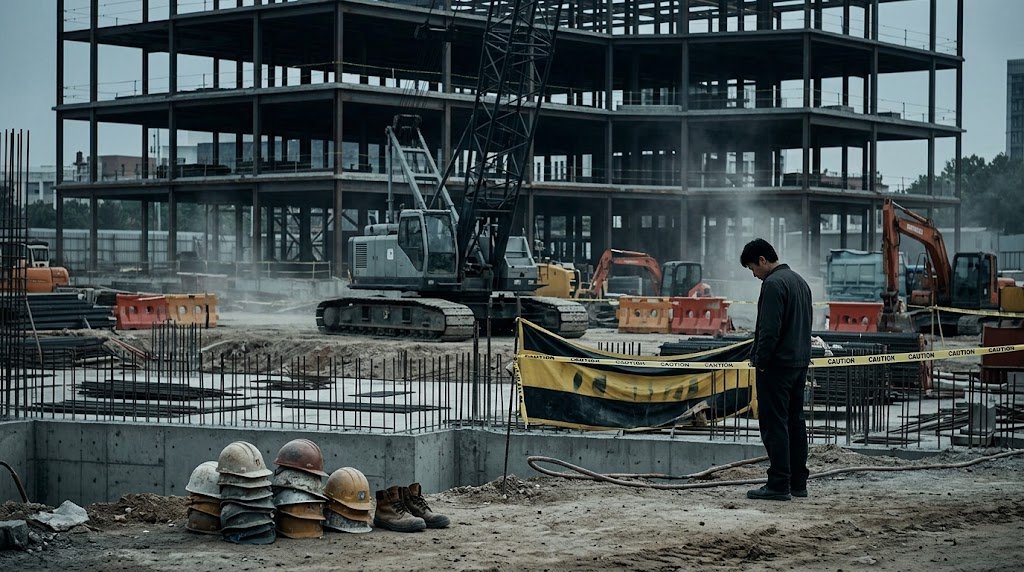


When a Workplace Death in Texas Is More Than a Workers’ Comp Claim: Wrongful Death Rights for Families

When a worker is killed on a Houston construction site, an oilfield, or a petrochemical facility, the first thing most families hear about is workers’ compensation. What they often don’t hear, at least not clearly, is that workers’ compensation may be only one piece of a much larger legal picture. Whether a family has the right to sue the employer directly, and what they would need to prove to do so, depends entirely on a distinction most people have never heard of: whether the employer was a workers’ compensation subscriber.
This single fact changes everything about what a family’s legal options look like. It is one of the more consequential and least understood aspects of Texas workplace death law, and it deserves a clear explanation.
Texas Is the Only State Where Employers Can Opt Out of Workers’ Compensation
Texas is the only state in the country where private employers can legally choose not to participate in the workers’ compensation system. An employer that carries workers’ compensation insurance is called a subscriber. An employer that does not is called a non-subscriber. This single choice, made by the employer before any accident occurs, fundamentally determines what legal rights a family has if a worker is killed on the job.
Jonathan Herrera spent over a decade evaluating high-exposure casualty claims as a licensed insurance adjuster, including industrial and construction-related claims, before becoming an attorney. That background is directly relevant to workplace death cases, where understanding how an employer’s insurance structure works often determines the legal path available to the family.
If the Employer Is a Workers’ Compensation Subscriber
When an employer subscribes to workers’ compensation, Texas Labor Code Section 408.001 establishes that workers’ compensation benefits are the exclusive remedy for the death of an employee. This means that, in the ordinary course, a family cannot sue a subscribing employer directly for negligence. The trade-off built into the system is that the family receives workers’ compensation death benefits regardless of fault, but in exchange, the employer is shielded from a standard negligence lawsuit.
There is one significant exception, and it is narrow. Under Section 408.001(b), if the employee’s death was caused by an intentional act or omission of the employer, or by the employer’s gross negligence, the surviving spouse or heirs of the body of the deceased employee may bring a claim for exemplary damages against the employer.
Two details about this exception matter enormously and are frequently misunderstood.
First, only exemplary damages are available, not actual damages. This is a critical distinction. When a family successfully proves gross negligence against a subscribing employer, Texas courts have held that compensatory damages, such as lost earnings, lost companionship, and mental anguish, are not separately recoverable in that claim. Only exemplary damages, intended to punish and deter, may be awarded. Those exemplary damages are still subject to the statutory caps under Chapter 41 of the Texas Civil Practice and Remedies Code.
This cap interacts with the exemplary-damages-only structure of the claim in a way worth understanding. The Chapter 41 cap formula limits exemplary damages to the greater of $200,000 or two times economic damages plus up to $750,000 in noneconomic damages. Because a Section 408.001(b) claim against a subscriber typically does not include an award of economic or noneconomic damages within that specific claim, there is often nothing for the multiplier portion of the formula to apply against. In practice, this frequently means the exemplary damages award in a pure gross negligence claim against a subscribing employer defaults to the $200,000 floor. This is one of the most important reasons the third-party claims discussed later in this guide matter so much in subscriber cases.
Second, the standing to bring this claim is narrower than a standard wrongful death claim. Texas Labor Code Section 408.001(b) limits this exemplary damages claim to the surviving spouse and the heirs of the body of the deceased employee, meaning the deceased’s children. Parents of a deceased employee do not have standing to bring this specific claim against a subscribing employer, even though parents are eligible to bring a standard wrongful death claim under Chapter 71 of the Civil Practice and Remedies Code in other contexts. This is a meaningful gap between general Texas wrongful death law and the workers’ compensation exemplary damages provision, and it has been the subject of ongoing legislative attention. As of now, it remains the current state of Texas law.
What Gross Negligence Actually Means
Gross negligence is a significantly higher standard than ordinary negligence, and proving it is correspondingly more difficult. Under Texas Civil Practice and Remedies Code Section 41.001, gross negligence requires showing two distinct elements.
The first element is objective: the employer’s act or omission, viewed objectively from the employer’s standpoint at the time, involved an extreme degree of risk, considering the probability and magnitude of the potential harm. This is more than carelessness. It requires conduct that created a serious likelihood of catastrophic harm.
The second element is subjective: the employer had actual, subjective awareness of the risk, but proceeded with conscious indifference to the rights, safety, or welfare of others. This means the family must show not just that a reasonable employer should have known about the danger, but that this specific employer actually knew and disregarded it anyway.
In practice, gross negligence claims in workplace death cases often rest on evidence such as documented prior safety violations the employer ignored, OSHA citations the employer received but did not remedy, internal communications showing the employer was warned about a specific hazard, or a pattern of similar incidents the employer failed to address. A single unfortunate accident, without this kind of documented prior knowledge and disregard, typically does not meet the gross negligence standard.
If the Employer Is a Non-Subscriber
The legal landscape changes substantially when the employer did not carry workers’ compensation insurance. Texas Labor Code Section 406.033 governs claims against non-subscribing employers, and it removes the exclusive remedy protection entirely.
For a non-subscriber, a family does not need to prove gross negligence. Ordinary negligence is sufficient, the same standard that applies in most personal injury and wrongful death cases. The family must show that the employer failed to exercise reasonable care and that this failure caused the death, which is a substantially lower bar than the extreme-risk-plus-conscious-indifference standard required for gross negligence.
Non-subscriber cases also come with another significant structural advantage for families. Section 406.033 eliminates three common-law defenses that would otherwise be available to the employer: the employer cannot argue that the deceased employee was contributorily negligent, cannot argue that the employee assumed the risk of the job, and cannot argue that a fellow employee’s negligence was the cause. Removing these defenses means the non-subscribing employer faces a meaningfully higher litigation risk than a subscriber would.
There is also no cap on the damages available in a non-subscriber wrongful death case, and the case proceeds under the standard Chapter 71 wrongful death framework, meaning the surviving spouse, children, and parents are all eligible to bring the claim, consistent with the broader Texas wrongful death statute.
It is worth noting that even a non-subscribing employer retains the ability to argue that a third party shares responsibility for the death under Texas’s proportionate responsibility framework, which can affect how damages are ultimately allocated among multiple defendants.
Third-Party Claims: A Path That Exists Regardless of Subscriber Status
One of the most important things for a family to understand, regardless of whether the employer was a subscriber or non-subscriber, is that the employer is rarely the only party who may bear legal responsibility for a fatal workplace accident.
Construction sites, oilfields, refineries, and industrial facilities are environments where multiple companies operate simultaneously. A general contractor may have overall responsibility for site safety. Subcontractors may have caused the specific hazard. Equipment manufacturers may have designed or built defective machinery. Property owners may have failed to maintain safe conditions. Each of these parties is a potential third-party defendant, entirely separate from the employer, and Texas law does not require proving gross negligence against any of them, only ordinary negligence.
This matters enormously in subscriber cases specifically. Even when a family cannot pursue actual damages against a subscribing employer because the gross negligence standard cannot be met, or can only recover a capped exemplary damages amount as described above, a viable claim against a third party, such as the general contractor on a construction site or the manufacturer of defective equipment, may still provide a path to full compensatory damages, including lost earnings, loss of companionship, and mental anguish.
Identifying every potentially responsible third party requires a thorough investigation into the structure of the worksite, the contractual relationships between the companies present, and the equipment and conditions involved in the death. This is precisely the kind of multi-party analysis that high-exposure industrial and construction claims require, and it is an area where Jonathan Herrera’s background evaluating complex casualty claims directly applies.
The Industries Where Houston Families Most Often Face This Situation
Several industries concentrated in the Greater Houston area generate a disproportionate share of fatal workplace accidents, and families in these industries face the subscriber versus non-subscriber question with particular frequency.
Construction. Houston’s continuously active construction market produces falls from heights, scaffolding collapses, equipment failures, and trench collapses. Construction sites typically involve multiple contractors and subcontractors, making third-party claims a central feature of most fatal construction cases regardless of the general contractor’s subscriber status.
Oilfield and drilling operations. Oilfield work involves heavy machinery, high-pressure systems, and hazardous materials. Fatal incidents in this sector frequently involve equipment manufactured or maintained by third parties separate from the direct employer, creating multiple potential avenues for a claim.
Refinery and petrochemical facilities. Houston’s status as the center of the U.S. petrochemical industry means refinery and plant explosions, toxic exposures, and equipment failures are a recurring category of fatal workplace incidents. These facilities often involve complex contractor relationships, with the property owner, the operating company, and numerous specialty contractors all potentially bearing some responsibility.
Industrial and manufacturing facilities. Crush injuries, machinery entanglement, and chemical exposure incidents at industrial facilities raise similar multi-party liability questions, particularly when defective equipment or inadequate safety systems are involved.
According to analysis from Matthiesen, Wickert & Lehrer on Texas’s unique non-subscriber framework, Texas courts have continued to clarify how third-party liability interacts with the workers’ compensation system, including confirming that non-subscribing employers retain certain procedural tools to allocate fault to third parties even though they lose key common-law defenses. This evolving area of Texas law underscores why a thorough liability analysis matters in every fatal workplace case.
Frequently Asked Questions About Texas Workplace Wrongful Death Claims
Can my family sue my employer in Texas if my spouse or parent was killed in a workplace accident?
It depends on whether the employer was a workers’ compensation subscriber. If the employer is a non-subscriber, the family can sue directly for ordinary negligence, with no cap on damages and without the employer being able to raise contributory negligence or assumption of risk as defenses. If the employer is a subscriber, the family generally cannot sue the employer directly except in the narrow circumstance where gross negligence or an intentional act caused the death, and in that case, only exemplary damages, not actual damages, are recoverable, the award is often limited to the $200,000 statutory floor, and only the surviving spouse and the deceased’s children have standing to bring that specific claim.
What is the difference between gross negligence and ordinary negligence in a Texas workplace wrongful death case?
Ordinary negligence requires showing that the employer failed to exercise reasonable care under the circumstances. Gross negligence, defined under Texas Civil Practice and Remedies Code Section 41.001, requires two additional elements: that the employer’s conduct involved an extreme degree of risk when viewed objectively, and that the employer was subjectively aware of that specific risk but proceeded with conscious indifference to the safety of others. Gross negligence is a significantly higher bar, typically requiring evidence of documented prior knowledge of the hazard, such as ignored safety violations or repeated similar incidents.
If my family member was killed while working for a Texas non-subscriber employer, what rights do we have?
Families of workers killed by a non-subscriber employer’s negligence can pursue a standard wrongful death claim under Chapter 71 of the Texas Civil Practice and Remedies Code, requiring only proof of ordinary negligence rather than gross negligence. There is no cap on damages, and the employer cannot raise the common-law defenses of contributory negligence, assumption of risk, or fellow-employee negligence. The surviving spouse, children, and parents of the deceased may all be eligible to bring this claim, consistent with the standard wrongful death framework.
Can a family file both a workers’ compensation claim and a wrongful death lawsuit after a fatal work accident in Texas?
This depends on the employer’s subscriber status. If the employer is a subscriber, workers’ compensation death benefits are generally the exclusive remedy against the employer, with the narrow gross negligence exception described above. However, regardless of the employer’s subscriber status, the family may pursue separate wrongful death claims against third parties, such as general contractors, equipment manufacturers, or property owners, whose negligence contributed to the death. These third-party claims exist independently of any workers’ compensation benefits received and are not barred by the exclusive remedy provision.
Who besides the employer can be sued after a fatal construction or oilfield accident in Texas?
Potentially liable third parties in construction and oilfield fatality cases include general contractors, subcontractors, equipment and machinery manufacturers, property owners, and companies responsible for site safety or maintenance. Texas law permits ordinary negligence claims against these third parties regardless of whether the employer was a workers’ compensation subscriber or non-subscriber. Identifying every potentially responsible party typically requires a thorough investigation of the contractual relationships and safety responsibilities present at the worksite.
Understanding the Path Forward
The subscriber versus non-subscriber distinction is one of the most consequential and least publicized aspects of Texas workplace death law. It determines whether a family must prove gross negligence or ordinary negligence, whether actual damages or only exemplary damages are available against the employer, and who within the family has legal standing to bring a claim.
What remains true regardless of the employer’s subscriber status is that the employer is rarely the only party with potential legal responsibility for a fatal workplace accident. Third-party claims against general contractors, equipment manufacturers, and property owners exist independently of the workers’ compensation framework and frequently provide the most direct path to full compensation for a family’s loss.
For families navigating a fatal workplace accident in construction, oilfield, refinery, or industrial settings, the serious injury and wrongful death practice at Herrera PLLC approaches these cases with both the insurance industry’s claims structure and the multi-party liability questions they raise in mind.
For families ready to take the next step, reaching out to discuss the specific facts of a workplace death is a meaningful way to understand what options exist.
Jonathan Herrera, J.D. is a Houston-based attorney who represents families in workplace wrongful death cases and seriously injured Texans across the state. Before practicing law, he spent over a decade as a licensed insurance adjuster managing high-exposure casualty claims, including industrial and construction-related cases, for carriers and third-party administrators across multiple states. He is the founder of Herrera PLLC and a member of the Texas Trial Lawyers Association and the American Association for Justice.