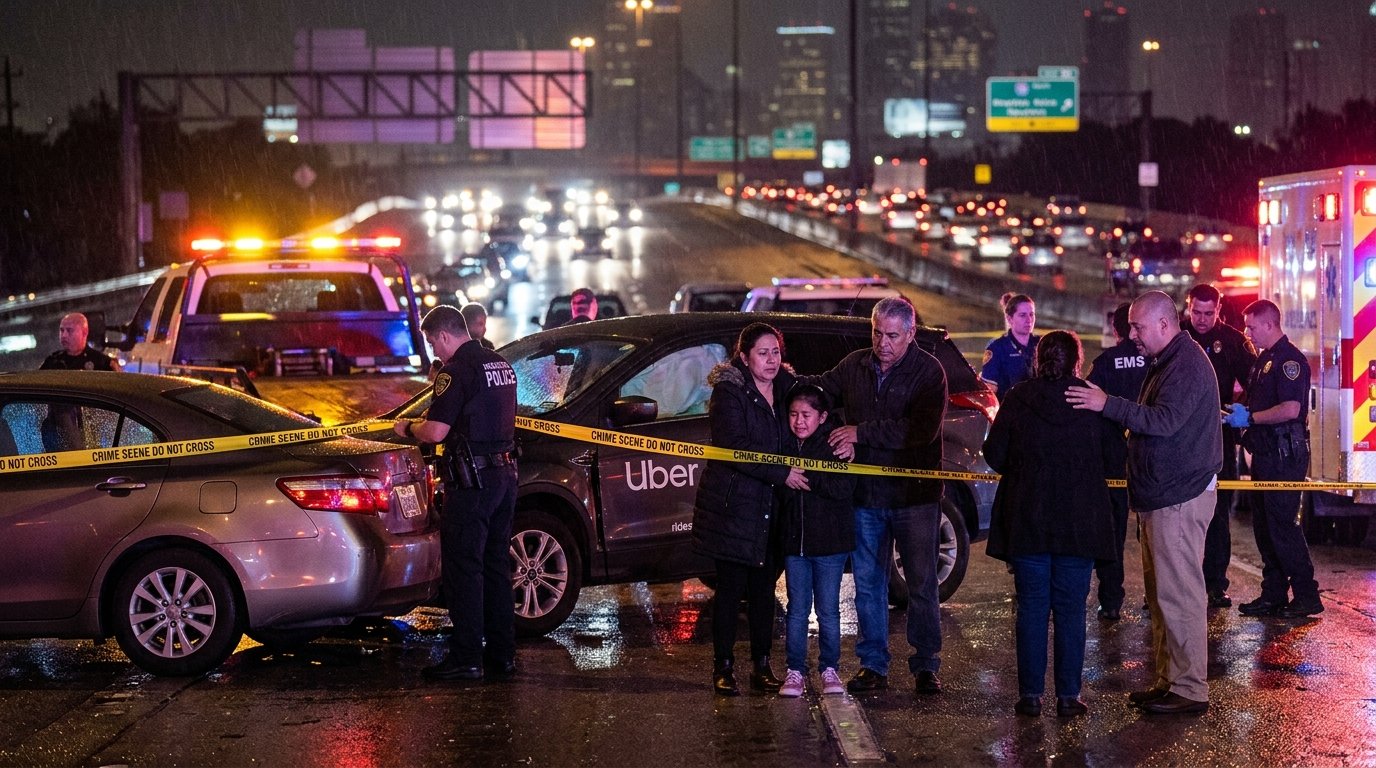

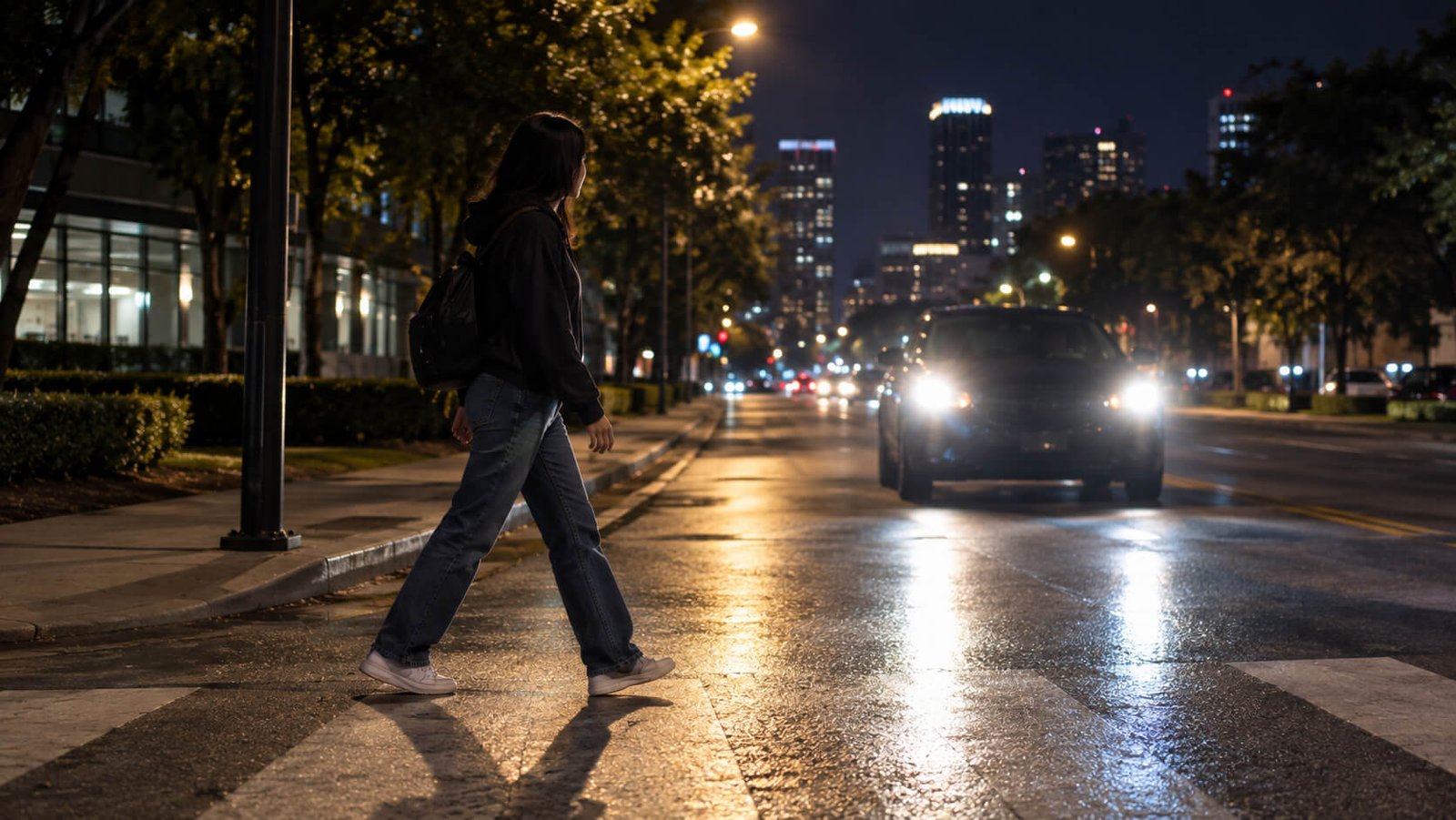

In Texas, drivers are legally required to adjust their speed and driving behavior for nighttime and low-visibility conditions, meaning a driver who hits a pedestrian after dark is not automatically excused just because visibility was poor. Darkness changes the math of a pedestrian accident. Drivers have less time to see and react, pedestrians are harder to spot, and afterward, insurance companies often try to shift blame onto the person who was hit simply because visibility was low. Understanding a driver’s legal duty in these conditions is central to evaluating a nighttime pedestrian claim.
Herrera PLLC represents pedestrians hit at night or in low-visibility conditions throughout Houston and across Texas. If a pedestrian accident involves a vehicle collision, you can also learn more about Herrera PLLC’s car accident representation.
Why Nighttime Pedestrian Crashes Are Disproportionately Severe
Reduced visibility affects nearly every part of the sequence that leads to a pedestrian accident. A driver’s field of vision at night is limited to what headlights illuminate, which is often far less distance than is needed to stop safely at typical roadway speeds. A pedestrian who is not directly in the path of a headlight beam, who is crossing mid-block, or who is wearing dark clothing may not become visible to a driver until the gap has closed to a dangerous degree.
According to 2024 data reported by the National Highway Traffic Safety Administration, 74% of pedestrian traffic deaths nationally occurred during dark conditions, with or without artificial lighting, even though only a fraction of overall driving happens after dark. Poorly lit roadways, higher average vehicle speeds on less congested streets at night, and driver fatigue later in the evening all compound the risk. This gap between how much driving happens at night and how many fatal pedestrian crashes happen at night is a big part of why nighttime visibility is treated as a serious, independent safety issue rather than just bad luck.
Driver Duties Regarding Speed and Headlight Use in Low Light
Texas law does not allow a driver to treat a posted speed limit as a safe speed regardless of conditions. Under Texas Transportation Code Section 545.351, a driver may not operate a vehicle at a speed greater than is reasonable and prudent under the circumstances then existing, which includes low-light and nighttime conditions. A driver traveling at the posted limit on an unlit residential street or a poorly illuminated commercial corridor may still be found to have been driving too fast for the actual visibility available.
This duty extends beyond speed alone. Drivers are expected to use headlights appropriately and to remain attentive to the increased likelihood of pedestrians appearing suddenly in areas with limited lighting, such as near transit stops, apartment complexes, or commercial parking lot entrances. A driver’s failure to adjust speed, or failure to keep a proper lookout given the reduced visibility, can support a finding of negligence separate from any fault attributed to the pedestrian.
Why “They Were Wearing Dark Clothing” Is Not a Complete Defense
Insurance adjusters frequently raise dark clothing as a reason to reduce or deny a nighttime pedestrian claim, arguing that the pedestrian made themselves harder to see and therefore bears responsibility for the crash. This argument can carry some weight under Texas’s comparative negligence framework, but it does not automatically shift fault away from the driver.
The driver’s independent duty to operate at a speed reasonable and prudent for existing conditions, and to keep a proper lookout, does not disappear because a pedestrian was dressed in dark colors. Having spent over a decade evaluating high-exposure claims from the insurance carrier’s side before becoming an attorney, Jonathan Herrera has seen this argument used by adjusters as a starting point to devalue a claim rather than as the complete picture the facts actually support. A driver traveling too fast for the available visibility, or who was distracted in the moments before impact, may still bear substantial or primary responsibility even when the pedestrian’s visibility was reduced by clothing choice.
Street Lighting and Municipal Liability Questions
In some nighttime pedestrian cases, the condition of the roadway itself becomes relevant. A stretch of road with malfunctioning or absent street lighting, an unmarked or unlit crosswalk in an area with regular foot traffic, or a known hazard that a municipality failed to address after prior complaints or incidents can raise questions about government responsibility for the conditions that contributed to the crash. This can be a meaningful issue in parts of Greater Houston with older infrastructure or limited pedestrian lighting along busy corridors.
Claims against a government entity in Texas generally require written notice within six months of the incident, far shorter than the standard two-year deadline that applies to most personal injury claims. This shorter window makes early evaluation of a potential lighting or roadway design issue especially important in a nighttime pedestrian case. Not every case involves a municipal liability angle, but when street lighting or roadway design appears to have played a role, it is worth examining alongside the driver’s conduct.
Comparative Fault Analysis in Reduced-Visibility Crashes
Texas follows a modified comparative negligence rule, which allows fault to be divided between the driver and the pedestrian based on the specific facts of the crash. An injured pedestrian can still recover damages even if found partly at fault, as long as they are not assigned more than 50% of the responsibility, though their recovery is reduced by their percentage of fault.
Because insurers often start from an assumption that a nighttime pedestrian bears significant responsibility simply for being present on the roadway after dark, a careful comparative fault analysis grounded in the specific facts of the crash matters a great deal to the outcome of the claim.
Several factors may be considered when evaluating comparative fault in a nighttime pedestrian accident:
- Crosswalk use: Crossing in a marked crosswalk generally favors the pedestrian. Mid-block crossing can add some pedestrian fault, but does not erase driver duties.
- Speed vs. conditions: A driver going the speed limit but traveling too fast for actual visibility can still be found negligent.
- Driver attentiveness: Distraction or failure to keep a proper lookout weighs against the driver, regardless of pedestrian visibility.
- Lighting and clothing: Dark clothing or unlit surroundings may reduce, but do not eliminate, driver responsibility.
- Roadway and lighting defects: Malfunctioning or absent street lighting may support a separate claim against a governmental entity.
Evidence That Matters Most When Visibility Is Disputed
When visibility itself is a contested issue, certain evidence becomes especially valuable. Nearby surveillance or traffic camera footage can show actual lighting conditions and vehicle speed at the time of the crash, rather than relying on competing accounts of how dark it really was. Weather and lighting data for the specific time and location can help establish what a driver could reasonably have been expected to see. Vehicle event data, when available, can indicate speed and braking in the moments before impact, and witness statements from people who were in the area can help fill in details a driver’s account alone would not capture.
Because footage and certain electronic data are often overwritten or lost within days, promptly identifying and preserving this evidence is one of the most important early steps in a disputed nighttime pedestrian case.
The steps taken in the hours and days after a nighttime pedestrian accident can directly affect the strength of a claim:
- Seek medical evaluation, even if injuries seem minor at first. Some injuries, including head and soft-tissue injuries, are not immediately obvious.
- Get the police report number and, if possible, the responding officer’s name and badge number.
- Note the lighting and conditions at the scene if you’re able to, including nearby streetlights, whether they were working, and general visibility.
- Identify potential witnesses or cameras nearby, such as businesses, apartment complexes, or traffic cameras, since footage is often overwritten within days.
- Avoid giving a recorded statement to the driver’s insurance company before speaking with an attorney. Early statements are often used to minimize a claim.
- Talk to an attorney promptly, particularly given how quickly camera footage and other electronic evidence can disappear.
Texas law allows an injured pedestrian to pursue several categories of damages, depending on the facts of the case. These can include medical expenses, lost income, and pain and suffering, and in cases involving a drunk or reckless driver, punitive damages may also be available. Every case is different, and no outcome or dollar amount can be guaranteed, but understanding the categories of damages available under Texas law is an important first step in evaluating a claim.
Most personal injury claims arising from a nighttime pedestrian accident in Texas are subject to a two-year statute of limitations. Pedestrian accident cases at Herrera PLLC are handled on a contingency fee basis, meaning there are no upfront attorney’s fees and no obligation to pay unless compensation is recovered.
Frequently Asked Questions
Why are nighttime pedestrian crashes so severe?
Reduced visibility limits how far ahead a driver can see and how much time they have to react, which often results in higher-speed impacts and more severe injuries compared to similar daytime crashes. NHTSA data shows nearly three-quarters of pedestrian traffic deaths occur in dark conditions.
Can a driver blame dark clothing for hitting a pedestrian?
A pedestrian’s clothing can be one factor in a comparative fault analysis, but it does not eliminate the driver’s independent duty to drive at a speed appropriate for existing conditions and to keep a proper lookout.
Does a pedestrian have to be in a crosswalk to have a valid claim?
No. Crossing outside a marked crosswalk can be a factor considered in the comparative fault analysis, but it does not automatically eliminate a claim. The driver’s duty to drive safely for the conditions and watch for pedestrians still applies.
What speed and lighting duties do drivers have at night?
Under Texas Transportation Code Section 545.351, drivers may not operate at a speed greater than is reasonable and prudent under the circumstances then existing, which includes adjusting for reduced nighttime visibility rather than simply following the posted limit.
Can poor street lighting make the city liable?
In some cases, yes. If a municipality knew about inadequate or malfunctioning street lighting and failed to address it, a claim may involve government liability. These claims generally require written notice within six months of the incident, which is much shorter than the standard two-year deadline for private injury claims.
This article is for general informational purposes only and does not constitute legal advice, and the facts of any specific accident can change how Texas law applies. If you or a family member has been hit at night or in low-visibility conditions, Herrera PLLC offers a free, confidential consultation with no obligation. Call 832-891-3210 or contact us online to discuss what happened.
Jonathan Herrera, J.D. is a Houston-based attorney and the founder of Herrera PLLC, representing individuals and families across Texas in serious injury, insurance law, and civil litigation matters. Before practicing law, he spent over a decade as a licensed insurance adjuster managing high-exposure casualty and property claims for carriers and third-party administrators across multiple states, and he later practiced insurance defense before founding Herrera PLLC. He is a member of the Texas Trial Lawyers Association and the American Association for Justice.