

Getting struck by a vehicle in a parking lot or garage feels different from a street-level crosswalk crash, and legally, it often is. In a parking lot, the driver’s actions are only part of the picture. The property owner’s decisions about lighting, signage, and layout can also come into play, which means these cases sometimes involve more than one potentially responsible party.
Herrera PLLC represents pedestrians struck by vehicles in Houston parking lots, garages, and retail lots.
Why Parking Lots Create Overlapping Driver and Property Owner Liability
A parking lot pedestrian accident can involve two separate legal questions at once: did the driver operate the vehicle negligently, and did the property owner maintain the lot in a reasonably safe condition. These questions do not cancel each other out. A driver can be negligent for failing to see a pedestrian, while the property owner can also bear responsibility if a hazard it created or ignored, such as poor lighting or a blocked sightline, made the accident more likely to happen.
Under Texas premises liability law, a property owner generally owes customers and other invitees a duty to use reasonable care to keep the property safe, or to warn of dangerous conditions the owner knew about or reasonably should have discovered. This duty applies to retail parking lots, garages, and other commercial parking facilities. Depending on the facts, a parking lot pedestrian accident claim can proceed against the driver, the property owner, or both, and identifying which parties may share liability is often one of the first steps in evaluating the case.
Backing-Up Accidents and Low-Speed Visibility Failures
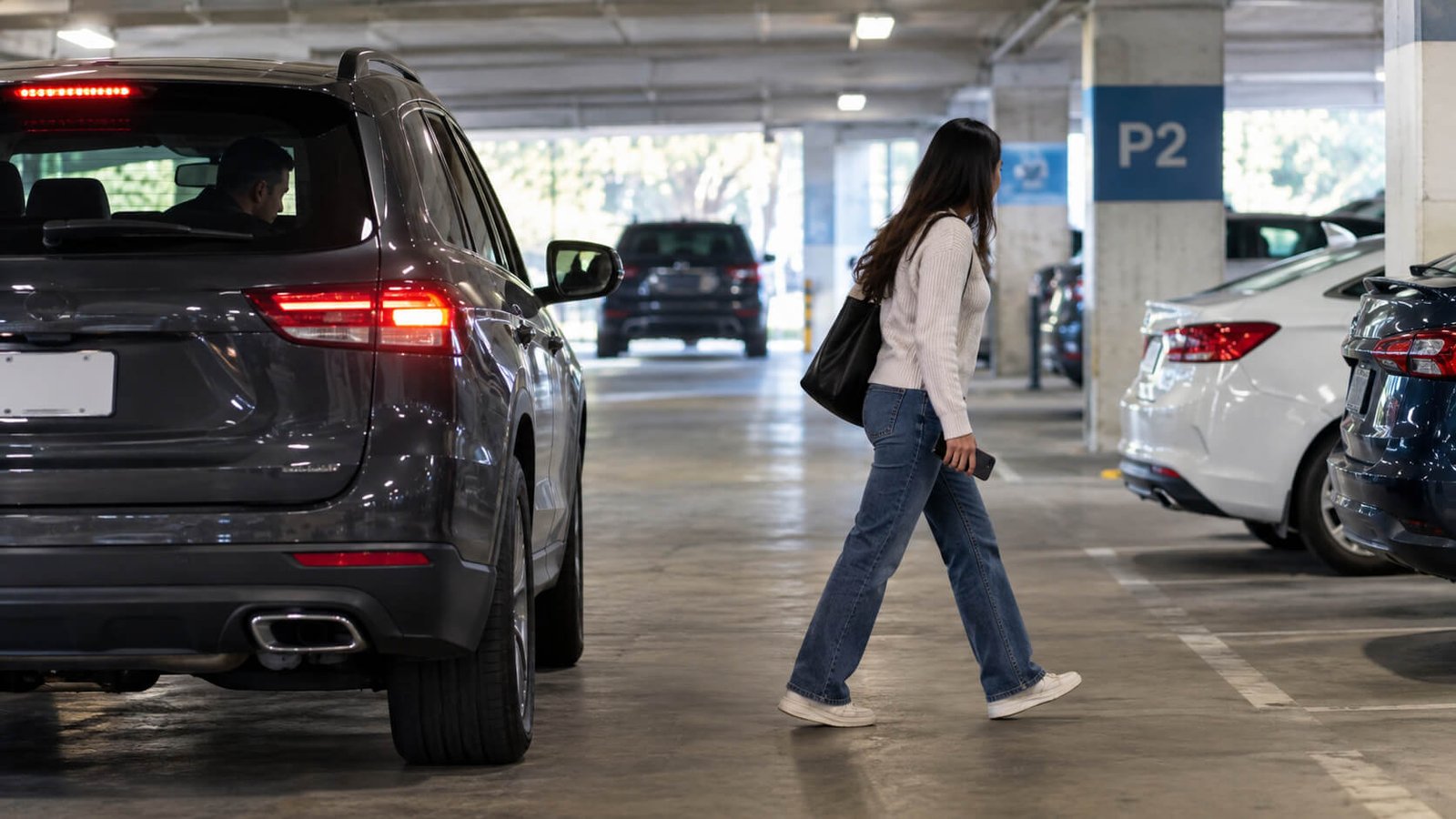
A significant share of parking lot pedestrian accidents happen when a driver is backing out of a space rather than driving forward through the lot. Backing-up accidents present a particular visibility problem: rearview mirrors and backup cameras have limited fields of view, blind spots are common behind larger vehicles like SUVs and trucks, and a pedestrian walking behind a parked vehicle may not be visible to the driver until it is too late to stop.
These crashes tend to happen at low speeds, but low speed does not mean low severity. A pedestrian struck while walking behind a vehicle can still suffer serious injury, particularly if they are knocked down and run over rather than simply bumped. Because backing-up accidents often come down to whether the driver checked their surroundings adequately before reversing, witness accounts and any available surveillance footage of the specific parking aisle can be important to establishing what happened.
Poor Lighting, Signage, and Design as a Premises Liability Claim
When a parking lot’s physical condition contributes to a pedestrian accident, the property owner’s design and maintenance choices become directly relevant. Inadequate lighting in a parking lot or garage can make it difficult for drivers to see pedestrians, particularly during evening hours or in enclosed garage structures with limited natural light. A lack of clearly marked pedestrian walkways, faded crosswalk striping, or the absence of speed bumps and directional signage in a busy lot can all increase the likelihood that a driver and pedestrian end up in the same space without adequate warning to either one.
Property owners who allow these conditions to persist, particularly after prior incidents or complaints, may bear responsibility for injuries that result. Evaluating this type of claim typically involves looking at the property’s maintenance and lighting records, any prior accident history at the location, and whether the design of the lot met a reasonable standard of care for pedestrian safety.
Multi-Level Garages and Blind-Corner Hazards
Multi-level parking garages, common at Houston shopping centers, medical complexes, and office towers throughout areas like the Galleria and the Texas Medical Center, introduce hazards that a surface lot does not have. Tight turning radii, low visibility around structural columns and stairwell exits, and ramps connecting different levels all create blind corners where a driver may not see a pedestrian until the vehicle is nearly on top of them. Garage lighting is also frequently dimmer than outdoor lighting, which compounds the visibility problem at these blind spots.
Because garages are enclosed, permanent structures, the property owner typically has significant control over design features like mirror placement at blind corners, pedestrian-only walkways separated from vehicle lanes, and adequate lighting throughout each level. When a garage’s design contributes to a pedestrian accident, that design becomes part of the premises liability analysis alongside the driver’s conduct.
When the Property Owner, Not Just the Driver, Should Be Named
Not every parking lot accident involves the property owner, but certain fact patterns raise the question directly. These include a history of prior pedestrian accidents at the same location that the property owner failed to address, inadequate lighting or signage that a reasonable property owner should have corrected, a garage or lot design that created a known blind spot or hazard, and a failure to separate pedestrian walkways from active vehicle traffic in high-foot-traffic areas like retail entrances.
Having spent over a decade evaluating high-exposure claims from the insurance carrier’s side, including commercial and industrial exposure, before becoming an attorney, Jonathan Herrera brings that background to how these mixed driver and premises liability cases are investigated at Herrera PLLC. Determining whether a property owner should be named alongside the driver generally requires looking closely at the specific conditions of the lot or garage where the accident happened.
Evidence Unique to a Parking Facility Investigation
Parking facility cases often involve evidence that a street-level accident would not. Surveillance footage from the property itself, including cameras covering the specific aisle, entrance, or garage level where the accident occurred, can be critical, and this footage is frequently overwritten within days or weeks if not requested promptly. Maintenance and lighting logs can show whether the property owner was aware of, or should have been aware of, a hazardous condition. Prior incident reports at the same location can establish a pattern the property owner failed to correct.
Because this evidence exists in the property owner’s records and systems rather than in a public police report alone, a thorough investigation into a parking lot pedestrian accident generally requires promptly requesting these materials before they are lost or routinely deleted. Most personal injury claims arising from a parking lot pedestrian accident in Texas are subject to a two-year statute of limitations. Pedestrian accident cases at Herrera PLLC are handled on a contingency fee basis, meaning there are no upfront attorney’s fees and no obligation to pay unless compensation is recovered.
Frequently Asked Questions
Who is liable for a parking lot pedestrian accident?
Liability can fall on the driver, the property owner, or both, depending on the facts. A driver who failed to see a pedestrian may be negligent, while a property owner may share responsibility if a hazard like poor lighting or inadequate design contributed to the accident.
What makes backing-up accidents different?
Backing-up accidents involve limited driver visibility, since mirrors and backup cameras have blind spots that can hide a pedestrian walking behind a vehicle. These crashes often happen at low speeds but can still cause serious injury.
Can a property owner share liability for poor lighting or design?
Yes. Under Texas premises liability law, property owners generally owe a duty to use reasonable care to keep the property safe for customers and other invitees. Inadequate lighting, poor signage, or a hazardous layout that the owner knew about or should have discovered can support a claim against the property owner.
Are parking garages held to a different standard?
Garages are generally evaluated under the same premises liability principles as surface lots, but their design, including blind corners, ramps, and dimmer lighting, can create hazards unique to that type of structure, which becomes part of the liability analysis.
What evidence matters in a parking facility case?
Surveillance footage from the property, maintenance and lighting records, and any history of prior incidents at the same location can all be important. This evidence is often time-sensitive, since footage and records may be deleted or overwritten if not requested promptly.
This article is for general informational purposes only and does not constitute legal advice, and the facts of any specific accident can change how Texas law applies. If you or a family member has been struck by a vehicle in a Houston parking lot, garage, or retail lot, Herrera PLLC offers a free, confidential consultation with no obligation. Call 832-891-3210 or contact us online to discuss what happened.
Jonathan Herrera, J.D. is a Houston-based attorney and the founder of Herrera PLLC, representing individuals and families across Texas in serious injury, insurance law, and civil litigation matters. Before practicing law, he spent over a decade as a licensed insurance adjuster managing high-exposure casualty and property claims, including commercial and industrial exposure, for carriers and third-party administrators across multiple states, and he later practiced insurance defense before founding Herrera PLLC. He is a member of the Texas Trial Lawyers Association and the American Association for Justice.