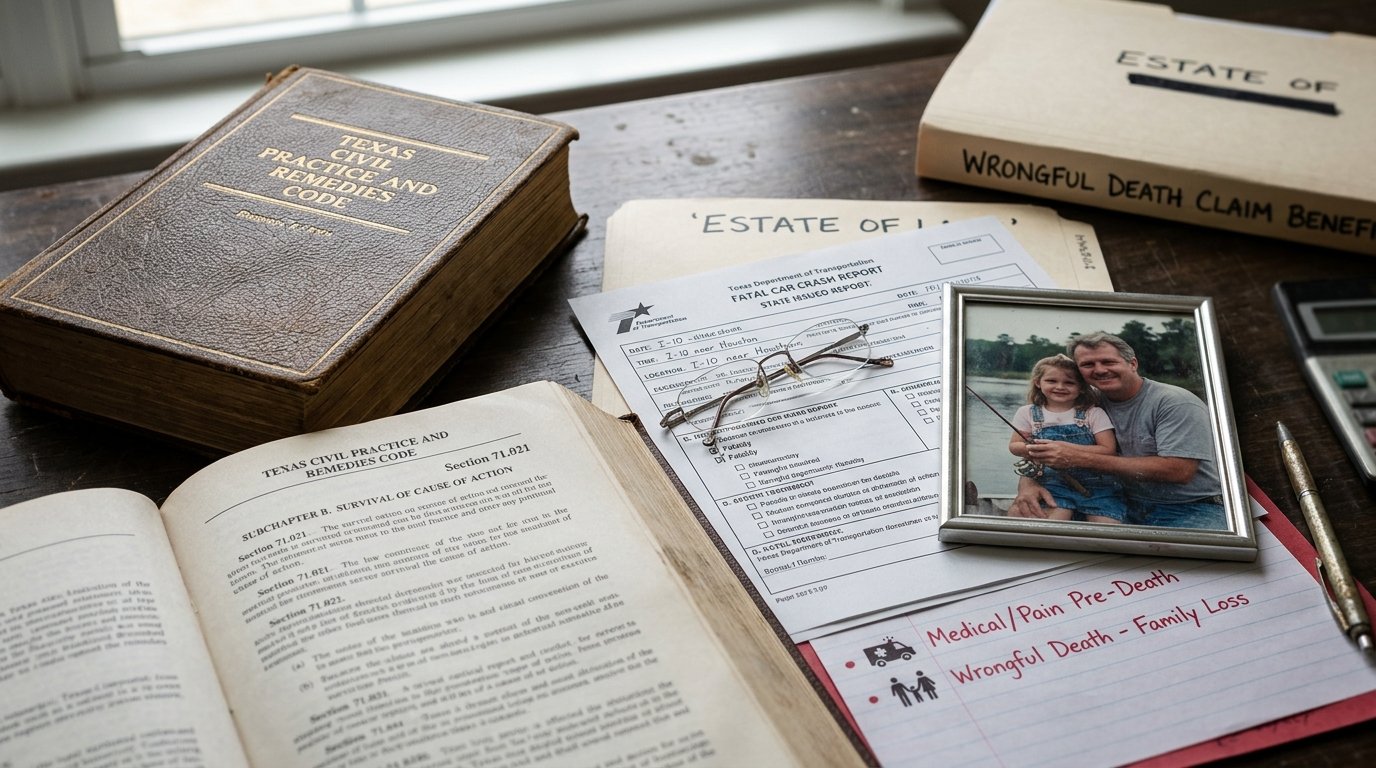



At some point in nearly every wrongful death case, a family faces a decision that has nothing to do with legal theory and everything to do with judgment: settle, or take the case to trial. There’s no universal right answer. The decision depends on the strength of the evidence, the insurance company’s posture, the family’s own needs, and sometimes on how the case has evolved as it’s moved forward. Understanding how this decision typically unfolds can help families feel less blindsided when they reach it.
Herrera PLLC represents families pursuing wrongful death claims throughout Houston and across Texas, and prepares every case as though it may need to go before a jury.
How a Wrongful Death Case Typically Proceeds in Texas
A wrongful death claim in Texas, governed by Texas Civil Practice and Remedies Code Chapter 71, generally moves through several stages before a family ever has to decide between settlement and trial. After a claim is filed, both sides typically exchange information and evidence during a discovery process, which can include depositions, medical and financial records, and expert evaluations. Settlement discussions can happen at almost any point in this process, sometimes early, sometimes only after significant preparation has occurred. If no settlement is reached, the case proceeds toward trial, though many cases still settle in the weeks or days immediately before a scheduled trial date. Understanding this general arc helps families recognize that the settle-or-trial decision isn’t a single moment but often a series of smaller decisions made as the case develops.
Factors That Make an Early Settlement Reasonable
Not every case benefits from prolonged litigation, and there are legitimate reasons a family might reasonably accept an earlier settlement offer. A strong, well-documented case with clear liability and cooperative insurance carriers sometimes allows for a fair settlement without the time and uncertainty of extended litigation. Financial pressure is another real consideration. Wrongful death cases often follow the sudden loss of a family’s income earner, and the months or years a case can take to reach trial may not align with a family’s immediate financial needs. Emotional factors matter too. For some families, resolving the case and avoiding a prolonged legal process, including the possibility of testifying at trial about a loved one’s death, is itself a meaningful consideration, separate from the dollar figure involved.
When Trial Preparation Produces a Better Settlement Offer
Ironically, one of the most effective ways to secure a strong settlement is often to prepare seriously for trial. Insurance companies and defense attorneys evaluate settlement offers based partly on how genuinely prepared the other side appears to take the case to a jury. When a case is thoroughly investigated, supported by strong expert testimony, and clearly ready to proceed to trial if necessary, settlement offers frequently improve as trial dates approach. This is why many wrongful death cases that eventually settle do so only after substantial trial preparation has already taken place, sometimes even after jury selection has begun.
Having previously practiced insurance defense before founding Herrera PLLC, Jonathan Herrera has firsthand familiarity with how carriers and defense counsel evaluate a case’s trial-readiness when deciding how much settlement authority to extend. That perspective is part of why every case at the firm is prepared from the outset as though it will actually go before a jury. The willingness to go to trial, backed by real preparation, is often what produces a fair settlement rather than an early, lower offer.
What a Wrongful Death Trial Actually Involves
A wrongful death trial involves presenting evidence and testimony to a judge or jury to establish both liability and damages. This typically includes testimony from surviving family members about the loss they’ve experienced, expert witnesses addressing matters like economic damages or the circumstances of the death, and evidence establishing how the death occurred and who was responsible. Trials require significant time, both in preparation and in the length of the proceedings themselves, and outcomes are inherently less predictable than a negotiated settlement, since a jury’s decision can’t be guaranteed in advance. Families considering trial should understand that it also means their loved one’s death, and their own testimony about its impact, becomes part of a public court proceeding.
Confidentiality and Finality: What Settling Gives Up
Settling a wrongful death case typically resolves the matter privately and often includes a confidentiality provision, meaning the terms of the settlement aren’t part of the public record in the way a jury verdict would be. Settlement also provides finality and certainty. Once a settlement is reached and finalized, the outcome isn’t subject to appeal in the way a trial verdict can be. This certainty is itself valuable to many families, since a jury verdict, even a favorable one, can potentially be appealed and delayed further, or in some cases result in a lower recovery than a settlement would have provided. Weighing this tradeoff, the certainty and privacy of settlement against the possibility of a larger recovery, and public accountability, through trial, is a central part of the decision.
Making the Decision as a Family, Not Just a Legal Question
Ultimately, the choice between settlement and trial isn’t purely a legal or financial calculation. It’s a decision that involves a family’s values, their capacity to endure a longer legal process, and what closure looks like for them individually. Some families feel strongly about having their case heard by a jury, particularly when they want a public acknowledgment of what happened. Others prioritize resolving the matter as privately and directly as possible. Because both settlement and trial carry real tradeoffs, and because every family’s circumstances are different, this decision benefits from being made deliberately, with a full understanding of what each path actually involves, rather than by default or under time pressure.
Timing and Cost Considerations
In Texas, wrongful death claims are generally subject to a two-year statute of limitations from the date of death, though certain circumstances, such as claims involving a government entity, can shorten that window significantly. Wrongful death cases at Herrera PLLC are handled on a contingency fee basis, meaning there are no upfront attorney’s fees and no obligation to pay unless compensation is recovered.
If your family is navigating this decision after a wrongful death, Herrera PLLC handles wrongful death claims, including those arising from car accidents. Consultations are free, confidential, and come with no obligation. Call 832-891-3210 or contact us to talk through where your case stands.
Frequently Asked Questions
How long does a Texas wrongful death case typically take?
Timelines vary widely depending on the complexity of the case, the cooperation of the insurance carrier, and whether the case settles or proceeds to trial. Cases that settle early can resolve in months, while cases that go to trial often take considerably longer due to discovery, expert preparation, and court scheduling.
When does an early settlement make sense?
An early settlement can make sense when liability is clear, the insurance carrier is cooperative, and the offer reasonably reflects the family’s losses. Financial or emotional considerations, such as the need for timely resolution, can also make an earlier settlement a reasonable choice for some families.
Does trial preparation improve a settlement offer?
Often, yes. Insurance companies and defense attorneys tend to increase settlement offers when a case appears genuinely prepared for trial, since a well-prepared case signals a credible willingness to let a jury decide the outcome.
What happens at a wrongful death trial?
A trial involves presenting evidence and testimony to a judge or jury, including testimony from surviving family members, expert witnesses, and evidence establishing liability and damages. The outcome is decided by the judge or jury rather than negotiated between the parties.
Is a settlement confidential?
Settlements often include a confidentiality provision, meaning the terms aren’t part of the public record in the way a jury verdict would be. This is one of the key differences between resolving a case through settlement versus trial.
This article is for general informational purposes only and does not constitute legal advice, and the facts of any specific wrongful death case can change how Texas law applies.
Jonathan Herrera, J.D. is a Houston-based attorney and the founder of Herrera PLLC, representing families across Texas in serious injury, insurance law, and civil litigation matters. Before practicing law, he spent over a decade as a licensed insurance adjuster managing high-exposure casualty and property claims, and he later practiced insurance defense before founding Herrera PLLC. He is a member of the Texas Trial Lawyers Association and the American Association for Justice.