
Overweight Trucks on Texas Highways — How a Weight Violation Strengthens Your Injury Claim

Most people involved in a serious commercial truck crash spend the first days focused on medical care, insurance calls, and the immediate aftermath. Very few are thinking about whether the truck that hit them was carrying an illegal load. But the trucking company is.
Weight violations are among the most verifiable and damaging facts that can emerge from a commercial truck crash investigation. They are documented in weigh station records, FMCSA safety databases, and the carrier’s own cargo manifests. When a truck was operating above the legal weight limit, that fact changes the liability picture in ways that generic crash investigation alone cannot. It creates a direct link between a federal violation and the physical forces that caused the crash.
Jonathan Herrera spent over a decade evaluating exactly these kinds of commercial vehicle claims as a licensed insurance adjuster before becoming an attorney. He knows how carriers assess weight violation exposure internally, which records they preserve, and which ones they hope the other side never finds.
What Texas Law Sets as the Weight Limit — and Why It Exists
Texas law, consistent with federal standards, sets the following maximum weight limits for commercial vehicles operating on public highways without a special permit:
• Gross vehicle weight: 80,000 pounds
• Single axle: 20,000 pounds
• Tandem axle: 34,000 pounds
These limits are codified in Texas Transportation Code Section 621.101 and apply to interstate highways statewide. The limits exist for two distinct reasons, both of which become legally significant in an injury case.
The first is infrastructure protection. Roads and bridges are engineered to absorb a calculated load over time. A vehicle exceeding legal weight limits degrades road surfaces and bridge structures faster than those structures were designed to handle, which is why Texas and federal law treat weight violations as serious regulatory offences, not mere administrative technicalities.
The second reason is crash physics. The relationship between vehicle weight and stopping distance is not linear. At highway speeds, a fully loaded 80,000-pound truck already requires significantly more distance to stop than a passenger vehicle. At 65 miles per hour, the difference in stopping distance between a car and a legal-weight truck is measurable in hundreds of feet. Add weight beyond the legal limit and the problem compounds: the braking system is working against greater momentum, brake components experience accelerated wear under the additional strain, and the margin for error in an emergency shrinks further.
When a carrier operates above the legal limit, both of those legal rationales become evidence in an injury case.
How a Weight Violation Functions as a Liability Tool
Texas follows the doctrine of negligence per se, which means that violating a statute or regulation designed to protect a class of people from harm establishes a presumption of negligence. The plaintiff no longer needs to prove that the defendant failed to act reasonably — the violation itself performs that function, provided the plaintiff can show that the harm suffered was the type the regulation was designed to prevent, and that the plaintiff belongs to the class the regulation was designed to protect.
Weight limit statutes exist specifically to prevent crashes caused by extended stopping distances, brake failures, and the increased destructive forces that overweight vehicles generate on impact. A motorist injured in a crash with an overweight commercial truck falls squarely within the class those regulations protect.
It is important to note that negligence per se creates a presumption of negligence, not an automatic finding of liability. The carrier can offer evidence to rebut the presumption, and the plaintiff must still establish causation — that the weight violation contributed to the crash or the severity of the injuries. But the burden shifts in a meaningful way. Rather than the injured party having to prove that the carrier’s conduct was unreasonable, the carrier must now explain why exceeding the legal weight limit was not the cause of the crash or the harm.
In commercial truck litigation, that is a significant structural advantage.
The Records That Establish Whether a Truck Was Overweight
One of the most important aspects of overweight truck cases is that the violation is frequently documented before any truck accident attorney becomes involved. Unlike driver error or inattention, which must be reconstructed from witness accounts and electronic data, weight violations leave a paper and data trail that exists independently of the crash investigation.
The key records include:
Weigh station records. Texas operates a network of permanent weigh stations on major freight corridors, including I-10, I-45, and US-59. When a commercial vehicle passes through a weigh station, the axle weights and gross vehicle weight are recorded. If the truck was flagged and cited, that citation is part of the public enforcement record. These records are maintained by TxDOT and accessible through appropriate legal process.
FMCSA safety data. The Federal Motor Carrier Safety Administration maintains the Safety Measurement System, which contains publicly available carrier inspection and crash data for carriers operating in interstate commerce. It is worth noting that following the FAST Act of 2015, certain performance categories for property carriers are no longer publicly visible through the SMS website. Fuller access to a carrier’s complete safety record, including weight violation history, is typically obtained through the legal discovery process rather than through public search alone.
Bill of lading and cargo manifest. Every commercial shipment is accompanied by documentation listing the shipper, the cargo, and the declared weight. If the declared weight on the manifest falls within legal limits but the truck was actually overweight, the discrepancy raises questions about who provided inaccurate weight information and who had responsibility for verifying the actual load.
Load confirmation and dispatch records. Carriers maintain internal records of each load assignment, including instructions from dispatch and weight information provided at the point of loading. These records can show whether the carrier knew or should have known the truck was overweight before it departed.
The driver’s pre-trip inspection report. Federal regulations require commercial drivers to conduct and document pre-trip vehicle inspections. A driver who departed with a load that put the truck above legal weight limits either knew about the violation or failed to verify the load weight, either of which is relevant to the liability analysis.
Jonathan Herrera’s background evaluating commercial vehicle claims means he understands what these records should contain, where they are kept, and what is missing when a carrier’s file is incomplete. That knowledge directly informs how overweight claims are built.
Why These Cases Often Name the Shipper or Loader as a Defendant
Commercial truck crashes involving weight violations are frequently multi-defendant cases. The truck driver and the carrier are the obvious targets, but the chain of responsibility for an overweight load often extends further.
Under federal regulations, the shipper and the loading company carry independent legal obligations regarding weight and cargo documentation. If a shipper provided false weight declarations or understated the cargo weight on the bill of lading, and the carrier relied on those representations in accepting the load, the shipper may share liability for the resulting crash. If a third-party loading company improperly loaded the cargo, failed to verify the weight, or provided inaccurate documentation, it can be named as a separate defendant under FMCSA cargo securement rules found at 49 CFR Part 393.
This matters practically because naming additional defendants can expand the total insurance coverage available. A carrier may carry a $1 million liability policy. A shipper or logistics company may carry separate commercial coverage. In cases involving catastrophic injuries or wrongful death, identifying every party in the liability chain is directly connected to the full scope of recovery available.
The investigation required to identify those additional defendants is document-intensive and time-sensitive. Cargo documentation, shipper contracts, weight certifications, and loading records all have limited preservation windows without a formal legal hold in place.
How Weight Violations Affect Crash Forces and Case Value
The physics of an overweight truck crash are relevant beyond the negligence per se analysis. They directly affect how damages are assessed and what experts will say about the severity of the collision.
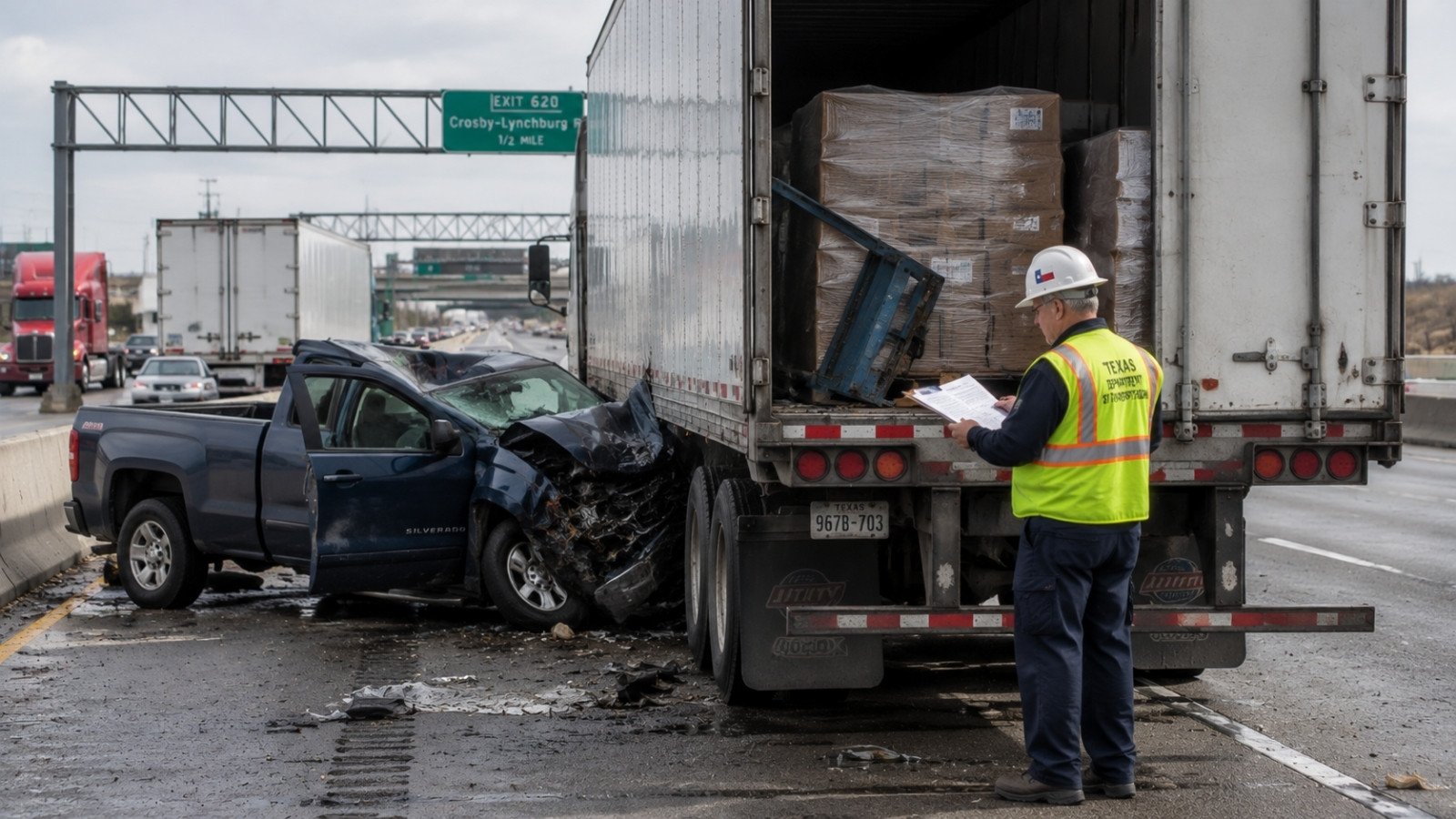
An 80,000-pound truck at legal weight hitting a passenger vehicle at highway speed generates enormous destructive force. The same truck carrying 10,000 pounds above the legal limit generates proportionally greater force on impact, takes a longer distance to stop, and places greater stress on every mechanical system involved in braking and control. In cases involving rear-end collisions, intersection crashes, and incidents where the truck’s inability to stop in time is a central question, the actual weight of the vehicle at the time of the crash is a direct input into the accident reconstruction analysis.
Accident reconstruction experts use weight data to calculate impact forces, pre-collision speeds, and the question of whether the crash was avoidable at the truck’s actual weight. When a truck was overweight, those calculations produce numbers that reflect the actual, unlawful condition of the vehicle, not the hypothetical performance of a legal-weight truck. That distinction can be significant in how damages are presented and assessed by a jury.
The Evidence That Needs to Be Preserved Quickly
Weight-related evidence operates on timelines that work against an injured party who isn’t represented. Cargo manifests and bills of lading are business records that carriers and shippers retain for varying periods. Electronic dispatch records are subject to the same overwrite risks as other commercial vehicle data. Weigh station records are maintained by TxDOT but accessing them requires knowing where and when the truck crossed a weigh station. The carrier’s internal load records may be reorganised, archived, or affected by routine document retention policies.
A formal legal preservation demand served on the carrier, the shipper, and any known loading company creates a documented legal obligation to retain all records related to the load, its weight, and its documentation. The sooner that demand is served, the less opportunity any party has to allow relevant records to disappear through ordinary business operations.
The serious injury practice at Herrera PLLC approaches commercial truck cases with the understanding that weight violations, when they exist, represent some of the most verifiable and powerful evidence available in the entire case. Finding that evidence requires knowing where to look and moving before it is gone.
Frequently Asked Questions About Overweight Truck Cases in Texas
What is the legal weight limit for commercial trucks on Texas highways and interstates?
Texas sets a maximum gross vehicle weight of 80,000 pounds for commercial trucks operating without a special permit, consistent with federal standards. Single axle weight is capped at 20,000 pounds and tandem axle weight at 34,000 pounds. These limits are codified in Texas Transportation Code Section 621.101. Trucks exceeding these limits without a valid overweight permit are in violation of state and federal law.
How do I find out if the truck that hit me was carrying an illegal or overweight load in Texas?
Several records can establish whether a truck was overweight at the time of a crash. Weigh station records maintained by TxDOT document axle weights and gross vehicle weights for trucks that passed through fixed inspection points. The FMCSA Safety Measurement System contains publicly available carrier inspection and crash data, though certain performance categories for property carriers are restricted from public view under the FAST Act of 2015, and complete carrier safety records are typically accessed through legal discovery. The cargo manifest, bill of lading, and the carrier’s internal load records document the declared and actual weight of the cargo. Accessing and preserving these records through the legal process is part of the investigation in any commercial truck crash case where weight may be a factor.
Does an overweight truck violation automatically make the trucking company liable for my injuries in Texas?
Not automatically. Under Texas’s negligence per se doctrine, a weight violation creates a presumption of negligence, which shifts the burden to the carrier to explain why the violation did not cause or contribute to the crash. The plaintiff still needs to establish causation, that the overweight condition contributed to the crash or the severity of the injuries. A violation alone is not sufficient without connecting it to the harm. However, the presumption is a meaningful advantage in litigation, and a weight violation combined with evidence that the excess weight affected stopping distance or crash forces is a powerful combination.
Can I sue the company that loaded or shipped the cargo if it caused the truck to be overweight?
Yes, under certain circumstances. Shippers and loading companies carry independent legal obligations regarding weight documentation and cargo securement under federal regulations. If a shipper provided inaccurate weight information, if a loading company failed to verify the actual load weight, or if either party pressured the carrier to accept an overweight load, those parties can be named as defendants. Adding them to a case can also expand the total insurance coverage available, which matters significantly in cases involving serious injuries.
How do weight violations affect the value of a truck accident injury claim in Texas?
Weight violations affect claim value in several ways. They establish a negligence per se presumption that reduces what the plaintiff must prove on the breach element. They provide a factual basis for accident reconstruction testimony about the actual crash forces involved, which can be greater than those of a legal-weight vehicle. They can support claims of systemic carrier negligence if the carrier has a documented history of weight violations. And in cases where the excess weight can be shown to have directly contributed to the severity of the crash, they connect the regulatory violation directly to the magnitude of the harm suffered.
What an Overweight Violation Means for Your Case
Texas consistently leads the nation in commercial truck fatalities. The highways around Houston, I-10, I-45, and the freight corridors feeding the Port of Houston, carry some of the highest commercial vehicle traffic volumes in the country. Every overweight truck on those roads represents a carrier that chose to prioritise load efficiency over the legal limits designed to protect everyone else on the highway.
When that choice results in a serious crash, the violation doesn’t just belong in a regulatory file. It belongs at the centre of the liability case.
For anyone injured in a commercial truck crash in Texas where the load weight may be relevant, speaking with an attorney who understands how carriers document, manage, and sometimes obscure weight-related evidence is where that investigation begins.
Jonathan Herrera, J.D. is a Houston-based attorney and licensed appraisal umpire who represents seriously injured Texans in commercial truck crash cases and insurance disputes across the state. Before practicing law, he spent over a decade as a licensed insurance adjuster managing high-exposure casualty claims, including commercial vehicle cases, for carriers and third-party administrators across multiple states. He is the founder of Herrera PLLC and a member of the Texas Trial Lawyers Association and the American Association for Justice.