
Hit by a Lyft Driver Who Was Between Rides in Texas — Who Pays for Your Injuries?

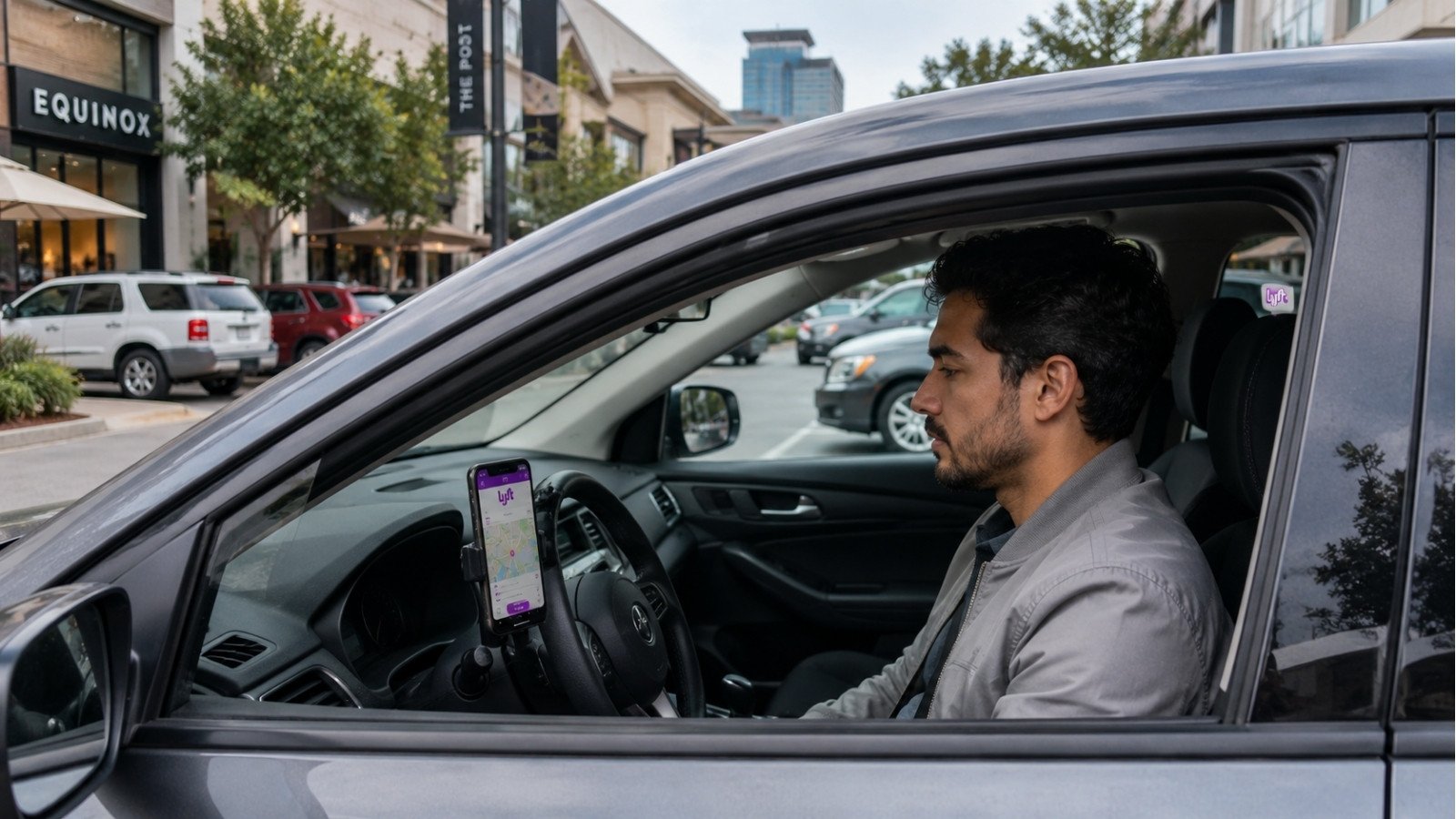
There’s a specific moment that insurance companies have learned to exploit in rideshare crashes: the moment a driver is logged into the Lyft app, available and waiting for a ride request, but hasn’t accepted one yet. No passenger. No active trip. Just a driver, online, between rides.
When a crash happens in this window, both the driver’s personal insurer and Lyft’s insurer frequently point at each other. The personal insurer says the driver was working and excluded under a commercial-use clause. Lyft’s representative may suggest the driver’s own policy should respond first. The injured party, caught in the middle, is left without clarity about who is actually responsible for the bills piling up.
This guide explains exactly what coverage applies when a Lyft driver causes a crash between rides in Texas, what insurance companies routinely get wrong, or misrepresent, about how this coverage works, and what it takes to actually access it.
What “Between Rides” Means Under Texas Law
In the legal framework governing rideshare insurance in Texas, the scenario described as “between rides” has a specific name: Period 1. Texas Insurance Code Chapter 1954 divides a rideshare driver’s status into distinct periods based on app activity, and Period 1 covers the exact situation at issue here: the driver is logged into the Lyft app, available to accept ride requests, but has not yet accepted one and has no passenger in the vehicle.
This is legally and financially distinct from Period 0, when the app is off entirely, and from Periods 2 and 3, when a ride has been accepted or a passenger is in the car. Each of these periods carries a different insurance obligation, and Period 1 carries, by a wide margin, the most limited coverage and the most frequent disputes.
Jonathan Herrera spent over a decade evaluating high-exposure casualty claims as a licensed insurance adjuster, including commercial lines coverage disputes, before becoming an attorney. Coverage disputes precisely like the Period 1 scenario, where two insurers each have an argument for why the other should pay first, are exactly the kind of dispute his adjusting background prepared him to navigate from both sides.
The Coverage That Actually Applies in Period 1
Texas Insurance Code Section 1954.052 requires that, during Period 1, a policy maintained by the transportation network company or the driver provide contingent liability coverage of at least $50,000 per person, $100,000 per accident for bodily injury, and $25,000 for property damage.
Here is where a widely repeated misunderstanding needs to be corrected directly, because it shapes how injured parties and even some insurance representatives describe this coverage. It is commonly said that Lyft’s Period 1 coverage only activates if the driver’s personal insurer denies the claim first. This is not what Texas law actually requires. Texas Insurance Code Section 1954.055 states plainly that coverage maintained by the transportation network company is not contingent on the driver’s personal automobile insurer initially denying a claim. As a matter of statute, Lyft’s $50,000/$100,000/$25,000 Period 1 coverage does not legally require a prior denial from the driver’s personal insurer before it can be pursued.
What actually happens in practice is different from, and less favorable than, a clean denial-then-coverage sequence, which is precisely why this scenario generates so much confusion and dispute.
Why Both Insurers Often Deny the Claim
The real-world coverage gap in Period 1 crashes does not come from a strict legal contingency requirement. It comes from the interaction between two separate facts.
The driver’s personal auto policy almost certainly contains a commercial-use or livery exclusion. Texas law expressly permits personal auto insurers to exclude coverage for any period when the insured vehicle is being used to transport passengers or property for compensation, and most major personal auto insurers write this exclusion broadly enough to apply the moment a driver logs into a rideshare app, regardless of whether a ride has actually been accepted. This means the personal insurer frequently denies the claim outright, citing the driver’s app status alone.
Lyft’s own claims process, in practice, often treats Period 1 coverage as a true secondary or last-resort layer, even though the statute does not require this sequencing. Insurance companies, including TNC insurers, are not above structuring their internal claims handling to make a coverage layer harder to access than the underlying statute strictly requires, particularly for a coverage tier with comparatively low limits and high dispute potential. This is where the gap between what Section 1954.055 says and how a claim is actually handled becomes the injured party’s problem to solve, often without realizing there’s a meaningful legal distinction to invoke at all.
The result is an injured party facing a denial from the personal insurer and a slow, resistant, or disputed response from Lyft’s side, even though Texas law does not actually require the driver’s personal insurer to deny the claim before Lyft’s coverage becomes available.
How to Prove a Driver Was in Period 1 at the Moment of the Crash
Because insurance companies on both sides have an incentive to dispute the driver’s exact status, particularly given how much smaller Period 1’s coverage is compared to Periods 2 and 3, establishing precisely what the app showed at the moment of impact is the single most important factual question in this type of claim.
App screenshots. If you are able to safely view the driver’s phone at the scene, or if a screenshot exists from any source, documenting that the Lyft app was open and showing an “available” or “waiting for requests” status is direct, immediate evidence. This kind of contemporaneous documentation is far more valuable than a later recollection of what the screen showed.
Police report documentation. Asking the responding officer to note the driver’s stated app status as part of the official crash report creates an independent, third-party record of the driver’s own account, even when a screenshot isn’t available.
Lyft’s internal trip and activity records. This is the authoritative source, and it is also the most difficult to access without formal legal process. Lyft’s own data systems record precisely when a driver logged in, when they were marked available, when (or whether) a ride request was sent or accepted, and the corresponding timestamps. The specific length of time Lyft retains this kind of system-level data is governed by the company’s own internal data policies rather than a specific, independently confirmed Texas statutory retention mandate, which is exactly why prompt action to preserve this evidence matters.
Lyft does not produce this kind of data informally on request. According to Lyft’s own published guidance on third-party data requests, the company requires a valid, properly issued subpoena or formal civil discovery request, served through Lyft’s registered agent for service of process, narrowly tailored to a specific time period and specific data, before it will review and potentially produce trip or app activity records in a civil case. This means obtaining this evidence is not simply a matter of asking; it is a formal legal process that an attorney, not the injured party directly, typically carries out once litigation or a properly structured pre-litigation demand is underway.
Why a Preservation Demand Matters Even Before Records Are Formally Obtained
Beyond the formal subpoena process, there is an earlier and equally important step: putting Lyft and the driver on notice, as early as possible, that records related to the crash must be preserved and not allowed to be purged through Lyft’s routine, automated data management processes.
Because the specific retention period for app activity and system-level data is governed by Lyft’s own internal policies rather than a fixed, independently verified statutory schedule, there is no guarantee that relevant records will remain available indefinitely. A preservation demand sent promptly after the crash creates a documented legal basis for holding Lyft accountable if relevant evidence is later found to have been deleted through ordinary system processes, even before a subpoena has been formally issued or litigation has been filed.
The Maximum Coverage Available in a Period 1 Crash
Understanding the actual coverage ceiling in a Period 1 case matters because it shapes the entire strategy for pursuing a claim. Lyft’s statutory Period 1 obligation is $50,000 per person and $100,000 per accident for bodily injury, and $25,000 for property damage. This is the maximum available specifically from Lyft’s TNC policy during this period; it does not increase regardless of how serious the injury is.
For injuries that exceed this limit, which is common in any case involving significant medical treatment, several additional sources of recovery may be relevant. The driver’s own personal auto policy, even with a commercial-use exclusion potentially in play, may still respond depending on the specific exclusion language and how the claim is framed. The injured party’s own underinsured motorist coverage, if available, can potentially fill a gap between what Lyft’s Period 1 policy pays and the actual scope of the harm. And if the facts support it, a separate and independent negligent hiring claim against Lyft itself, which does not depend on the Period 1 coverage analysis at all, may provide an additional avenue, since that theory targets Lyft’s own conduct in screening the driver rather than the insurance coverage that applies to the specific trip status.
What This Means for Anyone Hit by a Lyft Driver Between Rides
A Period 1 crash is, structurally, the most disputed and most poorly understood category of rideshare accident in Texas, precisely because the coverage exists but is frequently treated, in practice, as harder to access than the statute actually requires. Insurance companies on both sides have a financial incentive to characterize the situation in whatever way shifts responsibility away from their own policy, and an injured party without a clear understanding of Section 1954.052 and Section 1954.055 is at a significant disadvantage navigating that dispute alone.
The serious injury practice at Herrera PLLC approaches Period 1 rideshare cases with direct experience in exactly this kind of coverage dispute, having evaluated commercial lines claims, including disputes between multiple potentially responsible insurers, prior to practicing law.
Frequently Asked Questions About Lyft “Between Rides” Accidents in Texas
If a Lyft driver hit me while they were logged into the app but waiting for a ride, which insurance covers me in Texas?
This scenario falls under Period 1 of Texas’s rideshare coverage framework. Texas Insurance Code Section 1954.052 requires Lyft to maintain contingent liability coverage of at least $50,000 per person, $100,000 per accident, and $25,000 for property damage during this period. This coverage is not legally required to wait for the driver’s personal insurer to deny the claim first, though in practice, claims handling and personal policy exclusions often make this coverage layer more difficult to access than the statute alone suggests.
Why do both Lyft’s insurance company and the driver’s personal insurer deny my claim in a Period 1 accident in Texas?
The personal insurer typically denies the claim by citing a commercial-use or livery exclusion that applies the moment a driver logs into a rideshare app, regardless of whether a ride was accepted, a practice Texas law expressly permits. Lyft’s claims process, in practice, sometimes treats its Period 1 coverage as a secondary layer even though Section 1954.055 does not legally require the personal insurer to deny first. The combination leaves an injured party facing resistance from both sides, even though Texas law provides a path to Lyft’s coverage independent of the personal insurer’s decision.
How do I prove that a Lyft driver was logged into the app at the moment they caused my accident in Texas?
The most immediately available evidence is an app screenshot taken at or near the time of the crash, or documentation of the driver’s stated app status in the police report. The most authoritative evidence is Lyft’s own internal trip and activity data, which records precise timestamps for app status, but this data is generally only obtainable through a formal, properly issued subpoena or civil discovery request served on Lyft, since the company does not produce this information through informal requests.
What is the maximum coverage available when a Lyft driver causes an accident between rides in Texas?
Lyft’s statutory obligation during Period 1 is capped at $50,000 per person and $100,000 per accident for bodily injury, and $25,000 for property damage, regardless of the severity of the injury. For injuries exceeding this amount, the driver’s personal auto policy, the injured party’s own underinsured motorist coverage, and a potentially separate negligent hiring claim against Lyft, depending on the driver’s background, may each represent additional avenues for recovery.
Can a Houston attorney force Lyft to produce the driver’s app records after a Texas rideshare accident?
Yes, through the formal civil discovery and subpoena process. Lyft’s own published policy states that it requires a valid, properly issued subpoena or civil discovery request, served through its registered agent for service of process and narrowly tailored to a specific time period and specific data, before it will review and potentially produce trip or app activity records in connection with a civil case. This is a formal legal process rather than an informal request, and it is typically carried out by an attorney once a claim or lawsuit is properly underway. Sending an early preservation demand, even before a subpoena is issued, also helps ensure relevant data is not lost to Lyft’s routine, automated data management processes in the meantime.
The Gap Between What the Law Says and What Insurers Do
Period 1 coverage exists. Texas law requires it, sets specific minimum limits for it, and does not condition it on the driver’s personal insurer denying the claim first. What happens in practice, two insurers each pointing at the other, a claim caught in the middle, an injured party unsure who is actually responsible, is a function of how this coverage is handled in claims practice, not a reflection of what the statute actually provides.
For anyone hit by a Lyft driver who was between rides in Texas, speaking with an attorney who understands both the statutory coverage requirements and how insurers actually handle these disputes in practice is a meaningful step toward understanding what coverage is genuinely available.
Jonathan Herrera, J.D. is a Houston-based attorney who represents seriously injured Texans, including rideshare accident victims, across the state. Before practicing law, he spent over a decade as a licensed insurance adjuster managing high-exposure casualty claims, including commercial lines coverage disputes, for carriers and third-party administrators across multiple states. He is the founder of Herrera PLLC and a member of the Texas Trial Lawyers Association and the American Association for Justice.