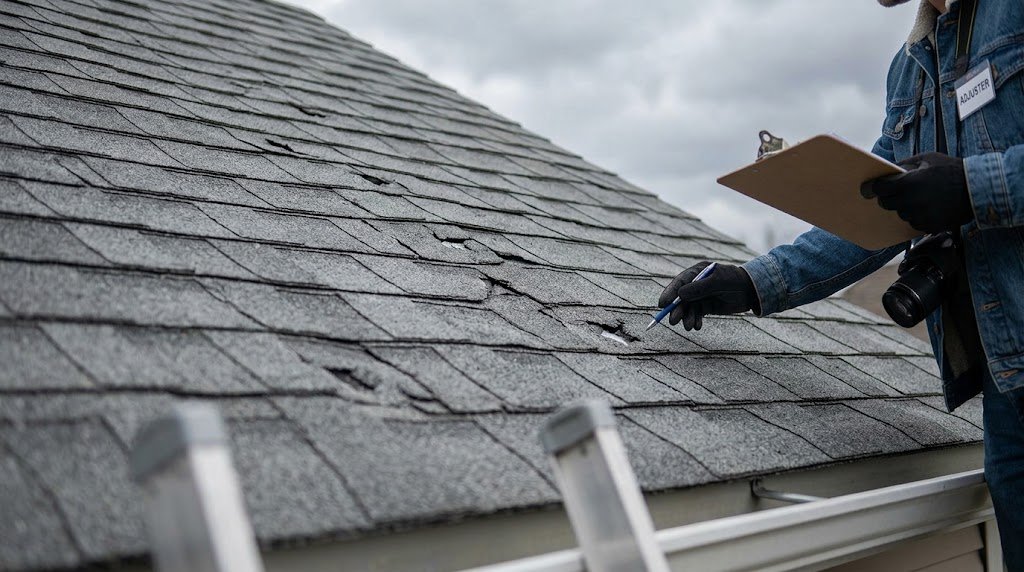

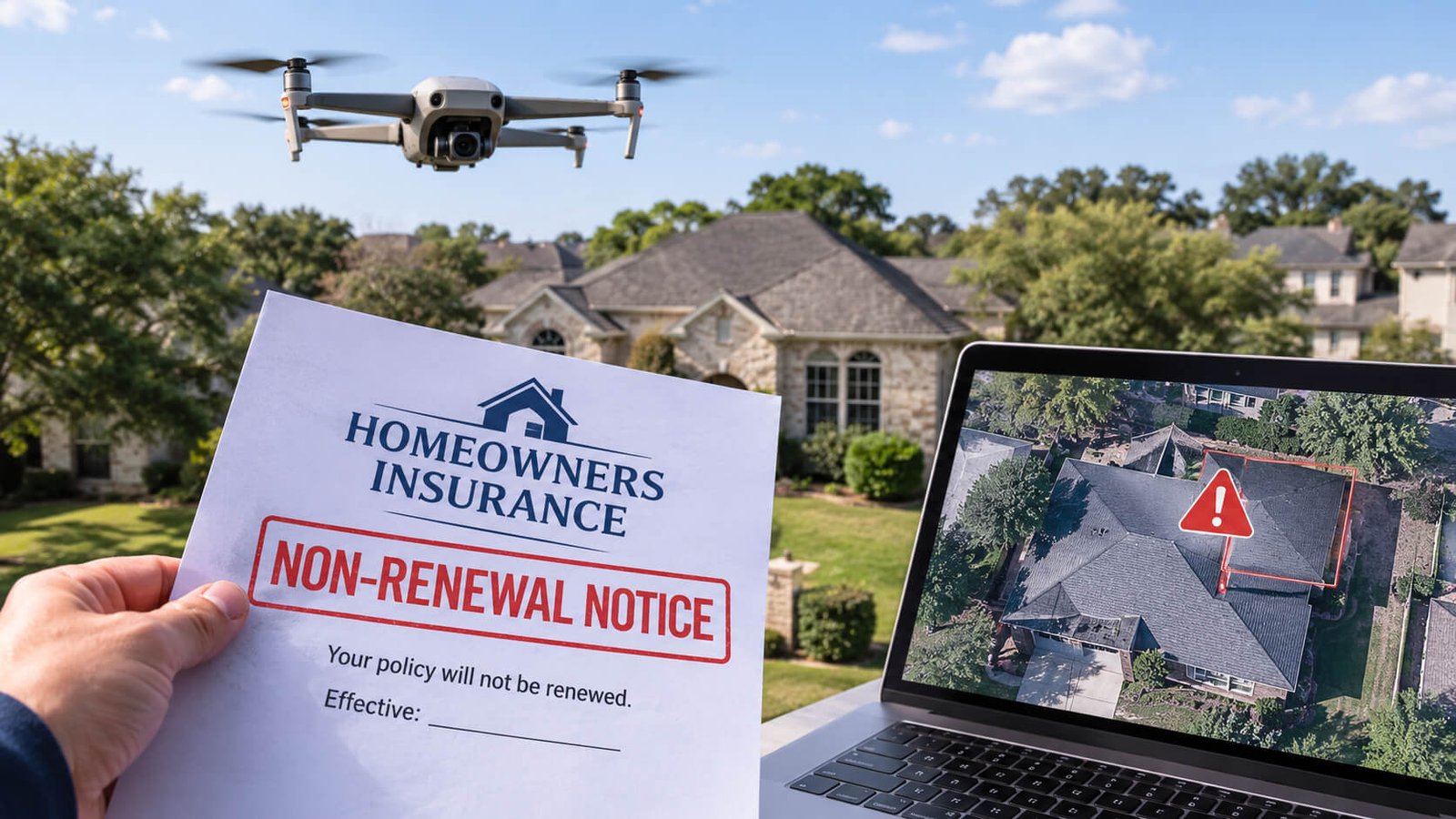

Imagine opening your mail and finding a notice that your homeowners insurer will not renew your policy. You have not filed a claim. No adjuster has visited. The reason, as best you can tell, is a photograph of your house taken from above.
Reporting by KUT News and other Texas outlets, beginning in 2025, found that this has happened to Texas homeowners, including in Houston, Austin, and San Antonio. Insurers are using satellite and drone imagery, often with automated image analysis, to help decide which homes to renew. For homeowners from Houston to the Rio Grande Valley, it raises a practical question: what can you do when a software-assisted reading of an image affects whether you can keep your coverage?
In short: as reported in 2025, Texas law did not prohibit insurers from using aerial imagery or artificial intelligence in underwriting. Since January 1, 2026, however, House Bill 2067 requires insurers to provide a written statement of the reasons for a non-renewal without being asked, and Texas law generally requires 60 days’ written notice before a home policy is non-renewed.
I spent over a decade as an insurance adjuster before becoming an attorney, managing high-exposure property and casualty claims for carriers and third-party administrators, and later practiced insurance defense. My experience was on the claims side, not in underwriting. But I know how carriers build files, how they document property conditions, and how a single data point can shape a decision about a home. This article explains what is known about aerial-imagery underwriting and where homeowners may have questions.
How Insurers Are Using Satellite and Drone Imagery to Underwrite Homes
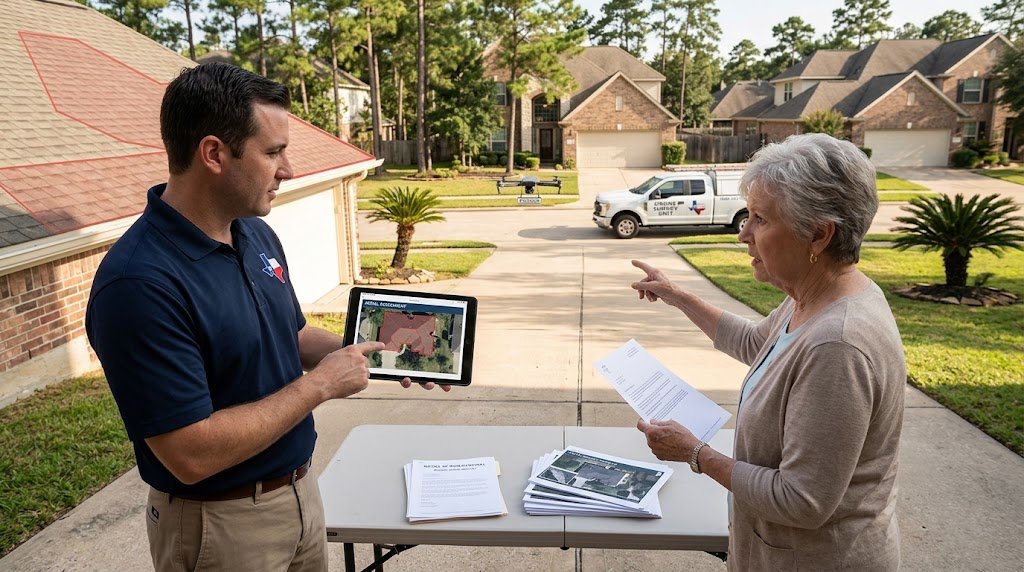
Underwriting is how an insurer decides whether to offer coverage, on what terms, and at what price. Traditionally that meant applications, inspection reports, and claim history. Many carriers now supplement those sources with high-resolution aerial photographs from satellites, aircraft, or drones, and software that scans the images for features the insurer considers risk factors.
According to KUT News, at least one insurer uses computer models to flag conditions such as moldy roofs, crooked tree branches, and missing shingles, and then notifies homeowners that their policies may not be renewed. The reporting also noted that some insurers obtain their images from third-party aerial imagery services, and that insurers are required to file documents with the state describing how they evaluate homes and set prices, including the vendors they use.
In general terms, an imagery-based review looks at the exterior of a property: the roof’s apparent age and condition, visible debris, nearby tree growth, and other features that may signal a higher likelihood of loss. An insurer may use the results to flag a home for further review, request repairs, or decide not to renew the policy.
The appeal to insurers is easy to see. Imagery lets them review thousands of homes without sending anyone to the property. For a homeowner, though, the process can feel opaque. You may never learn which image was used, when it was taken, or what a program concluded from it. The stakes can be high, because losing homeowners coverage can also affect a mortgage, since lenders typically require it.
Texas regulators have been paying attention to the underlying transparency issue. The Texas Department of Insurance issued Commissioner’s Bulletin B-0012-25 on HB 2067, which explains the new written-reason requirement and states that TDI will adopt rules. Regulators in other states, including Colorado and Tennessee, have gone further and issued bulletins cautioning insurers that aerial imagery should not be the sole basis for an adverse action, and that homeowners should have a chance to dispute it. I am not aware of Texas guidance that does the same, so Texas homeowners should not assume those protections apply here.
Real Examples of Non-Renewals Triggered by Aerial Photos
The reported examples tend to involve conditions that look minor to the homeowner. KUT News described an Austin homeowner whose insurer emailed aerial photographs appearing to show tree branches close to her roof and gave her roughly two months to address them. She paid a landscaping company about $3,000 to prune the trees, and the insurer agreed to renew her policy days before it was set to expire. KUT also reported, based on records from the Texas Department of Insurance, that an aerial photo of a Houston home was used by American Mercury to assess the property for renewal, and that the homeowner was told to replace the roof or lose coverage. In another reported complaint, a homeowner said the roof had been replaced only five or six years earlier.
The reporting also described a broader trend. According to Texas Public Radio, the rate at which insurers in Texas chose not to renew home policies nearly doubled between 2020 and 2023, and NPR reported that at least a dozen homeowners had asked TDI to investigate insurers’ use of aerial photos since 2023. These are reporters’ findings, not conclusions I can verify, and I am not describing any Herrera PLLC client’s experience here. The point is that the pattern is not limited to homes with obvious damage. It can involve conditions that a person standing in the yard would assess very differently than software looking down from above.
It also helps to separate two situations that can look alike from the homeowner’s side:
- Underwriting decisions, where the insurer decides whether to renew a policy or on what terms.
- Claim decisions, where the insurer decides whether and how much to pay for a loss that has already happened.
They follow different rules and call for different questions. A non-renewal looks forward: it generally ends coverage for future losses, but it does not erase a claim for a loss that happened while the policy was in force. The Texas Department of Insurance has a consumer page on reasons home and auto insurance policies are declined, canceled, or not renewed, and the Insurance Code’s Chapter 551, which governs declination, cancellation, and non-renewal, is the place to start for the statutory framework.
Why AI Image Analysis Sometimes Gets It Wrong
Automated analysis is a tool, and tools have limits. A photograph is a single moment from a single angle. Several things can lead to a misreading:
- Shadows and lighting. The angle of the sun, or a shadow from a tree or chimney, can look like staining, ponding, or damage in an image.
- Image age. The photograph may have been taken months or years before the decision. A roof repaired or replaced since then can still look damaged in an older image.
- Overhead perspective. A branch that appears to touch the roof from above may be several feet away. The view also cannot show the underside of a roof, the attic, or the interior.
- Material and color. Different roofing materials and aging patterns can confuse software trained mostly on other examples.
- Classification errors. A program may flag a condition as a “risk” that a human inspector would find unremarkable, or that a policy does not treat as a basis for non-renewal at all.
Because it was my job as an adjuster to look at property conditions in person and compare them to what the paperwork said, I am cautious about any conclusion drawn from a photograph alone. The gap between what an image suggests and what is physically present can be significant. Our article on what to do when an insurance company sends an engineer discusses a similar theme: an outside opinion about your property can shape a decision, and it can be examined.
Your Right to a Written Explanation Under HB 2067
House Bill 2067, passed by the 89th Texas Legislature and effective January 1, 2026, is the law at the center of this issue. Before it, Section 551.002 of the Insurance Code required an insurer to give a written statement of its reasons for declining, canceling, or non-renewing a policy only if the applicant or policyholder asked for one. HB 2067 removed the request requirement, so the insurer must now provide the written statement on its own. According to TDI’s bulletin, it applies to decisions made on or after January 1, 2026. The law also requires insurers to report summaries of their stated reasons to TDI each quarter, and it allows insurers to deliver the notice or statement electronically.
In practical terms, a written explanation matters because it can turn “we are not renewing your policy” into a stated reason that can be checked. If the reason is a tree branch, a roof condition, or a visible feature of the property, the homeowner can look at the property and compare. Without a stated reason, there is little to respond to.
The statute requires a statement of reasons. It does not, on its face, say that the insurer must hand over the image it relied on, and TDI has said it will adopt implementing rules, so the details may develop. TDI also accepts consumer complaints when an insurer does not provide a written explanation. Homeowners with questions about their rights can consult the Texas Department of Insurance’s consumer information. Whether a particular notice satisfies Texas requirements depends on the notice, the policy, and the date. That is a question to take to an attorney or to the Department rather than to assume either way.
Disputing a Non-Renewal Based on a Misread Image
When a homeowner believes a non-renewal rests on a misread image, the options generally fall into a few categories. What fits depends on the facts, the policy, and the timeline, and nothing here is a recommendation for any particular situation.
Understanding what the insurer actually relied on. A homeowner may want to know what image or report was used, when it was taken, and what condition it was said to show. A written explanation, where one is required, is the starting point.
Documenting the property as it actually is. Current photographs, repair or maintenance records, and invoices for work done after the image was taken may bear on whether the stated reason is accurate. A contractor, roofer, or independent inspector may be able to document actual condition.
Raising the issue with the insurer and, where appropriate, regulators. Insurers sometimes revisit a decision when presented with evidence that the underlying information was wrong, as in the Austin example above. The Texas Department of Insurance accepts consumer questions and complaints.
Considering the claim history. Non-renewal and claims often overlap. If your home has had storm damage, a pending claim, or a recent denial or underpayment, the two issues may be related. Our pages on homeowners insurance claims denied and homeowners insurance claims underpaid explain how Herrera PLLC approaches those disputes.
Roof condition is often the center of these disputes. If an insurer has pointed to roof condition in a claim, see our discussions of hail claims denied as cosmetic damage and roof claims denied for wear and tear or old damage. If the roof has had storm damage, our page on underpaid wind, hail, and roof damage claims is relevant.
One caution: deadlines can apply. Under Section 551.105, an insurer generally must mail written notice of non-renewal of a home policy not later than the 60th day before the policy expires, a period that was lengthened from 30 days for policies renewed on or after January 1, 2024. If the insurer does not mail timely notice, the statute generally gives the policyholder the right to ask that the policy be renewed. Cancellation during the policy term is more limited, and notice for a cancellation can be as short as 10 days. Waiting to ask questions can limit options.
Practical Steps to Keep Your Home Off the “High Risk” List
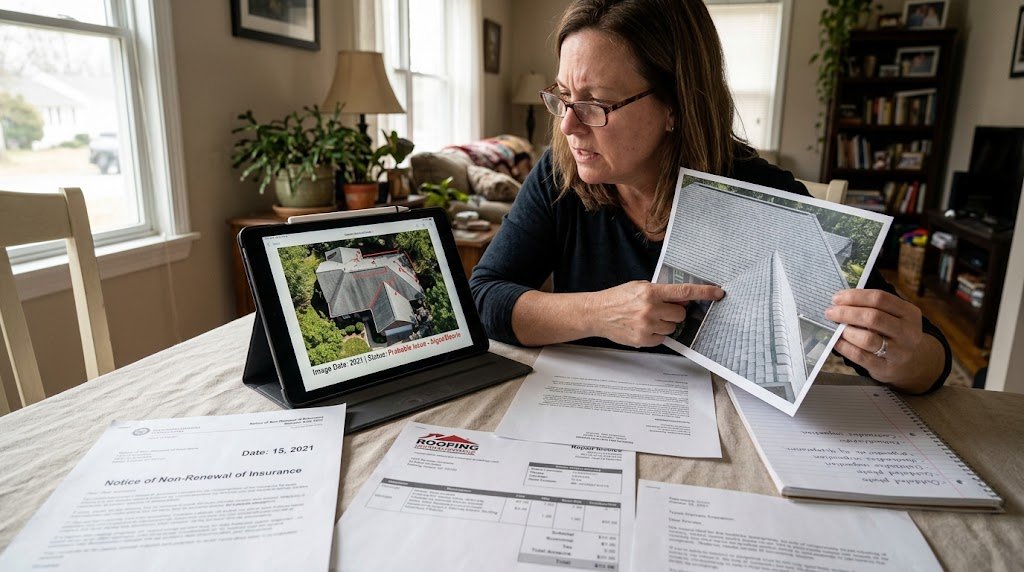
No homeowner can control how an insurer’s software reads a photograph. But there are general, commonsense steps that homeowners often consider to reduce the chance that an outdated or inaccurate picture works against them. This is general information, not a guarantee that any step will prevent a non-renewal.
- Keeping their own records. Dated photographs of the roof, exterior, and surrounding landscaping, along with maintenance and repair invoices, create a record that may help if a condition is ever disputed.
- Paying attention to what is near the roof. Trees, branches, and debris are among the features reported as triggering reviews. Houston’s Gulf Coast climate, with its heavy storms, humidity, and fast-growing vegetation, makes this an ongoing concern for many homeowners.
- Documenting repairs after storms. If a home sustained storm damage and was repaired, the paperwork can matter. An older aerial image may not reflect completed work.
- Reading renewal and policy notices carefully. Notices can contain deadlines and information about how to respond.
- Filing and documenting claims properly. If you have a loss, our article on what to do after you’ve filed a homeowners insurance claim explains what comes next.
Frequently Asked Questions
Can an insurer cancel my policy based on a satellite photo?
Insurers use aerial imagery as one input in underwriting decisions, including decisions not to renew. Cancellation during the policy term and non-renewal at the end of it are different things under Texas law. Cancellation is generally limited to specific circumstances, such as nonpayment of premium, a fraudulent claim, or an increase in hazard within the policyholder’s control, while non-renewal generally requires written notice at least 60 days before the policy expires. Since January 1, 2026, the insurer must also provide a written statement of its reasons. Whether a particular decision based on imagery is permitted depends on the policy, the notice, and Texas law. An attorney can review your notice and policy.
What kinds of issues do insurers look for from aerial imagery?
Reporting indicates insurers look at roof condition and age, tree branches near the roofline, missing shingles, moss or mold on the roof, debris, and other visible exterior features that they associate with risk. Which factors a given insurer uses can vary and is not always disclosed to homeowners.
Can AI misread damage in these photos?
Yes, misreadings are possible. Shadows, the age of the image, the overhead angle, and roofing materials can all lead software to flag a condition that does not exist or has since been repaired. A photograph is not a substitute for an in-person inspection of the property.
Do I have a right to know the specific reason?
Yes, in the sense that House Bill 2067, effective January 1, 2026, requires an insurer to provide a written statement of its reasons for declining, canceling, or non-renewing a policy, without the policyholder having to ask. How specific the statement must be, and whether you are entitled to see the image itself, depends on the statute’s text and on rules TDI has said it will adopt. TDI accepts complaints if no explanation is provided. An attorney can help evaluate whether the explanation you received is sufficient.
What can I do to avoid an aerial-imagery non-renewal?
There is no step that can guarantee a policy will be renewed. Homeowners commonly keep dated photographs and repair records, address visible conditions such as overhanging branches, and review their notices promptly. As the Austin example shows, insurers have sometimes renewed a policy after a flagged condition was addressed, but that is not assured. An attorney can discuss your situation specifically.
This article is for general educational purposes and is not legal advice or a substitute for advice about a specific situation. Insurance non-renewal decisions and property claim disputes depend on the facts, the applicable policy language, the insurer’s assessment of the property, and the circumstances surrounding the coverage decision or claim. Policyholders who have received a non-renewal notice or have a denied or underpaid property insurance claim are welcome to call Herrera PLLC at 832-891-3210, email jherrera@jh-lawpllc.com, or reach out through the contact page to schedule a free, confidential consultation.
Jonathan Herrera, J.D.
Jonathan Herrera is the founder of Herrera PLLC in Houston, Texas. He spent more than a decade working as an insurance adjuster, founded JH Claims LLC, and practiced insurance defense at Rymer, Echols, and Nelson-Archer before opening his own firm representing injury victims, policyholders, and businesses.