
What Counts as Uninsured and Underinsured Motorist Coverage in Texas? What UM/UIM Actually Pays For

Most drivers assume that if another driver causes a crash, the other driver’s insurance will cover the damage. On Houston roads like I-10, I-45, and Highway 288, that assumption does not always hold. The at-fault driver may carry no insurance, may carry the bare legal minimum, or may leave the scene and never be found. When that happens, the policy that matters most may be your own.
Uninsured and underinsured motorist coverage, usually shortened to UM/UIM, is the part of a Texas auto policy built for those situations. I spent over a decade as an insurance adjuster before becoming an attorney, and I later practiced insurance defense. That experience taught me how auto policies are written, how carriers read them, and how a carrier evaluates a claim from its own policyholder. This guide explains in plain terms what UM/UIM coverage does, where it can fall short, and what questions tend to arise when you file a claim against the company you pay every month.
What UM and UIM Coverage Actually Do
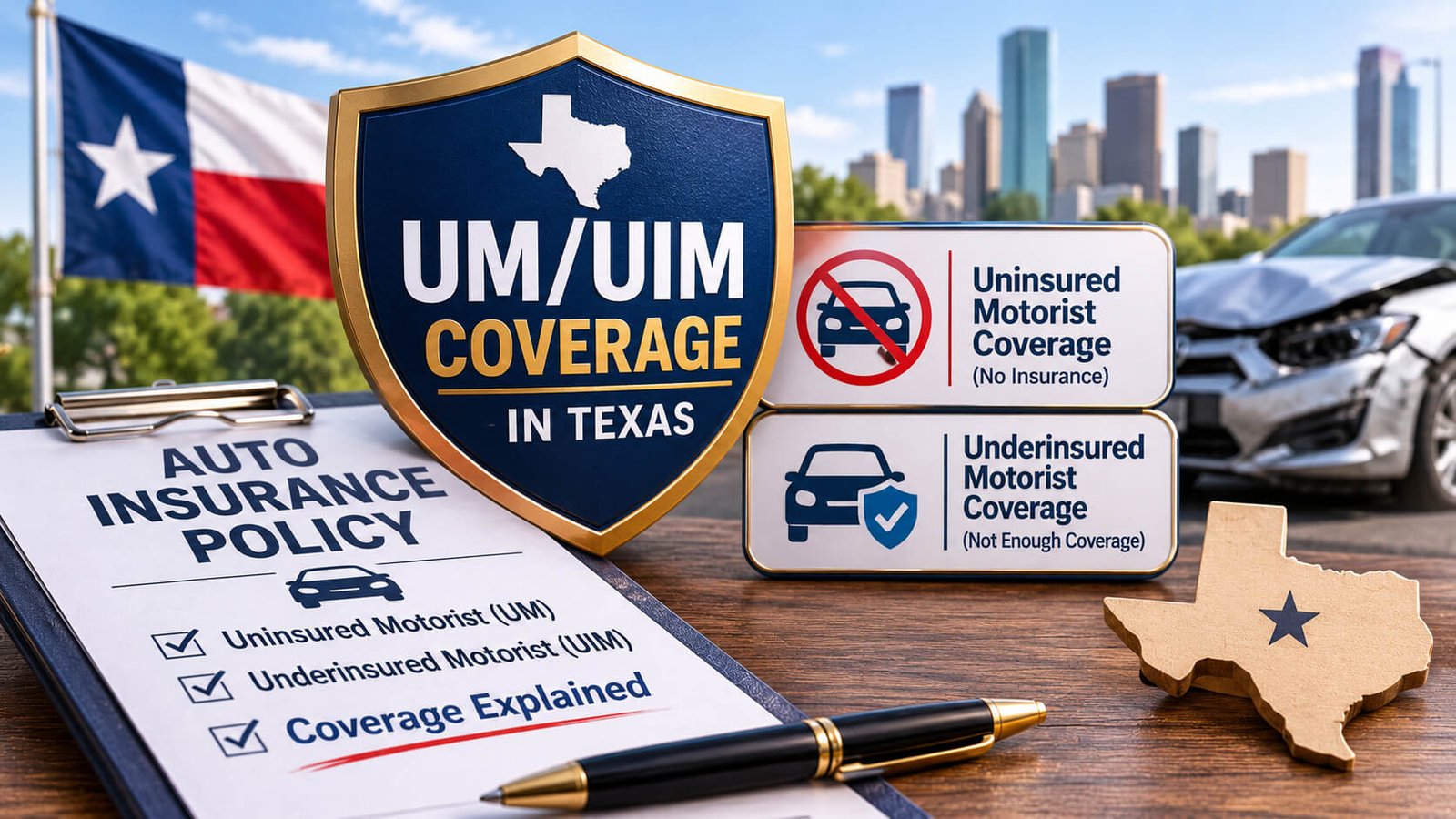
The Texas Department of Insurance describes uninsured/underinsured motorist coverage as paying when you are hit by someone who did not have insurance or did not have enough to pay your medical and car repair bills. It also applies in a hit-and-run accident. In effect, it steps into the shoes of the missing or inadequate liability policy.
The two terms are related but different:
- Uninsured motorist (UM) coverage applies when the at-fault driver has no liability insurance. Texas law also treats a vehicle as uninsured, subject to the terms of the coverage, when the other driver’s insurer cannot pay because of insolvency.
- Underinsured motorist (UIM) coverage applies when the at-fault driver has insurance, but the limits are lower than your own UIM limit, or have been reduced by other claims from the same accident.
According to the Texas Department of Insurance, this coverage can pay for car repairs and replacement of property in your car, a rental car if you need one, medical bills for you and your passengers, pain and suffering costs, and diminished value if your car is worth less after the accident. The property damage portion is subject to a $250 deductible under Section 1952.105 of the Insurance Code. Your actual coverage depends on your policy, so the declarations page and policy language control.
Texas law also sets how UIM recovery works. Under Section 1952.106 of the Texas Insurance Code, underinsured motorist coverage pays the amounts the insured is legally entitled to recover as damages from the underinsured driver, up to the policy limit, reduced by the amount recovered or recoverable from that driver’s insurer. The statutory framework for this coverage is found in Chapter 1952 of the Texas Insurance Code, Subchapter C.
Texas’s Minimum Liability Requirements and Why They Are Not Enough
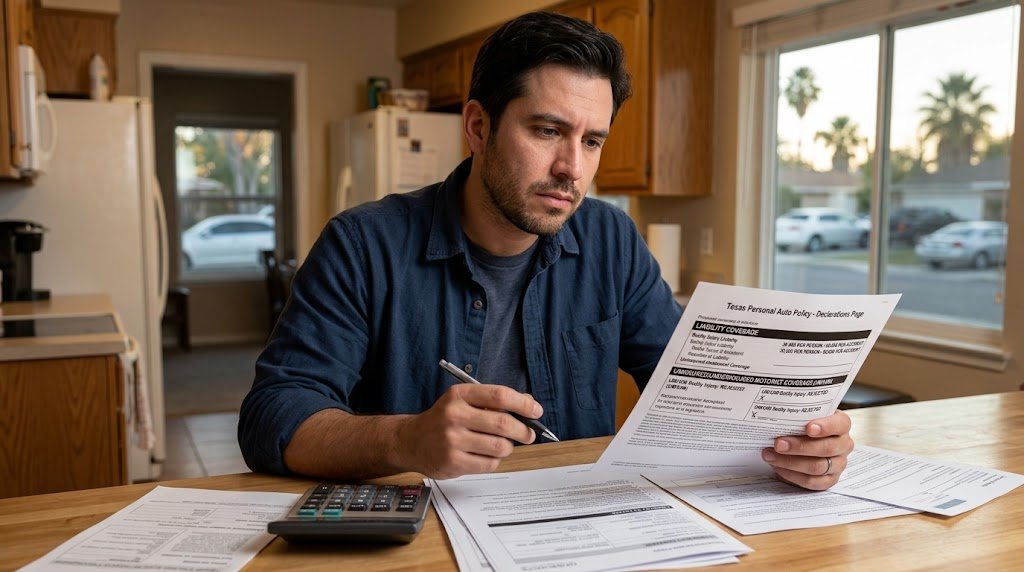
To understand why UIM matters, it helps to look at what a driver is required to carry. The Texas Department of Insurance explains that Texas law requires at least $30,000 of liability coverage for injuries per person, up to $60,000 per accident, and $25,000 for property damage. This is commonly called 30/60/25 coverage. The minimum amounts are set out in Chapter 601 of the Transportation Code.
Those numbers can disappear quickly after a serious crash. Consider the kinds of cases our firm handles: injuries requiring surgery, permanent disability, substantial lost income, and life-changing harm. A single hospital admission, a long recovery, or lost earning capacity can exceed a $30,000 per-person limit. The Texas Department of Insurance itself cautions that minimum liability limits might be too low if a driver causes a multi-vehicle accident or the other driver’s car is totaled.
When the at-fault driver’s coverage runs out before your losses do, the gap does not close on its own. UIM coverage exists to address it, but only if you purchased it, and only up to your own limits. Under Section 1952.105, you can choose your UM/UIM bodily injury limits, but they cannot exceed the bodily injury liability limits on the same policy.
Texas insurers must also offer this coverage. Under Section 1952.101 of the Insurance Code, an insurer may not issue an auto liability policy covering a motor vehicle unless it provides UM/UIM coverage in or supplemental to the policy, and the requirement does not apply if an insured named in the policy rejects the coverage in writing. In other words, UM/UIM is not mandatory for every driver, but declining it requires a written rejection. Policyholders sometimes do not remember whether they accepted or rejected it. Reviewing the actual paperwork is often the first step.
Filing a UM/UIM Claim Against Your Own Insurer
A UM/UIM claim is different from the claims most people imagine. You are not asking the at-fault driver’s company to pay. You are making a claim under your own policy, with the company you chose.
The Texas Department of Insurance advises several practical steps after an auto accident, including getting the other driver’s contact and insurance details, collecting witness information, noting the date, time, and location, photographing the scene, notifying your insurer as soon as possible, and sending the company a copy of the police report. If you were hurt, the Department also suggests telling the company and providing medical records and bills.
The Department’s auto insurance guide also describes the timeline Texas law sets for claims you file with your own company. The company must tell you it received your claim within 15 days of getting notice, must accept or reject the claim within 15 business days of receiving all the information it needs from you, and may take up to 45 days if it needs more time and tells you the reason for the delay. It must send payment within five business days after agreeing to pay. You can read the guidance in the Department’s auto insurance guide and its page on uninsured motorist coverage.
UM/UIM claims work differently from standard property claims in one important way. Because the coverage pays what you are legally entitled to recover from the other driver, fault and the amount of your damages have to be established. The Texas Supreme Court held in Brainard v. Trinity Universal Insurance Co. that a UIM carrier has no contractual duty to pay benefits until the insured obtains a judgment establishing the other driver’s liability and underinsured status, and in Allstate Insurance Co. v. Irwin it confirmed that a declaratory judgment action can be used to resolve those questions. This is why the prompt payment deadlines described above can play out differently in a UM/UIM dispute than they do in a roof or fire claim.
Texas has also set a few procedural rules for these claims. The Insurance Code places the burden of proof on the insurer in a dispute over whether a vehicle is uninsured, and it limits where an action against the insurer over this coverage can be brought: the county where the policyholder lived at the time of the accident, or the county where the accident occurred. For many readers, that means Harris County or a surrounding county. If your accident involved a commercial truck, our page on truck accidents discusses some of the added complexity. Time limits can apply both to the underlying injury claim and to claims under the policy, and the policy itself may contain notice requirements, so waiting too long can limit available options.
Why Your Own Insurer Can Still Act Like an Adversary
This is the part that surprises many policyholders. You have paid premiums for years, and the moment you file a claim, the company may treat you as a claimant to be evaluated rather than a customer to be protected.
The reason is structural. A UM/UIM claim asks your insurer to pay money. The company has a financial interest in what it pays, and its adjusters evaluate your claim using the same methods they use on any injury claim. I know those methods because I used them. As an adjuster, I evaluated injury claims, set reserves, and worked with defense counsel on how to resolve them. I know what documentation tends to move a claim’s value and which arguments carriers routinely discount.
Policyholders commonly run into several patterns:
- Disputes over fault. Your insurer may question whether the other driver was actually at fault, or argue that you share responsibility. The Texas Department of Insurance notes that if there are no independent witnesses and the other driver denies fault, a company might deny a claim.
- Disputes over damages. The company may argue that your treatment was excessive, that your injuries pre-dated the crash, or that your future medical needs are overstated.
- Disputes over what the policy covers. Policies contain definitions, conditions, and exclusions. Texas courts generally construe genuinely ambiguous policy language in favor of the policyholder, but enforcing that principle usually requires an attorney.
- Delay. A company that repeatedly requests information it already has, or goes quiet for long stretches, may be creating the kind of delay that Texas claim-handling rules are meant to address.
Where an insurer unreasonably denies a valid claim, fails to investigate properly, misrepresents policy provisions, or uses delay tactics, Texas law may treat that conduct as bad faith. That can open the door to recovery beyond policy benefits. In the UM/UIM setting, though, the threshold rule described above matters: because the carrier’s payment obligation generally depends on the other driver’s liability and your damages being established, claims about how the carrier handled the process can turn on that question. Whether any of this applies to a particular claim depends on the facts.
If your carrier is slow or unresponsive, the Texas Department of Insurance accepts written complaints, though the Department notes its ability to help can be limited and that it cannot decide who was at fault in an accident or determine damage amounts.
Stacking Coverage Across Multiple Vehicles or Policies
“Stacking” refers to combining UM/UIM limits from more than one vehicle or more than one policy to increase the total available after a single accident. It is one of the most misunderstood topics in this area, and the answer often turns on the exact policy wording.
Two pieces of Texas authority are worth knowing about. First, Section 1952.104 of the Insurance Code requires UM/UIM policy forms to provide that, regardless of the number of persons insured, policies or bonds applicable, vehicles involved, or claims made, the total aggregate limit of liability to any one person injured in a single occurrence may not exceed the limit stated in the policy. In practical terms, that language generally limits how a single policy’s limits can be multiplied by the number of vehicles listed on it.
Second, the Texas Department of Insurance’s review guidelines for personal auto policies address anti-stacking language. According to the Department, “other insurance” clauses may not contain anti-stacking or non-cumulation language that excludes or limits coverage in other separate but applicable policies, and anti-stacking language may only apply to policies issued to the named insured by the same company. The Department ties this to the Texas Supreme Court’s decision in Stracener v. United Services Automobile Association and states that insureds are entitled to the coverage they pay for. The Department’s review checklist for personal auto policies sets out this guidance.
What that means for any individual driver depends on how many policies exist, who the named insureds are, which vehicle was involved, and how the policy defines “insured.” A household with several vehicles, a policy through an employer, or a separate policy for a family member can each change the analysis.
Hit-and-Run Claims and UM Coverage
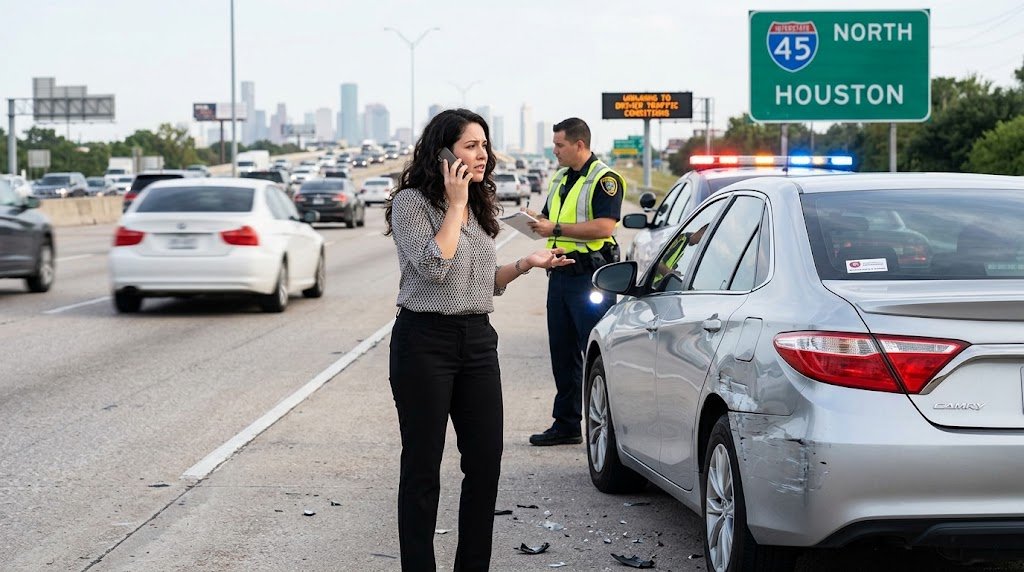
Hit-and-run crashes are among the most frustrating accidents because there is no one to hold responsible. The Texas Department of Insurance states that UM/UIM coverage also pays if you are in a hit-and-run accident and the other driver cannot be found to pay for damages.
Texas law attaches conditions to these claims. Under Section 1952.104 of the Insurance Code, when the owner or operator of the vehicle that caused the injury or damage is unknown, actual physical contact must have occurred between that vehicle and the insured’s person or property for the insured to recover under uninsured motorist coverage. The Department also advises calling the police if you were hit by a driver who left the scene, and warns that uninsured motorist coverage will not pay for a hit-and-run accident that was not reported to police.
Those details matter. A near miss that forces you off the road, with no contact, may not fit the statutory requirement. Prompt reporting, photographs, witness names, and a copy of the police report can all become important. The Office of Public Insurance Counsel also publishes information about hit-and-run crashes for Texas consumers.
UM/UIM questions can arise in many accident types. Motorcyclists may find our page on motorcycle accidents relevant, and passengers in ridesharing vehicles may want to review our rideshare accident page. When a crash results in the loss of a loved one, families may find information on our wrongful death page. For the most common scenario, see our overview of car accident claims.
Frequently Asked Questions
What is the difference between UM and UIM coverage?
UM coverage applies when the at-fault driver has no insurance. UIM coverage applies when the at-fault driver has insurance, but the limits are not enough to cover your damages. Texas law defines an underinsured motor vehicle as one with collectible liability coverage that was originally lower than, or has been reduced by other claims to an amount below, the underinsured limit stated in your policy.
Is UM coverage required in Texas?
Texas insurers must offer UM/UIM coverage when you buy auto insurance, but a named insured may reject it in writing. If you did not reject it in writing, the coverage may be part of your policy. Your declarations page and policy documents show what you have.
Can I stack UM coverage across multiple cars?
It depends on the policy language, the number of policies, and who is insured. Texas requires UM/UIM policy forms to limit the total aggregate liability for one person’s injuries in a single occurrence to the policy limit, while Department guidance addresses anti-stacking language across separate policies. An attorney can review your policies and explain how they apply to your situation.
What happens in a hit-and-run without UM coverage?
Without UM coverage, your options may be more limited, and the outcome depends on what other coverage you have, such as collision coverage, medical payments, or personal injury protection. The Texas Department of Insurance explains how these coverages can apply. If you have none of them, an attorney can discuss what remains available.
Why would my own insurer dispute a UM claim?
Because the claim asks the company to pay. Carriers may question fault, challenge the value of your injuries, dispute policy terms, or slow the process. Whether a dispute rises to the level of unreasonable conduct depends on the facts of your claim.
This article is for general informational purposes and is not legal advice or a substitute for advice about a specific situation. UM/UIM claims depend on the facts of the accident, the applicable insurance policy, and the circumstances surrounding the insurer’s evaluation of the claim. Individuals involved in crashes with uninsured or underinsured drivers are welcome to call Herrera PLLC at 832-891-3210, email jherrera@jh-lawpllc.com, or reach out through the contact page to schedule a free, confidential consultation.
Jonathan Herrera, J.D.
Jonathan Herrera is the founder of Herrera PLLC in Houston, Texas. He spent more than a decade working as an insurance adjuster, founded JH Claims LLC, and practiced insurance defense at Rymer, Echols, and Nelson-Archer before opening his own firm representing injury victims, policyholders, and businesses.