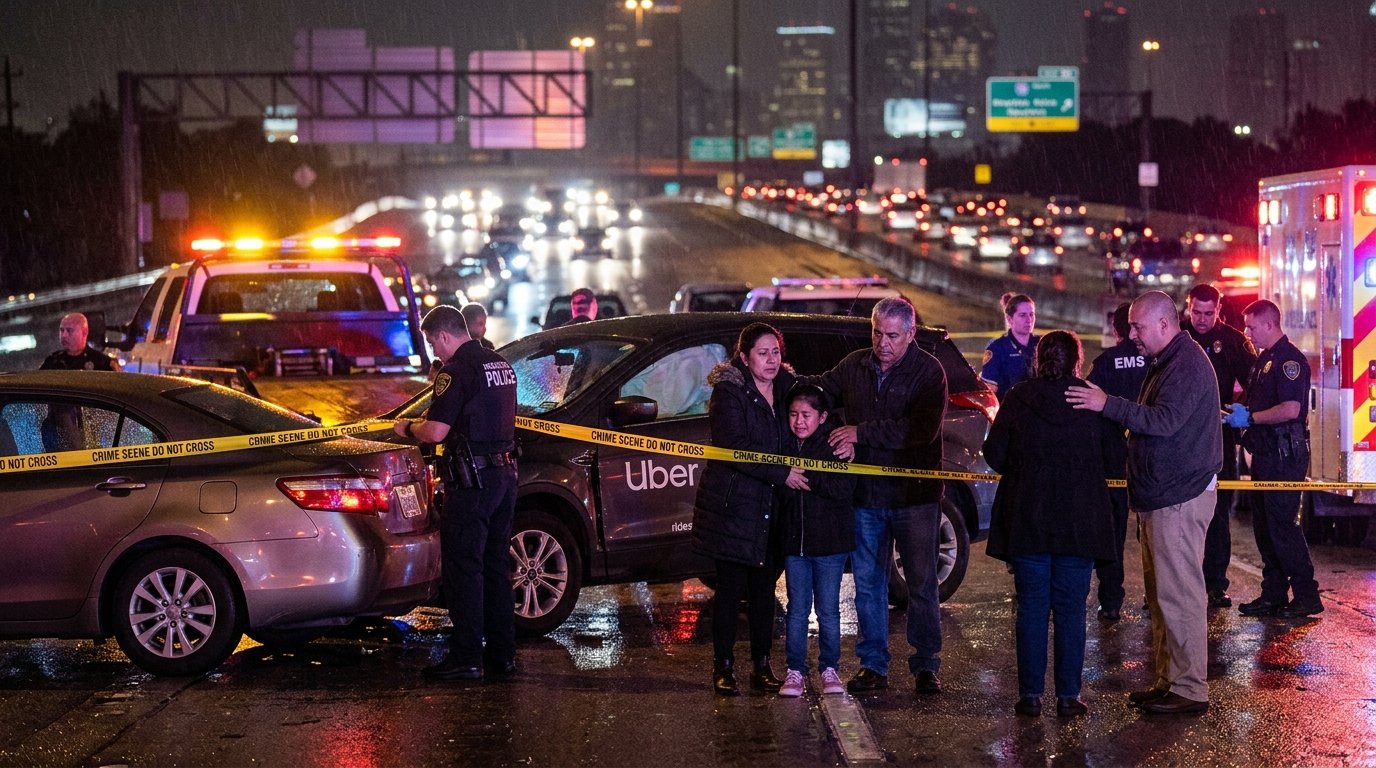

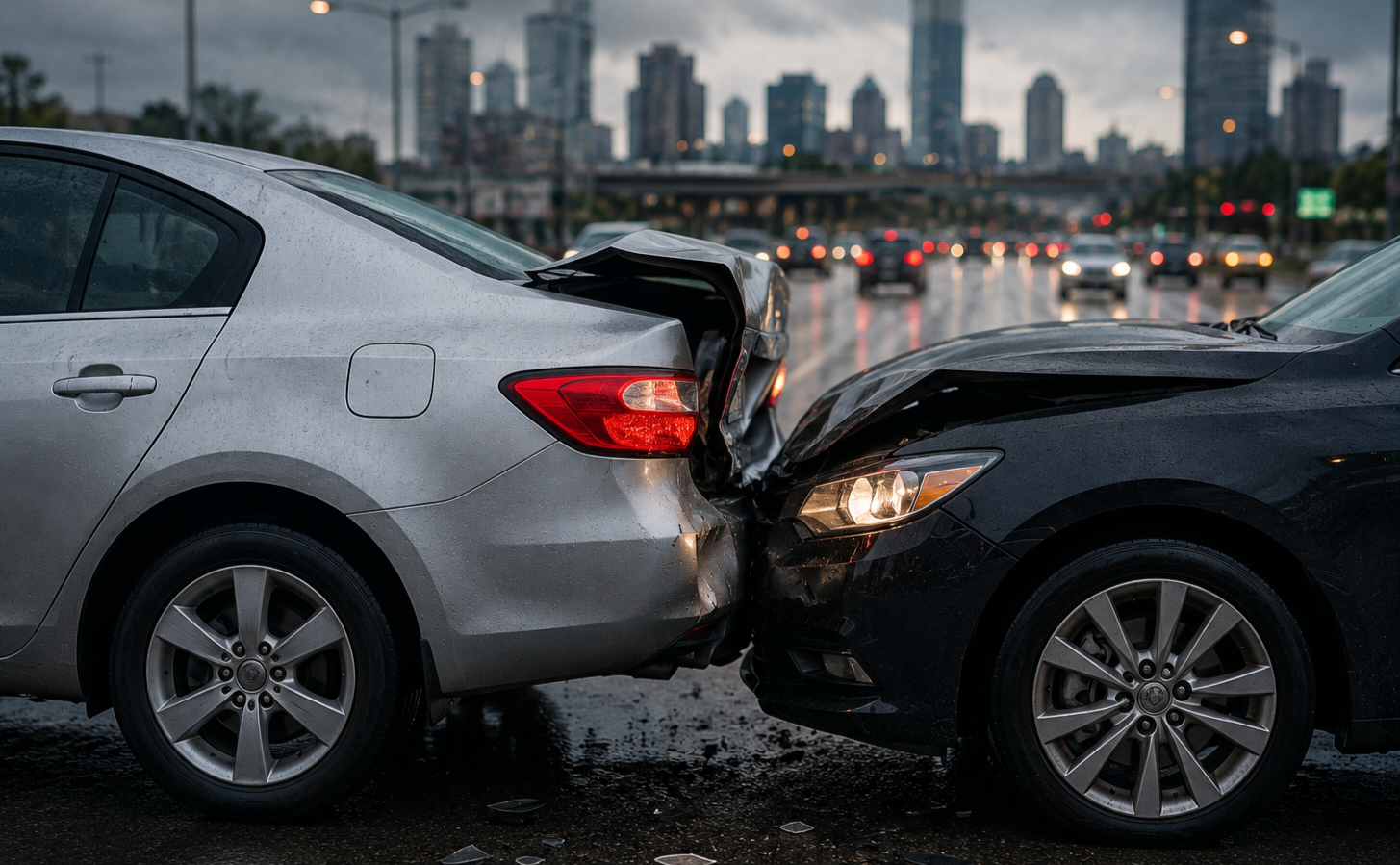

A driver stopped short in stop-and-go traffic on I-45. A car struck from behind after braking for a sudden lane change ahead of it. A three-car chain-reaction pileup on the Katy Freeway during rush hour. Rear-end collisions are the single most common type of crash on Houston’s freeways, and because they happen so often, there’s a near-automatic assumption attached to them: the driver in back hit the driver in front, so the driver in back must be at fault.
That assumption holds up in a lot of cases. But it isn’t an ironclad rule, and it doesn’t resolve every rear-end claim on its own. At Herrera PLLC, Jonathan Herrera draws on more than a decade evaluating claims as a licensed insurance adjuster before becoming an attorney, experience that informs how he looks at disputed fault scenarios, from how carriers apply the following-distance presumption to how they tend to value the resulting injuries. This article looks at how Texas law treats fault in rear-end crashes, when that fault can shift, and what tends to matter most in a genuinely contested claim.
The Following-Too-Closely Presumption Under Texas Law
Texas Transportation Code Section 545.062 requires drivers to maintain an “assured clear distance” from the vehicle ahead of them enough space, given speed, traffic, and road conditions, to stop safely without colliding. When a rear-end crash happens, the fact of the collision itself is often treated as evidence that this following distance wasn’t sufficient, and insurance adjusters, investigators, and courts commonly start from the assumption that the trailing driver is at fault.
Insurance companies, investigators, and even courts often start from the assumption that the trailing driver is at fault. But Texas appellate courts have specifically held that a rear-end collision, on its own, is not negligence as a matter of law. It can be some evidence of negligence, but the injured party generally still has to show the specific act that caused the crash. That distinction matters because it means the automatic-fault assumption insurers rely on is not as airtight as it is often treated.
When the Lead Driver Can Still Share Fault
Texas follows a modified comparative negligence rule under Chapter 33 of the Texas Civil Practice and Remedies Code, which means fault in a car accident claim doesn’t have to rest entirely on one driver. Each party’s share of responsibility is weighed against the specific facts of the crash, and an injured person can still recover damages as long as they are found no more than 50% at fault. When the lead driver’s own actions played a real role in causing the crash, that can shift meaningful responsibility away from the rear driver, even in a case that looks straightforward on the surface.
Circumstances that can support shared or shifted fault include a lead vehicle with non-functioning brake lights, an unsafe or illegal stop in a live traffic lane, an abrupt lane change without signaling, or reckless driving that leaves little realistic chance to react. None of these automatically clears the rear driver, since Texas law still asks whether that driver was following at a reasonable distance and speed for conditions, but they matter to how fault is ultimately divided. For a broader look at how fault and damages are evaluated across Texas car accident claims generally, see our car accidents page.
Sudden Stops, Brake-Checking, and Mechanical Failure Scenarios
Some of the most genuinely contested rear-end cases involve a sudden stop by the vehicle in front. There’s a meaningful difference between braking for ordinary traffic conditions, which a following driver is expected to anticipate, and an abrupt stop made without justification, sometimes described as brake-checking, where the stop itself may be the unreasonable act.
Mechanical issues can complicate fault further. A rear driver whose brakes failed unexpectedly may raise questions about vehicle maintenance and whether that failure was foreseeable. A lead driver whose vehicle stalled without warning, or whose brake lights weren’t working, raises a separate question about whether other drivers had a fair opportunity to see and react to the hazard ahead. Chain-reaction, multi-vehicle rear-end crashes add another layer of complexity, since each impact in the sequence may need to be examined separately to determine which driver’s conduct actually caused which collision. These scenarios are rarely resolved by a single fact; they typically depend on the full sequence of events and the evidence available to reconstruct it.
Commercial Trucks in Rear-End Crashes: Added Complexity
Rear-end collisions involving commercial trucks raise considerations beyond a standard two-car crash. Federal motor carrier regulations govern driver hours and vehicle maintenance standards for commercial operators, while separate federal guidance addresses safe following distances for large trucks. Corporate liability structures involving the trucking company, the driver, and in some cases third-party maintenance or logistics contractors can also mean more than one party bears responsibility for a crash on I-10, I-45, or another major Houston corridor. More on how these cases are approached is available on our truck accidents page.
Soft Tissue Injuries and Why Insurers Undervalue Them
Rear-end collisions frequently cause soft tissue injuries, whiplash, strained muscles and ligaments, and related neck or back injuries that don’t always appear clearly on imaging and can take days to fully present. Because these injuries are harder to document with a single piece of imaging, insurance companies often treat them as lower-value claims by default, regardless of the real effect on a person’s daily life or ability to work.
Having spent over a decade evaluating claims from the insurance carrier’s side, Jonathan Herrera has seen firsthand how adjusters approach these kinds of injuries and what they tend to look for to justify a low offer. That perspective is part of why consistent, well-documented medical treatment, and a clear connection between the crash and the diagnosis, matters so much when a soft tissue injury claim is disputed.
Evidence That Overcomes a Disputed Rear-End Claim
When fault is genuinely contested, the outcome usually comes down to evidence. Dashcam footage, nearby traffic or security camera video, and eyewitness accounts gathered while memories are fresh can directly confirm or contradict a driver’s version of events. Police reports, photographs of vehicle damage and final resting positions, and, in more serious or disputed cases, accident reconstruction analysis can help establish speed, braking distance, and the sequence of impacts, particularly in chain-reaction crashes.
Medical records that clearly connect an injury to the collision are just as important, both for proving the extent of harm and for countering an insurer’s attempt to minimize a soft tissue claim. When an attorney investigates a case promptly, visiting the scene, securing witness statements, and requesting relevant records before they’re lost, it generally produces a stronger record than waiting weeks to begin.
How Long Do You Have to File a Claim After a Rear-End Crash in Texas?
Texas generally gives an injured person two years from the date of the injury to file a personal injury lawsuit. Waiting too long can prevent a claim from being pursued even when the underlying evidence supports liability. Claims involving government entities can have shorter written-notice requirements, so the applicable deadline can depend on who is potentially responsible.
The statute of limitations is separate from the practical importance of investigating a crash promptly. Evidence can become harder to obtain as time passes, including surveillance footage, vehicle data, witness recollections, and other information that may help establish how the collision occurred.
Frequently Asked Questions
Is the rear driver always at fault in a rear-end crash?
Not always. Insurers and investigators often start from the assumption that the trailing driver failed to maintain a safe following distance under Transportation Code Section 545.062. But Texas courts have held that a rear-end collision alone does not establish negligence as a matter of law. It is evidence the jury weighs along with everything else. Depending on the facts, fault can be shared with, or shifted toward, the lead driver.
Can the lead driver share fault?
Yes, in some circumstances. Texas follows a modified comparative negligence rule under Chapter 33 of the Texas Civil Practice and Remedies Code, meaning fault can be divided between drivers based on the facts of the crash. If the lead driver’s own conduct, such as an unsafe stop, malfunctioning brake lights, or reckless maneuvering, contributed to the collision, that can affect how responsibility is allocated.
What if the lead driver brake-checked me?
A sudden, unjustified stop by the lead driver is one of the scenarios that can shift some or all fault away from the rear driver, but these cases are fact-specific. An attorney can evaluate the available evidence, such as dashcam footage or witness accounts, to assess how the circumstances of a particular crash may affect fault.
How are rear-end injuries typically undervalued?
Soft tissue injuries like whiplash are common in rear-end crashes but don’t always show up clearly on imaging, and insurance companies sometimes treat them as lower-value claims as a result. Thorough, consistent medical documentation connecting the injury to the crash is important to countering a low offer.
What evidence helps a disputed rear-end claim?
Dashcam or nearby camera footage, eyewitness statements, police reports, photographs of the vehicles and scene, and complete medical records are generally the most useful evidence. In more complex or contested cases, accident reconstruction analysis may also help establish how the collision actually occurred.
Do I need to call the police after a rear-end accident, even a minor one?
A police report can document the scene, vehicles involved, and statements made after a collision while the details are still fresh. Whether a crash must be reported can depend on the circumstances and applicable requirements, so the role of a police report can vary from one accident to another.
What if the insurance company’s adjuster says I was at fault?
An insurance adjuster’s initial assessment is not necessarily the final determination of legal fault. In a disputed rear-end collision, liability can depend on the broader evidence, including the circumstances of the crash, witness accounts, vehicle damage, photographs, video, and other available information.
This article is provided for general informational purposes and does not constitute legal advice. Every car accident case depends on its own specific facts, and reading this article does not create an attorney-client relationship with Herrera PLLC. If you were involved in a rear-end collision and are unsure who was at fault, Jonathan Herrera offers a free, confidential consultation to help you understand your options. Call 832-891-3210 or visit the contact page to get started.
Jonathan Herrera, J.D.
Jonathan Herrera is the founder of Herrera PLLC, a Houston, Texas law firm representing individuals in serious personal injury, insurance law, and civil litigation matters. Before becoming an attorney, he spent over a decade as a licensed insurance adjuster handling high-exposure casualty and property claims before practicing insurance defense and founding Herrera PLLC.