
Beyond Workers’ Compensation: Heat Illness Claims for Texas Construction and Oilfield Workers

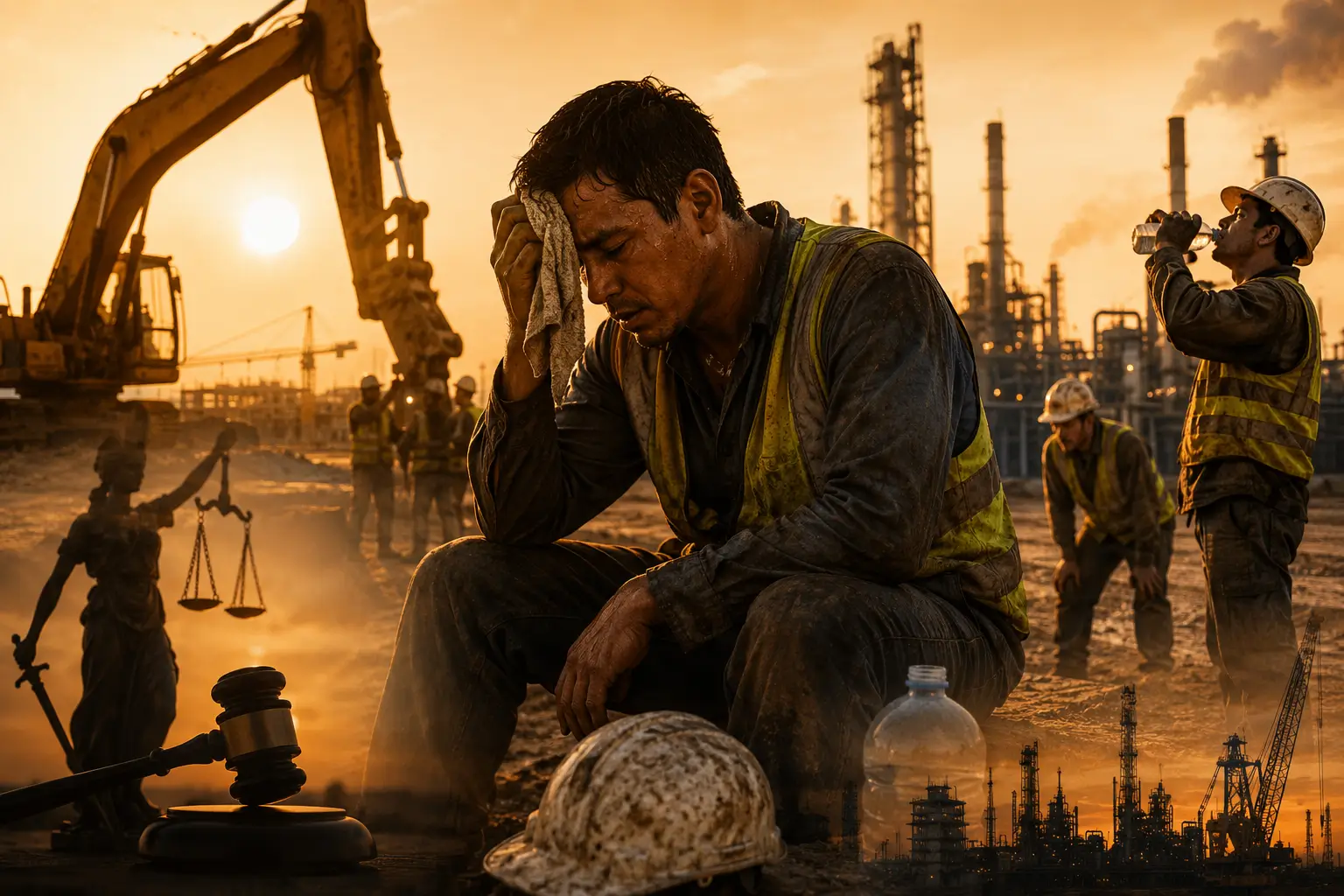
By early June, a Houston construction site can feel less like a workplace and more like a furnace. Add humidity off the Gulf, heavy protective gear, and physically demanding labor, and the conditions that produce heat stroke are not rare or unusual in Texas. They are routine, expected, and, in many workplaces, inadequately managed.
Texas has no state law requiring water breaks, shade, or heat acclimatization protocols for outdoor workers. That is not an oversight. It is the direct result of a legislative choice, and it leaves construction and oilfield workers in one of the hottest states in the country with fewer explicit legal protections than workers in California, Washington, or Colorado. For a worker who suffers a serious heat illness on the job, understanding what legal options actually exist, including options beyond the workers’ compensation system, matters enormously.
Why Texas Has No State Heat Standard for Outdoor Workers
Several states, including California, Washington, Oregon, Colorado, Minnesota, and Maryland, have adopted specific heat illness prevention standards requiring employers to provide water, shade, rest breaks, and acclimatization protocols once temperatures cross defined thresholds. Texas has taken the opposite approach. In 2023, the Texas Legislature passed House Bill 2127, commonly known as the Texas Regulatory Consistency Act, which broadly preempts cities and counties from enacting labor and employment ordinances stricter than state law. Among the local rules eliminated were mandatory water break ordinances in Austin and Dallas, which had required construction employers to provide a ten minute rest break every four hours.
The practical result is that Texas construction and oilfield workers are protected by whatever heat safety measures their individual employer chooses to implement voluntarily, layered on top of the general requirements of federal law, and nothing more. There is no statewide requirement dictating when work must stop for excessive heat, how much water must be provided, or how new workers should be acclimatized to summer conditions before being assigned full duty. For an industry where construction workers are documented to be many times more likely to die from heat related illness than workers in other fields, this regulatory gap is not a technicality. It is the reality every outdoor worker in Texas operates under from May through September, and often longer.
The OSHA General Duty Clause as the Only Federal Backstop
In the absence of a specific heat standard, either at the state or federal level, the primary legal protection available to Texas outdoor workers comes from the General Duty Clause of the Occupational Safety and Health Act, codified at 29 U.S.C. Section 654(a)(1). The General Duty Clause requires every employer to furnish a workplace free from recognized hazards that are causing or likely to cause death or serious physical harm to employees. OSHA has used this general provision, rather than a heat specific regulation, to cite employers for inadequate heat protections for years, arguing that extreme heat exposure is a recognized hazard employers have a duty to address even without a dedicated standard spelling out exactly how.
OSHA proposed a dedicated federal heat injury and illness prevention standard in August 2024, which would have established specific triggers, requirements for water and rest breaks, and acclimatization protocols for both outdoor and indoor work. That proposed rule remains unfinalized. OSHA’s related targeted enforcement initiative, the Heat National Emphasis Program, expired in April 2026 without renewal and was subsequently reissued in a narrower form covering a more limited set of high risk industries. What this means practically is that Texas workers currently have no specific numeric standard to point to, no defined heat index trigger, and no codified break schedule. They have only the General Duty Clause’s broader, harder to enforce requirement that employers address hazards they know or should know are dangerous, evaluated case by case after the fact rather than through a clear preventive rule.
When Workers’ Compensation Does and Does Not Cover Heat Illness
For employers who subscribe to workers’ compensation coverage, a heat illness suffered on the job is generally treated as any other workplace injury, potentially covering medical treatment and a portion of lost wages during recovery. But workers’ compensation carries real limitations that become especially significant in a serious heat illness case. It does not compensate for pain and suffering, disfigurement, or the emotional toll of a traumatic medical event like heat stroke. It typically covers only a percentage of lost wages, not full income replacement. And for the most severe heat related injuries, including organ damage, cognitive impairment, or death, workers’ compensation benefits are often far smaller than the actual lifetime cost of the harm suffered.
There is also a more fundamental complication specific to Texas. As addressed in more detail elsewhere on this site, Texas is the only state where most private employers are not required to carry workers’ compensation insurance at all. Many construction and oilfield companies operate as nonsubscribers, meaning an injured worker’s only path to compensation may run through a direct negligence claim against the employer rather than the workers’ compensation system, a claim that, notably, allows for full damages including pain and suffering, unlike a standard workers’ compensation claim, precisely because the employer opted out of the trade off that comp coverage represents.
Third-Party Claims Against Contractors and Site Owners
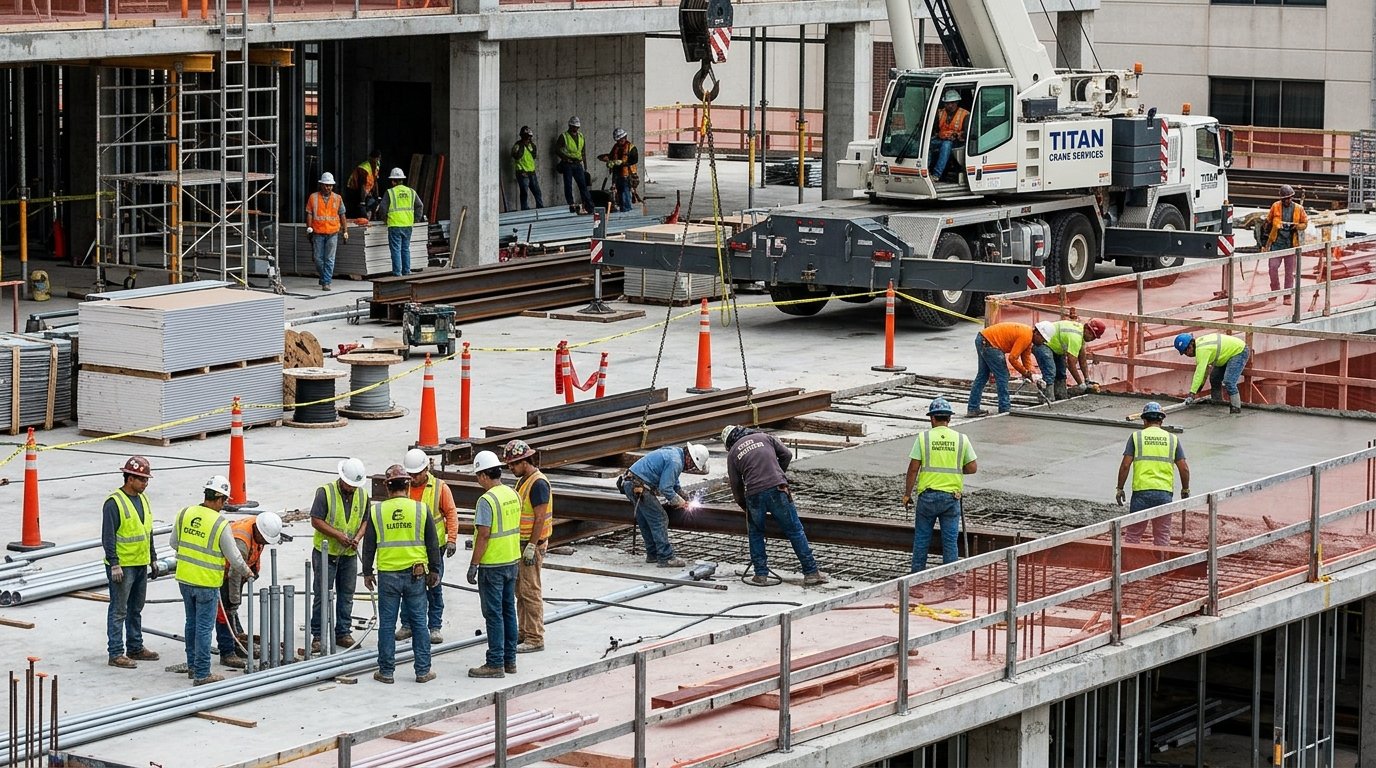
Even when workers’ compensation does apply to the direct employer, it generally does not shield other parties involved in a construction or oilfield project from liability. This is one of the most important and most frequently overlooked aspects of a serious heat illness case. Large construction sites and oilfield operations routinely involve multiple layers of contractors, subcontractors, and site owners or operators, each with different responsibilities and different levels of control over conditions at the worksite.
If a general contractor or site owner controlled scheduling, break policies, or safety protocols at a jobsite, and that control contributed to a worker suffering a heat illness, a third party negligence claim against that contractor or owner may be available regardless of whether the worker’s direct employer carries workers’ compensation coverage. This mirrors the retained control principle that governs many serious construction and industrial injury cases in Texas more broadly: the entity that had the authority to require water breaks, adjust the work schedule during dangerous heat, or halt work altogether can potentially be held responsible when it fails to exercise that authority reasonably and a worker is seriously harmed as a result. Identifying every entity present at a worksite, and what control each one actually exercised over heat safety decisions, is often the difference between a claim limited to workers’ compensation benefits and a claim that reflects the true extent of what a worker lost.
Documenting a Heat Illness Claim Before Evidence Disappears
Heat illness cases present a documentation challenge that many other workplace injuries do not. There is rarely a single dramatic incident, like a fall or an equipment failure, that leaves obvious physical evidence at the scene. Instead, a heat illness claim often depends on reconstructing conditions and decisions that existed only briefly: what the actual temperature and humidity were at the worksite that day, whether water and shade were actually available and actually accessible, whether the worker was new to the job or the climate and lacked acclimatization time, what break schedule was actually followed as opposed to what policy technically required, and what warning signs, if any, coworkers or supervisors observed before the worker’s condition became a medical emergency.
This kind of evidence degrades quickly. Weather data can be reconstructed after the fact, but firsthand accounts from coworkers fade, informal safety practices that existed only in day to day habit rather than written policy are easy for an employer to characterize differently after a serious incident, and internal records of near misses or prior heat related complaints on the same site can be lost or simply never documented in the first place. Medical records establishing the severity and immediate treatment of the heat illness, along with contemporaneous witness statements gathered as close to the event as possible, are critical to building a claim that accurately reflects what actually happened at the worksite rather than what an employer’s after the fact safety policy claims should have happened.
Special Risks for Oilfield and Refinery Workers in Houston’s Humidity
Construction workers face serious heat risk across Texas, but oilfield and refinery workers in the Houston area face a compounding set of hazards that make heat illness even more dangerous and even more likely to go unrecognized until it becomes severe. Petrochemical and refinery environments frequently require heavy personal protective equipment, including flame resistant clothing and, in some tasks, respiratory protection, all of which trap body heat and dramatically increase the physiological strain of working in Houston’s already high heat and extreme humidity. Gulf Coast humidity in particular impairs the body’s ability to cool itself through sweat evaporation, meaning heat illness can progress faster and become more severe at temperatures that might be more manageable in a drier climate.
Oilfield and refinery work also frequently involves physically demanding tasks performed near industrial equipment that itself generates significant heat, in locations where shade and immediate access to cooling may be limited by the physical layout of the facility or the nature of the task being performed. When a heat illness occurs in this kind of setting, the same questions about which entity controlled scheduling, break policy, and safety protocols become just as important as they are on a construction site, and often more complicated given the number of contractors, operators, and specialty service companies that can be present on a single industrial site at once.
Frequently Asked Questions About Heat Illness Claims in Texas
Does Texas require water and shade breaks for outdoor workers?
No. Texas has no statewide law requiring employers to provide water, shade, or rest breaks for outdoor workers. Local ordinances in Austin and Dallas that once required periodic water breaks for construction workers were preempted by the Texas Regulatory Consistency Act in 2023. Employers remain subject to the general requirements of OSHA’s General Duty Clause, but there is no specific numeric standard dictating break schedules or heat thresholds in Texas.
Is heat stroke covered by workers compensation in Texas?
If your employer subscribes to workers’ compensation coverage, a heat illness suffered on the job is generally treated as a covered workplace injury, though benefits are typically limited to medical treatment and a portion of lost wages rather than full compensation for pain, suffering, or the full extent of lost income. If your employer is a nonsubscriber, workers’ compensation may not apply at all, potentially opening the door to a direct negligence claim.
Can I sue someone other than my employer for a heat injury?
Depending on the facts, yes. If a general contractor, site owner, or another entity controlled scheduling, break policy, or safety conditions at the worksite where you were injured, a third party negligence claim against that party may be available regardless of your own employer’s workers’ compensation status.
What is the OSHA General Duty Clause?
The General Duty Clause, found at 29 U.S.C. Section 654(a)(1), requires every employer to provide a workplace free from recognized hazards likely to cause death or serious physical harm. In the absence of a specific federal or Texas heat standard, it serves as the primary legal basis for holding employers accountable for inadequate heat safety measures.
How do I document a heat illness claim?
Medical records documenting the severity and treatment of the heat illness, witness statements gathered as soon as possible after the incident, weather and humidity data for the worksite that day, and any records of the employer’s actual break and hydration practices, as opposed to written policy alone, are all important. Because much of this evidence can fade or become harder to obtain over time, documenting a heat illness claim promptly is particularly important.
Disclaimer: This article is for general informational purposes only and does not constitute legal advice. Heat illness claims depend heavily on the specific facts of the worksite, the parties involved, and applicable employer coverage. If you or a loved one has suffered a serious heat illness on a construction or industrial job site, an attorney can evaluate the specifics of your situation.
If you or a loved one suffered a serious heat illness while working construction or oilfield operations in Texas, Herrera PLLC can help you understand your options beyond workers’ compensation. Learn more about our representation in construction and industrial accident cases and oilfield accident claims, or call 832-891-3210 to contact us for a free, confidential consultation.
Jonathan Herrera, J.D. is a Houston based attorney and the founder of Herrera PLLC, representing construction workers, oilfield employees, and their families in serious injury and workplace accident cases across Texas. Before practicing law, he spent over a decade as a licensed insurance adjuster managing high exposure casualty claims, including construction and industrial cases, for carriers and third party administrators, giving him firsthand insight into how liability is evaluated across multiple contractors and site owners on complex industrial worksites. He is a member of the Texas Trial Lawyers Association and the American Association for Justice.