
Rideshare Passenger Injuries in Texas: Your Rights When the Driver Causes the Crash

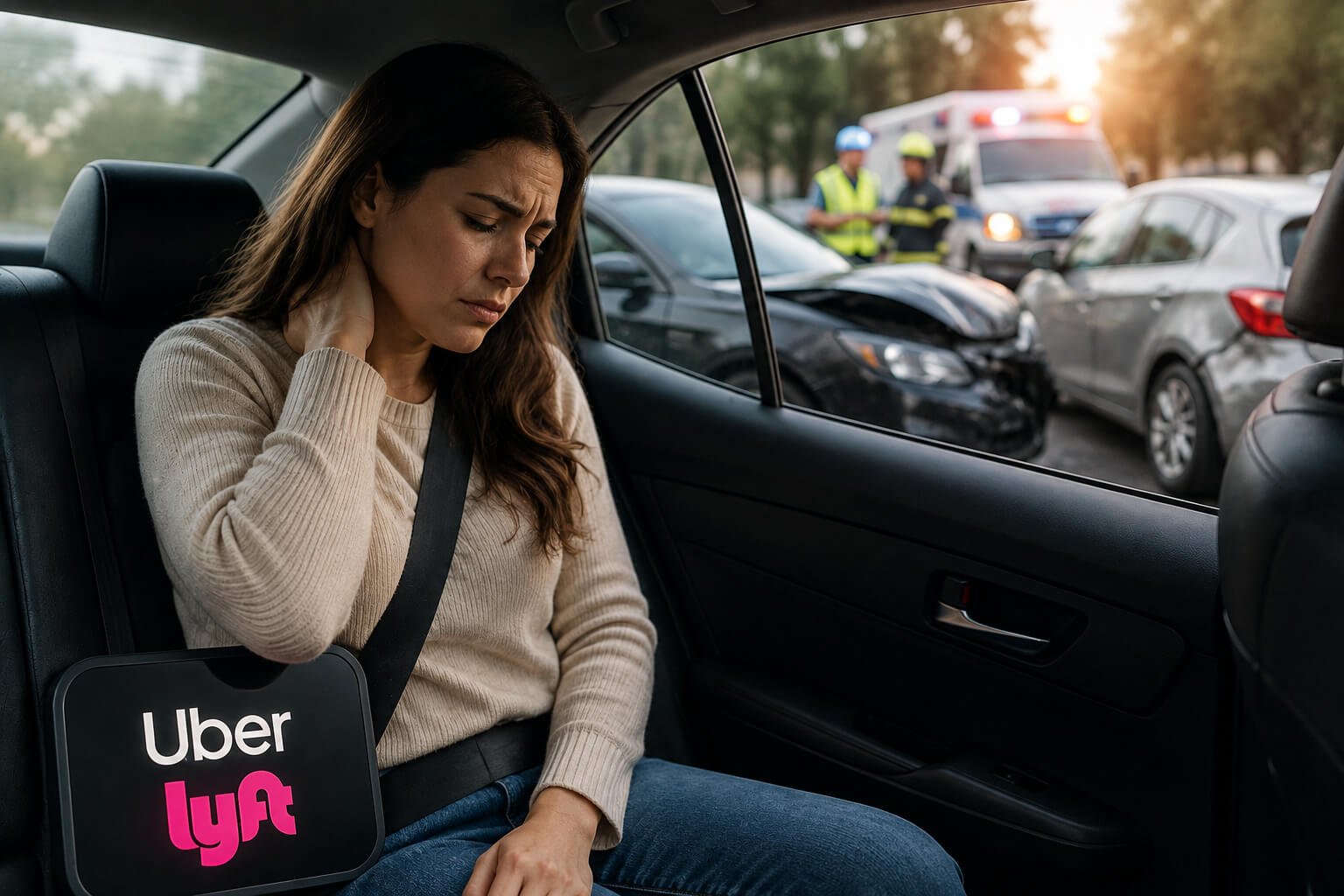
Getting into an Uber or Lyft means putting your safety in someone else’s hands, and most rides in Houston end without incident. But when the driver causes a crash while you’re a paying passenger, the injuries can be just as serious as any other car accident, with one important difference: as a passenger, you generally didn’t do anything to contribute to the crash, which puts you in a distinct legal position compared to either driver involved.
At Herrera PLLC, Jonathan Herrera brings more than a decade of experience evaluating serious injury claims as a former insurance adjuster to rideshare accident cases, including how rideshare insurers approach passenger claims specifically. This article looks at how Texas law treats a passenger’s claim when the rideshare driver is at fault, what insurance coverage applies, and what to expect from the process.
Why a Passenger’s Claim Is Usually the Most Straightforward Rideshare Case
Rideshare accident claims can get legally complicated when the dispute centers on which driver caused the crash or which insurance period applies. A passenger’s claim tends to avoid much of that complexity. Because a passenger isn’t operating either vehicle, questions of comparative fault that often reduce a driver’s recovery generally don’t apply in the same way. If the rideshare driver caused the crash, the passenger is typically viewed as an innocent party with a direct claim against the applicable insurance coverage, which is part of why passenger claims are often more straightforward to resolve than driver-versus-driver disputes, even though “straightforward” doesn’t mean insurers won’t still dispute the value of the claim.
The $1 Million Liability Coverage That Applies While You’re a Paying Passenger
Texas regulates rideshare companies, known formally as transportation network companies, under Chapter 2402 of the Occupations Code, which in turn incorporates the specific insurance requirements set out in Chapter 1954 of the Texas Insurance Code. Those requirements vary depending on what the driver is doing at the time of the crash. When a driver is logged into the app but isn’t engaged in a prearranged ride, Texas Insurance Code §1954.052 requires minimum liability coverage of $50,000 per person, $100,000 per incident for bodily injury, and $25,000 for property damage. When the driver is engaged in a prearranged ride, §1954.053 requires a total aggregate liability limit of at least $1,000,000 for death, bodily injury, and property damage. If you were injured as a passenger during an actual trip, meaning you were already in the vehicle on a matched, paid ride, this higher coverage level is generally the one that applies to your claim.
Filing a Claim Against the Driver, the Company, or Both
For most passenger injury claims, the claim is filed against the insurance policy that was in effect at the time of the crash, the $1 million policy maintained to satisfy Texas’s insurance requirements, rather than against the rideshare company directly. Texas law classifies rideshare drivers as independent contractors rather than employees, which generally limits a passenger’s ability to hold the company itself directly liable in the way an employer might be responsible for an employee’s actions. In practice, this means the insurance claim itself, rather than a lawsuit against Uber or Lyft as a company, is usually the primary path to compensation for a passenger hurt by driver negligence. In situations involving a company’s own conduct, such as who is allowed to drive, a different kind of claim can potentially apply, but that’s a separate legal theory from a standard passenger injury claim.
If you were injured as a passenger and are unsure which insurance coverage applies or whether the available coverage is sufficient, a free consultation can help you understand your potential options.
What Happens If Another Car Caused the Crash, Not Your Driver
Not every rideshare crash is the rideshare driver’s fault. If another vehicle caused the collision, an injured passenger generally has a claim against that other driver’s own liability insurance, just as any other injured person would. If that other driver is uninsured or doesn’t carry enough coverage to fully compensate the passenger’s injuries, the rideshare policy’s own uninsured and underinsured motorist coverage may also be available, depending on the specific coverage available and the extent of the passenger’s damages. Texas Insurance Code §1954.052 and §1954.053 require uninsured or underinsured motorist coverage where required by §1952.101. This means an injured passenger may be able to pursue compensation through the rideshare policy’s own uninsured or underinsured motorist coverage, in addition to whatever the at-fault driver’s own insurance provides, depending on the circumstances. For a broader look at how fault is generally evaluated between drivers in a Texas collision.
Medical Treatment and Documentation Steps as a Passenger
Getting prompt medical evaluation after any rideshare crash matters, even when injuries seem minor at first, since some injuries, particularly soft tissue injuries, don’t fully present until hours or days later. Beyond medical care, it’s generally useful to:
- Save the ride receipt and trip details from the app, since this documents that the trip was an active, paid ride at the time of the crash;
- Take photographs of the vehicles, the crash scene, and any visible injuries;
- Get the names and contact information of witnesses; and
- Obtain and preserve a copy of the police report.
Texas law also provides for personal injury protection, or PIP, coverage in automobile liability policies unless the required coverage has been rejected in writing. PIP can cover certain reasonable medical expenses and other qualifying losses regardless of who caused the crash. The amount and availability of PIP benefits depend on the applicable policy and circumstances, so a passenger should determine whether PIP coverage is available rather than assuming they must wait for the liability claim to be resolved. Texas Insurance Code §§1952.151–1952.153 address PIP coverage requirements.
These records can become especially important if there’s a later dispute about how the crash occurred, which coverage applied, or the extent of the passenger’s injuries.
Common Reasons Rideshare Insurers Delay or Dispute a Passenger Claim
Even when a passenger clearly wasn’t at fault, rideshare insurers don’t always move claims along quickly. Common friction points include:
- Disputes over which coverage period applied at the moment of the crash, since the difference between a driver being logged in versus actively on a matched trip can affect the available coverage;
- Disputes over the extent or cause of a passenger’s injuries, particularly for soft tissue injuries that are harder to document with a single piece of imaging; and
- Arguments that a pre-existing condition, rather than the crash, explains some or all of the reported injury.
Having spent over a decade evaluating claims from the insurance carrier’s side, Jonathan Herrera has seen firsthand how these disputes tend to unfold, and that experience often helps in pushing back on a delayed or undervalued passenger claim.
Texas generally provides a two-year limitations period for personal injury claims. Under Texas Civil Practice and Remedies Code §16.003, a person generally must bring a personal injury action no later than two years after the cause of action accrues. Because exceptions and case-specific rules can affect the exact deadline, a passenger should not assume the general two-year period will apply without having the facts reviewed.
Frequently Asked Questions
What insurance covers me as a rideshare passenger?
If the rideshare driver caused the crash while you were on an active, matched trip, Texas law generally requires the applicable rideshare insurance policy to provide at least $1,000,000 in aggregate liability coverage during that prearranged ride under Texas Insurance Code §1954.053. Different, lower coverage limits apply when a driver is logged into the app but isn’t engaged in a prearranged ride under §1954.052.
Can I file a claim against the rideshare company directly?
Generally, most passenger claims are filed against the insurance policy in effect at the time of the crash rather than against the company itself, since Texas law treats qualifying rideshare drivers as independent contractors. Direct claims against the company are a separate, less common legal theory that depends on different facts.
What if another driver caused the crash?
If a driver other than your rideshare driver caused the collision, you generally have a claim against that driver’s own insurance. If that driver is uninsured or underinsured, the rideshare policy’s own uninsured or underinsured motorist coverage may also be available depending on the circumstances.
How much coverage applies while I am a paying passenger?
While you’re in the vehicle on an active, matched ride, Texas Insurance Code §1954.053 generally requires a total aggregate liability limit of at least $1,000,000. This is significantly higher than the minimum coverage required when a driver is logged into the app but isn’t engaged in a prearranged ride under §1954.052.
Why do rideshare insurers delay passenger claims?
Common reasons include disputes over which coverage period applied at the time of the crash, questions about the extent or cause of the passenger’s injuries, and attempts to attribute injuries to a pre-existing condition rather than the crash itself.
This article is provided for general informational purposes and does not constitute legal advice. Every rideshare accident case depends on its own specific facts, and reading this article does not create an attorney-client relationship with Herrera PLLC. If you were injured as a passenger in an Uber or Lyft, Jonathan Herrera offers a free, confidential consultation to help you understand your options. Call 832-891-3210 or visit the contact page to get started.
Jonathan Herrera, J.D.
Jonathan Herrera is the founder of Herrera PLLC, a Houston, Texas law firm representing individuals in serious personal injury, insurance law, and civil litigation matters. Before becoming an attorney, he spent over a decade as a licensed insurance adjuster handling high-exposure litigated claims for carriers and third-party administrators nationwide. He then practiced with Rymer, Echols, and Nelson-Archer, a Houston insurance defense and coverage firm, before founding Herrera PLLC. He earned his J.D. from South Texas College of Law Houston and is admitted to practice in Texas, the U.S. District Courts for the Southern, Eastern, and Western Districts of Texas, and the U.S. Court of Appeals for the Fifth Circuit.