
Uber and Lyft Driver Screening: What Happens When a Rideshare Company Hires Negligently

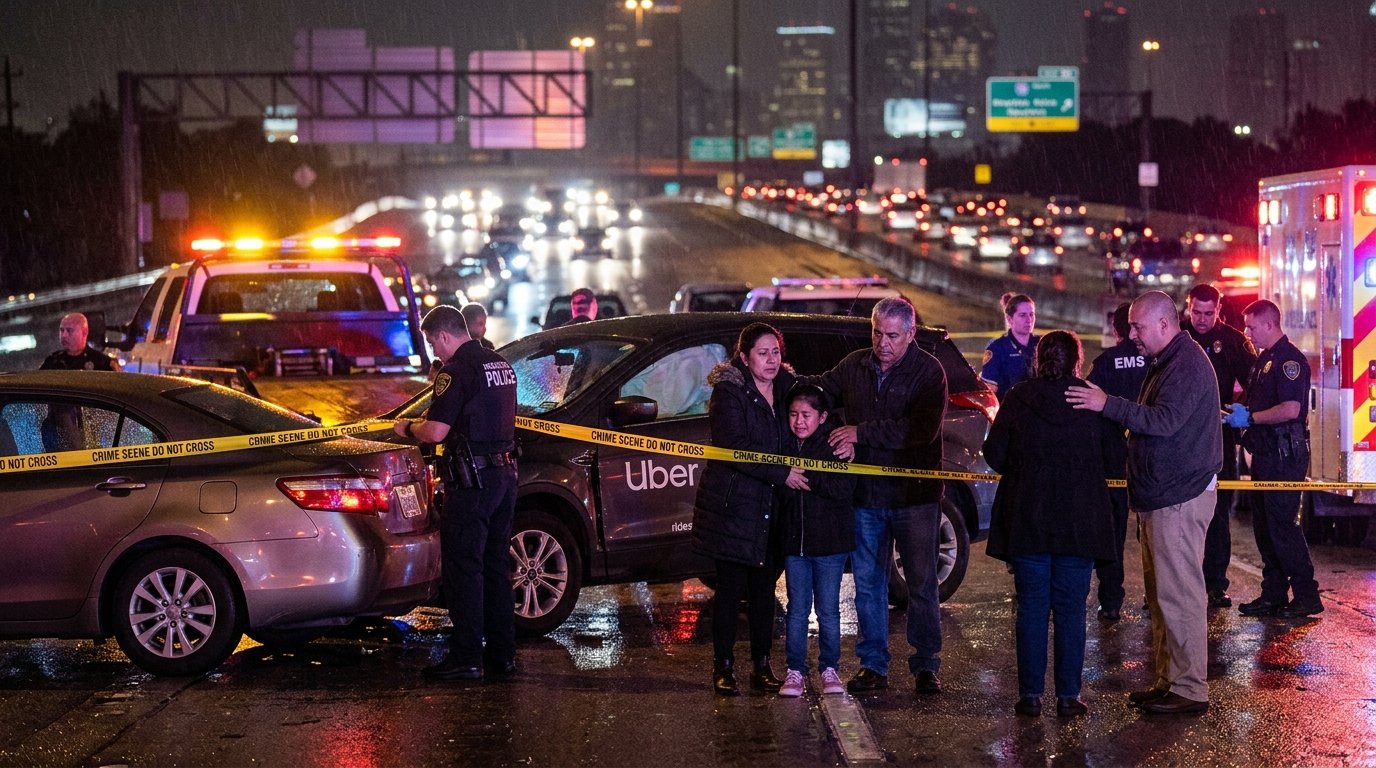
Most conversations about a rideshare accident start and end with the crash itself: who was speeding, who ran the light, who was distracted. But some of the most serious rideshare cases raise a different question entirely, one that has nothing to do with how the driver was driving that day and everything to do with how that driver came to be behind the wheel in the first place. When a rideshare company puts a driver on the road who never should have been approved, the company’s own hiring and screening decisions can become part of the case.
At Herrera PLLC, Jonathan Herrera brings more than a decade of experience evaluating serious injury claims as a former insurance adjuster to rideshare accident cases, including how insurers and rideshare companies respond when a driver’s background becomes part of the conversation. This article looks at what Texas law requires of rideshare companies when it comes to screening drivers, where gaps in that process tend to show up, and how a negligent hiring claim works differently than a standard crash claim.
What Background Check Requirements Apply to Uber and Lyft Drivers
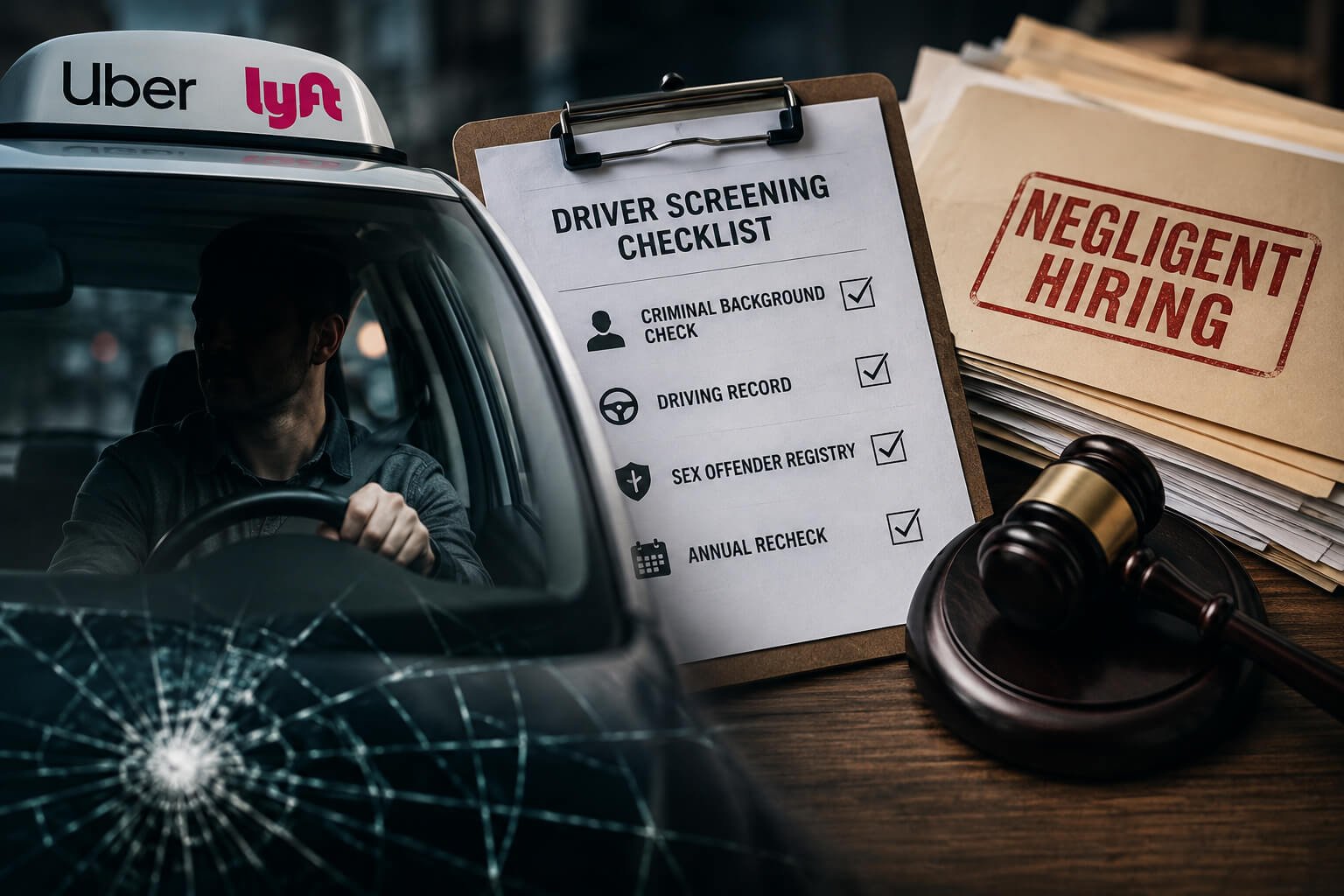
Rideshare companies, formally called transportation network companies under Texas law, are regulated under Chapter 2402 of the Texas Occupations Code. Before a company allows someone to log in as a driver, Texas law requires it to conduct a local, state, and national criminal background check, which must include a multistate criminal records search and checks against the national sex offender public website maintained by the United States Department of Justice and the state sex offender public website maintained by the Texas Department of Public Safety. The company must also obtain and review the individual’s driving record. These checks aren’t a one-time formality either; the company is required to repeat the criminal background check annually for every driver who remains active on its platform.
Texas law also sets specific disqualifying criteria. A company generally may not allow someone to drive if that person:
- Has been convicted, within the preceding three years, of more than three moving violations or certain serious offenses such as reckless driving or driving without a valid license;
- Has been convicted within the preceding seven years of driving while intoxicated, using a motor vehicle to commit a felony, or certain other serious felony offenses; or
- It is listed on either the national sex offender public website maintained by the United States Department of Justice or the state sex offender public website maintained by the Texas Department of Public Safety.
These are baseline statutory requirements, not a guarantee that every company follows them correctly in every case.
Gaps in Rideshare Screening Processes
Even where a company’s screening process technically follows the statutory checklist, gaps can and do occur. A criminal background check is only as good as the databases it searches, and records from certain counties or states can be incomplete, delayed, or missing entirely from commercial background check services. A driver who was convicted under a different name, or whose most serious offense predates the applicable lookback period, may pass a check that appears thorough on paper.
Annual re-checks are also only useful if they’re actually performed on schedule, and a driver who is approved once may continue operating before any new information is captured. Complaints submitted by prior passengers, patterns of concerning behavior flagged internally, or law enforcement contacts that don’t result in a conviction can also fall outside what a standard criminal background check is designed to catch.
Negligent Hiring as a Separate Claim From a Standard Car Accident Claim
A standard car accident claim generally focuses on what the driver did in the moments before the crash, speeding, distraction, failing to yield, and so on. A negligent hiring claim asks a different question: did the company that put this driver on the road fail in its own duty to screen and evaluate that driver before allowing them to carry passengers? Under Texas law, a negligent hiring claim generally requires showing that the employer had a duty to use reasonable care in hiring and retaining competent, safe personnel, that the employer breached that duty, and that the breach was a proximate cause of the resulting harm. This is a distinct legal theory from vicarious liability, where a company is held responsible for an employee’s actions simply because of the employment relationship. A negligent hiring claim instead focuses directly on the company’s own conduct in the hiring and screening process itself.
When a Company Knew or Should Have Known About a Driver’s History
The core of most negligent hiring claims comes down to foreseeability, whether the company knew, or should have known through reasonable diligence, that a particular driver posed a risk to passengers or the public. Texas Civil Practice and Remedies Code Chapter 142 places specific limits on negligent hiring and supervision claims based on an employee’s prior criminal convictions. Generally, an employer cannot be held liable solely because an employee had a past conviction, unless that conviction falls into certain categories, such as an offense committed under conditions similar to the job itself, certain serious violent or sexual offenses specifically identified by statute, or a fraud-related conviction relevant to a position involving funds or property.
There is an important distinction for rideshare cases. Chapter 142’s protections apply to an “employee,” while the statute’s definition of employee excludes an independent contractor. Texas Occupations Code §2402.114 separately provides that a transportation network company driver is considered an independent contractor when the statutory requirements for that classification are met. Because of that distinction, whether and how Chapter 142’s limitation applies to a transportation network company’s hiring and screening decisions can be a fact-specific legal question. These exceptions and the independent-contractor distinction should be evaluated based on the particular facts rather than assumed either way.
Evidence Needed to Prove a Screening Failure
Proving a negligent hiring claim against a rideshare company typically requires more than pointing to the crash itself. Evidence that tends to matter includes:
- The driver’s actual criminal and driving history at the time they were approved to drive;
- Records showing what background check process the company used and when it was last run;
- Any prior passenger complaints or internal flags associated with the driver’s account; and
- Expert testimony on what a reasonably diligent screening process should have caught.
Because rideshare companies control most of this information internally, these cases often depend heavily on formal discovery to obtain records the company wouldn’t otherwise disclose voluntarily. That process can make negligent hiring cases more involved than a straightforward accident claim because evidence about the company’s screening decisions may need to be requested and examined during litigation.
Texas generally provides a two-year limitations period for personal injury claims, although the exact deadline depends on when the cause of action accrues and whether any exception applies. Because a negligent hiring claim may involve evidence controlled by the rideshare company, it is important to address potential claims promptly rather than waiting until the limitations deadline is approaching.
How This Claim Differs From Simply Filing Through Rideshare Insurance
Most rideshare accident claims are resolved through the insurance coverage that applies while a driver is logged into the app, and for a routine crash, that’s often the most direct path to compensation. A negligent hiring claim is a different, and generally more involved, kind of case. It’s not filed against the rideshare company’s insurance policy in the same way a typical coverage claim is; it’s a direct claim against the company itself for its own conduct in vetting and approving the driver. These claims tend to arise less often, generally in situations involving a driver with a serious undisclosed or missed criminal history, but when the facts support one, it can open a path to accountability that a standard insurance claim against the driver alone doesn’t reach. For a broader look at how fault and coverage generally work in a Texas vehicle collision, see our car accidents page.
Frequently Asked Questions
What background checks do Uber and Lyft use in Texas?
Texas law requires transportation network companies to run a local, state, and national criminal background check, including a multistate criminal records search and checks against both the national sex offender public website maintained by the United States Department of Justice and the state sex offender public website maintained by the Texas Department of Public Safety, along with a review of the driver’s driving record. Companies must also repeat the criminal background check annually.
Can I sue the rideshare company itself and not just the driver?
In some circumstances, yes. If a company failed to properly screen a driver, or approved someone despite disqualifying information that should have been caught, a negligent hiring claim can be brought directly against the company, separate from a standard claim against the driver or an insurance claim.
What is negligent hiring?
Negligent hiring is a claim that an employer failed in its own duty to reasonably screen and evaluate a person before hiring or approving them, and that this failure caused foreseeable harm. It focuses on what the company knew or should have known, not just on what the individual driver did.
How is this different from a standard rideshare accident claim?
A standard claim generally centers on the driver’s conduct during the crash itself. A negligent hiring claim looks earlier in the timeline, at the company’s own screening and approval process, and asks whether the company should have caught information that would have kept that driver off the road.
What evidence proves a screening failure?
Records of the driver’s actual criminal and driving history, documentation of the background check process the company used, prior passenger complaints or internal flags, and expert analysis of standard screening practices are generally the most important evidence in these cases.
This article is provided for general informational purposes and does not constitute legal advice. Every rideshare accident case depends on its own specific facts, and reading this article does not create an attorney-client relationship with Herrera PLLC. If you or someone you know was hurt by a rideshare driver with a concerning background, Jonathan Herrera offers a free, confidential consultation to help you understand your options. Call 832-891-3210 or visit the contact page to get started.
Jonathan Herrera, J.D.
Jonathan Herrera is the founder of Herrera PLLC, a Houston, Texas law firm representing individuals in serious personal injury, insurance law, and civil litigation matters. Before becoming an attorney, he spent over a decade as a licensed insurance adjuster handling high-exposure litigated claims for carriers and third-party administrators nationwide. He later practiced with Rymer, Echols, and Nelson-Archer, a Houston insurance defense and coverage firm, before founding Herrera PLLC. He earned his J.D. from South Texas College of Law Houston and is admitted to practice in Texas, the U.S. District Courts for the Southern, Eastern, and Western Districts of Texas, and the U.S. Court of Appeals for the Fifth Circuit.