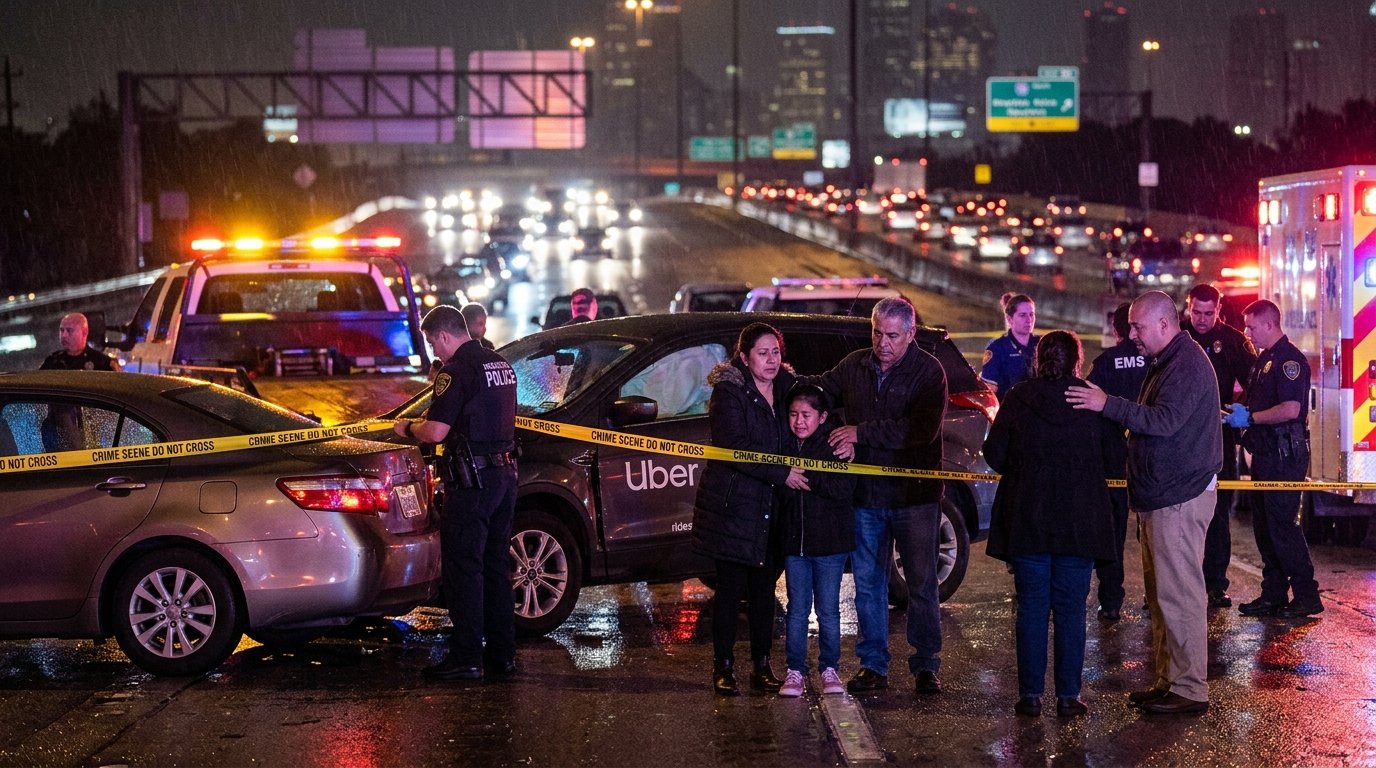

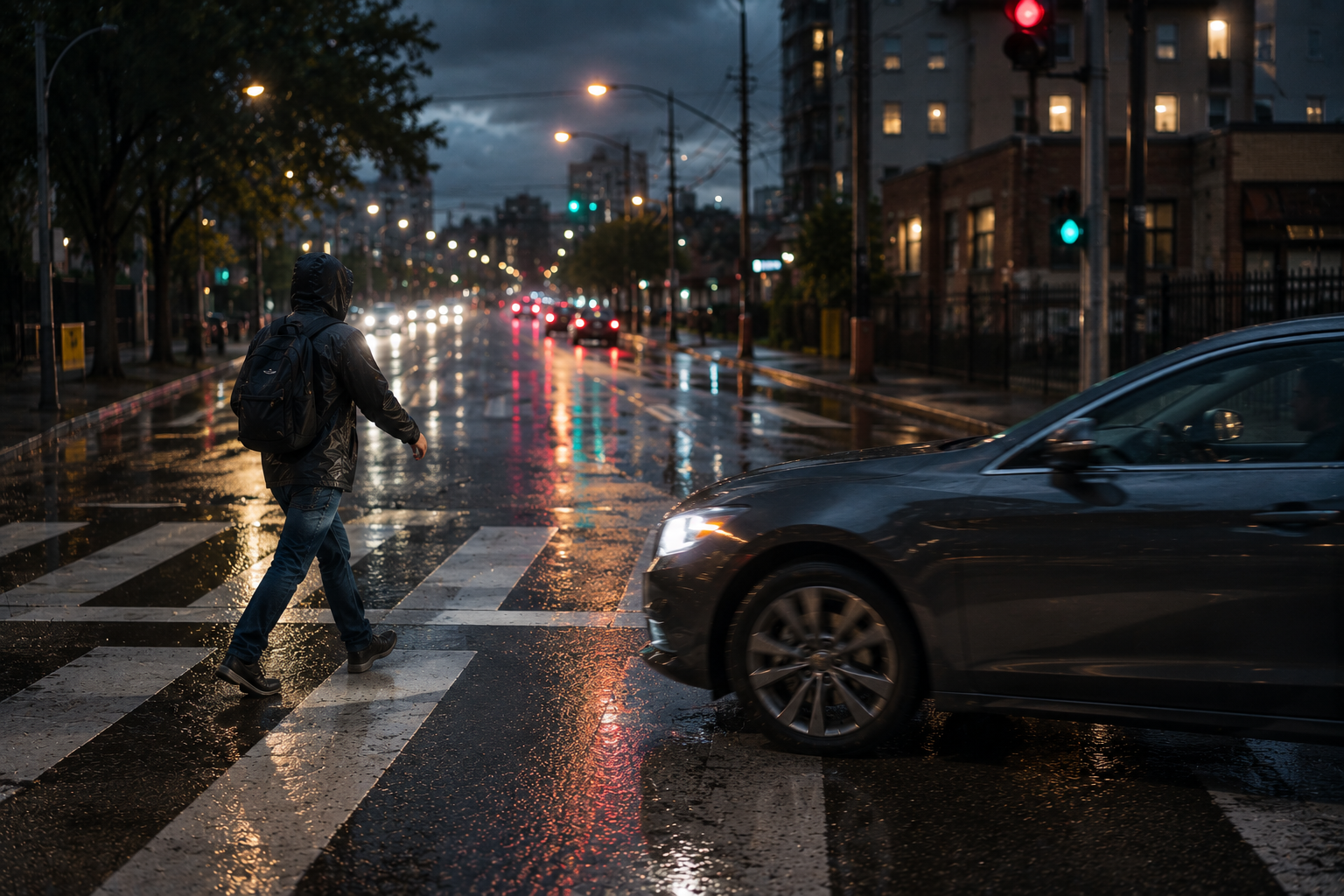

Failure to yield the right-of-way is one of the most frequently cited factors in Houston-area pedestrian crash reports. A driver turning right on a green light without checking the crosswalk. A car pulling out of a parking lot across a sidewalk. A driver at a four-way stop who simply does not see the person already crossing. These moments happen fast, and afterward, the driver’s explanation and the pedestrian’s actual right-of-way under Texas law can be two very different things.
At Herrera PLLC, Jonathan Herrera brings more than a decade of experience evaluating serious injury claims as a former insurance adjuster to pedestrian accident cases, including how insurers tend to approach fault when a driver claims they simply did not see someone in the road. This article breaks down how Texas right-of-way law works at crosswalks, what actually counts as a failure to yield, and what tends to prove it. For more information about his experience, see About Jonathan Herrera’s background as an insurance adjuster.
Texas pedestrian accidents can occur at busy intersections, commercial areas, and other locations throughout Houston and the surrounding communities. The specific location, traffic controls, crosswalk markings, and conduct of the driver and pedestrian can all affect how fault is evaluated.
Texas Right-of-Way Rules for Marked and Unmarked Crosswalks
Texas law defines a crosswalk more broadly than many people realize. Under Texas Transportation Code § 541.302(2), a crosswalk includes both a marked crossing, meaning the portion of a roadway designated by painted lines or other surface markings, and an unmarked crosswalk, meaning the portion of a roadway at an intersection that falls within the extension of the sidewalk lines on either side of the street. In practical terms, this means that an intersection can have a legal crosswalk even when there are no painted lines on the pavement.
Where no traffic signal is controlling the crossing, Texas Transportation Code § 552.003 requires a driver to stop and yield the right-of-way to a pedestrian crossing in a marked or unmarked crosswalk when the pedestrian is on the driver’s half of the roadway or approaching closely enough from the other half to be in danger. This obligation applies at ordinary intersections throughout Greater Houston, not only at crossings with painted lines, signs, or traffic signals.
Where a traffic signal controls the crossing, other rules apply. Texas Transportation Code § 552.002 addresses a pedestrian’s right to proceed when given a “Walk” signal, while drivers must yield to pedestrians who are lawfully proceeding through the crossing.
What ‘Failure to Yield’ Actually Means Under Texas Traffic Law
“Failure to yield” is not just a phrase used casually after a crash. It describes a driver’s failure to follow a specific legal duty to stop or slow down for a pedestrian who has the right-of-way. Beyond the crosswalk-specific yield requirement, Texas law also places a broader duty on drivers to exercise due care to avoid colliding with a pedestrian on the roadway. Under Texas Transportation Code § 552.008, that duty includes sounding a horn when necessary and using proper caution around a child or a person who is confused or unable to safely navigate traffic.
A driver who turns into a crosswalk without checking for pedestrians, fails to stop for someone already crossing, or is not paying attention when a pedestrian has the right-of-way can be found to have violated these duties.
Importantly, having the right-of-way and being at fault in a crash are not always the same legal question. A documented failure to yield can be strong evidence that a driver breached the duty of care owed to the pedestrian. When a child is involved, the applicable due-care rule can also become particularly important. Readers looking specifically at school-zone crashes can review how Texas law treats school-zone pedestrian claims differently.
Common Driver Excuses and Why They Rarely Hold Up
After a pedestrian is struck, certain explanations come up again and again: “I didn’t see them,” “the sun was in my eyes,” “they came out of nowhere,” or “I was already in the intersection.” These explanations may describe what a driver experienced, but they do not necessarily excuse a failure to yield under Texas law.
A driver’s duty includes keeping a proper lookout for pedestrians who may be lawfully in a crosswalk. Difficulty seeing someone because of glare, weather, or simple inattention does not necessarily eliminate that duty. Insurance companies sometimes rely on these explanations early in a claim to suggest that a pedestrian was unavoidable or unexpected. The more relevant legal questions generally include whether the driver was keeping a proper lookout, whether the pedestrian had the right-of-way, and whether the driver acted as Texas law requires under the circumstances.
Comparative Fault When a Pedestrian Crossed Mid-Block
Not every pedestrian accident happens at a crosswalk, and Texas law treats mid-block crossings differently. When a pedestrian crosses somewhere other than a marked or unmarked crosswalk, the pedestrian generally must yield the right-of-way to vehicles on the road. Between two adjacent intersections that both have working traffic signals, Texas law goes further and requires a pedestrian to cross only within a marked crosswalk under Texas Transportation Code § 552.005.
This does not automatically mean a pedestrian struck outside a crosswalk has no claim. Texas follows a modified comparative negligence rule, meaning fault can be divided between the driver and the pedestrian based on the specific facts. An injured pedestrian can still recover damages as long as the pedestrian is found no more than 50% at fault.
A driver still owes a general duty of care to avoid hitting a pedestrian in the roadway, crosswalk or not. Evidence of speeding, distraction, or failure to keep a proper lookout can therefore support a claim even in a mid-block crossing case, although fault is more likely to be shared depending on the circumstances.
Police Reports and Citations as Evidence of a Yield Violation
When officers respond to a pedestrian crash, the resulting police report often includes an assessment of contributing factors. A citation issued to the driver for failure to yield can be significant evidence in a subsequent injury claim.
A cited traffic violation does not automatically resolve the civil case, but an unexcused violation of a statute designed to protect a particular class of people can, in some circumstances, support an argument for negligence as a matter of law. Whether that doctrine applies depends on the specific statute and facts involved.
The absence of a citation does not necessarily mean that a pedestrian injury claim cannot proceed. The report itself, along with the responding officer’s diagram of the scene and statements taken at the time, can become an important early record of how the crash occurred. Other evidence, including video, witness accounts, photographs, and medical records, can also be considered when determining fault.
For a broader look at how fault is evaluated across pedestrian and vehicle crashes in Texas, see our car accidents page.
Building a Failure-to-Yield Case With Witness and Camera Evidence
Because failure-to-yield cases often come down to a dispute over exactly what happened in the seconds before impact, independent evidence can matter significantly. Traffic camera or nearby business surveillance footage can show whether a pedestrian was in a crosswalk and whether a driver had an opportunity to stop.
Eyewitness accounts gathered soon after the crash can corroborate or contradict a driver’s version of events. Photographs of the crosswalk, relevant signage, and the vehicle’s position after the crash, along with medical records connecting the injury to the collision, can also contribute to a complete picture of what happened and why the driver may bear responsibility.
An attorney evaluating a disputed failure-to-yield claim may review these types of evidence to determine how the collision occurred and how liability should be evaluated. A free consultation to discuss your pedestrian accident claim can provide an opportunity to discuss the circumstances of a particular case.
Texas generally gives an injured person two years from the date of a personal injury to file a lawsuit. The applicable deadline can depend on the type of claim and the parties involved, and certain circumstances can affect how limitations periods apply. Because a statute of limitations can prevent an otherwise viable claim from being pursued after the deadline expires, the applicable filing period is an important part of evaluating a pedestrian injury case.
Frequently Asked Questions
What are Texas’s right-of-way rules at crosswalks?
When no traffic signal is controlling the crossing, Texas law requires drivers to stop and yield to a pedestrian crossing in a marked or unmarked crosswalk if the pedestrian is on the driver’s half of the road or approaching close enough to be in danger. Where a signal is present, drivers must yield to a pedestrian who has a “Walk” signal when the pedestrian is lawfully proceeding through the crossing.
What counts as failure to yield?
Failure to yield generally means a driver did not stop or slow down for a pedestrian who had the right-of-way, whether by proceeding through a crosswalk without checking, turning into a pedestrian’s path, or failing to keep a proper lookout for someone crossing legally.
Does it matter if the crosswalk was unmarked?
Not for right-of-way purposes at an intersection. Texas law recognizes unmarked crosswalks, which can consist of the portion of the roadway that aligns with the sidewalks on either side of the street even without painted lines.
Can I still recover if I was not in a crosswalk?
Potentially, yes. Texas follows a modified comparative negligence rule, so a pedestrian struck outside a crosswalk may still recover damages if the pedestrian is found no more than 50% at fault. The amount of any recovery can depend on the percentage of fault assigned to each party.
What evidence proves a yield violation?
Police reports and citations, traffic or business surveillance footage, eyewitness statements, photographs of the scene, and medical records connecting the injury to the crash can all be important evidence in a disputed failure-to-yield claim. The absence of a citation does not necessarily prevent a claim from proceeding because liability can be evaluated using the broader body of available evidence.
This article is provided for general informational purposes and does not constitute legal advice. Every pedestrian accident case depends on its own specific facts, and reading this article does not create an attorney-client relationship with Herrera PLLC. If you were hit by a driver who failed to yield the right-of-way, Jonathan Herrera offers a free, confidential consultation to help you understand your options. Call 832-891-3210 or visit the contact page to get started.
Jonathan Herrera, J.D.
Jonathan Herrera is the founder of Herrera PLLC, a Houston, Texas law firm representing individuals in serious personal injury, insurance law, and civil litigation matters. Before becoming an attorney, he spent over a decade as a licensed insurance adjuster handling high-exposure casualty and property claims before practicing insurance defense and founding Herrera PLLC.