
School Zone and Crosswalk Safety: Pedestrian Accident Liability Near Houston Schools

Every school day across Houston, from the Heights to Alief to Sugar Land, children walk, bike, and are dropped off near campuses where cars, buses, and pedestrians all converge in a small window of time. Most mornings and afternoons pass without incident. But school zones are, by design, areas of elevated risk, and when a driver fails to slow down, yield, or watch for a child crossing the street, the results can be devastating.
At Herrera PLLC, Jonathan Herrera brings more than a decade of experience evaluating serious injury and casualty claims as a former insurance adjuster to pedestrian accident cases, including the particular sensitivity and complexity involved when a child is hurt. This article looks at how Texas law approaches school zone speed limits, who can be held responsible when a driver fails to yield near a school, and what makes these claims different when the injured pedestrian is a child.
Texas’s Reduced Speed Requirements in School Zones
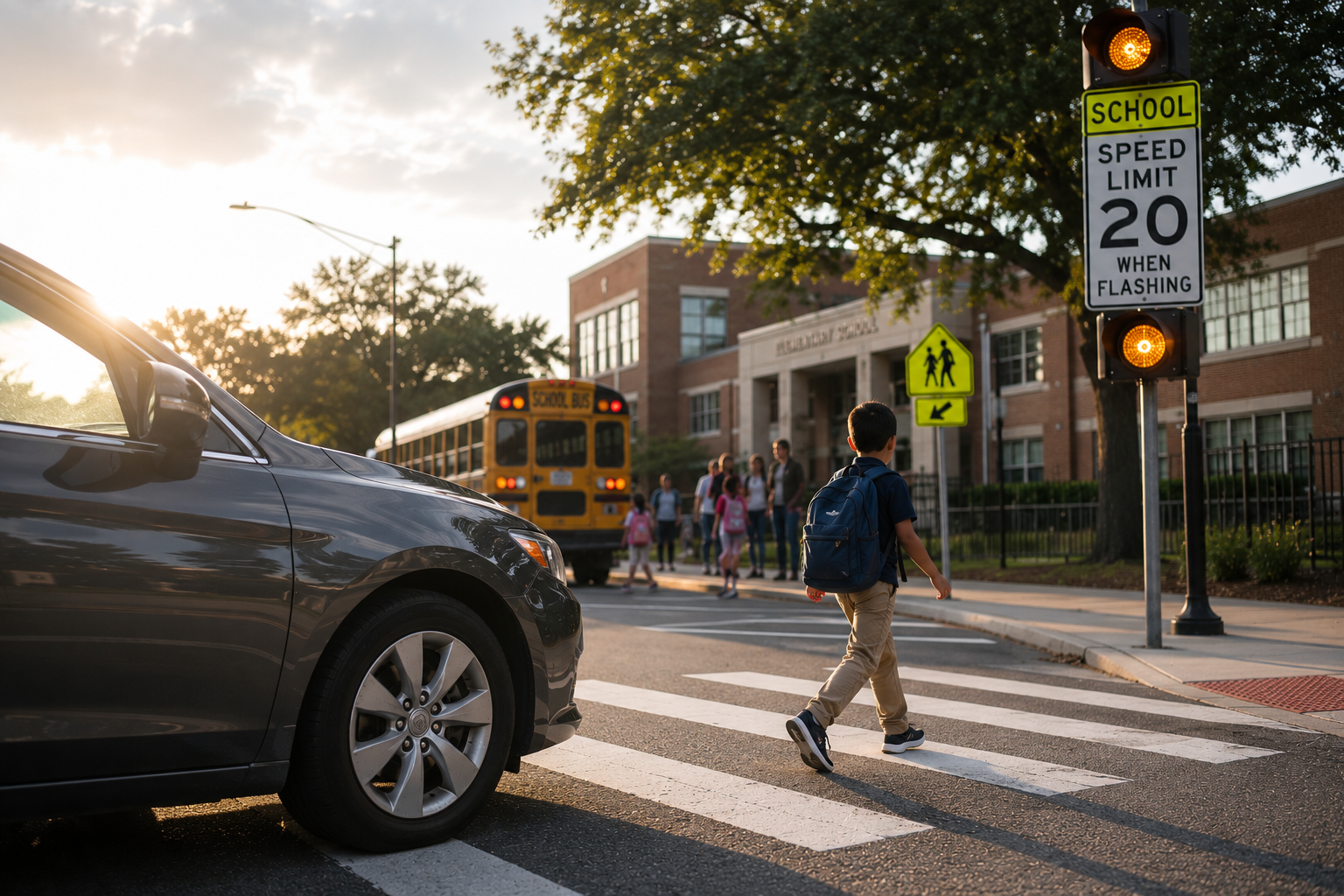
Under the Texas Transportation Code, a “school crossing zone” is defined under § 541.302(13) as a reduced-speed zone designated by a local authority to help children safely cross the street going to or from school. Texas law gives municipalities the authority to set and adjust these reduced speed limits, typically after an engineering and traffic study evaluates the location under § 545.357. Because these limits are set locally, the specific speed and the hours it applies can vary from one Houston-area school to the next, which is why drivers are required to follow the posted signs and flashing beacons for that specific zone rather than assuming a single statewide number.
What stays consistent is the underlying purpose: school zones exist because the presence of children walking, crossing, and being dropped off near a school creates risks that an ordinary residential or arterial speed limit doesn’t account for. Drivers are expected to slow down, watch actively for pedestrians, and remain alert throughout the entire posted zone, not just near a crosswalk.
Why Drop-Off and Pick-Up Times See the Most Incidents
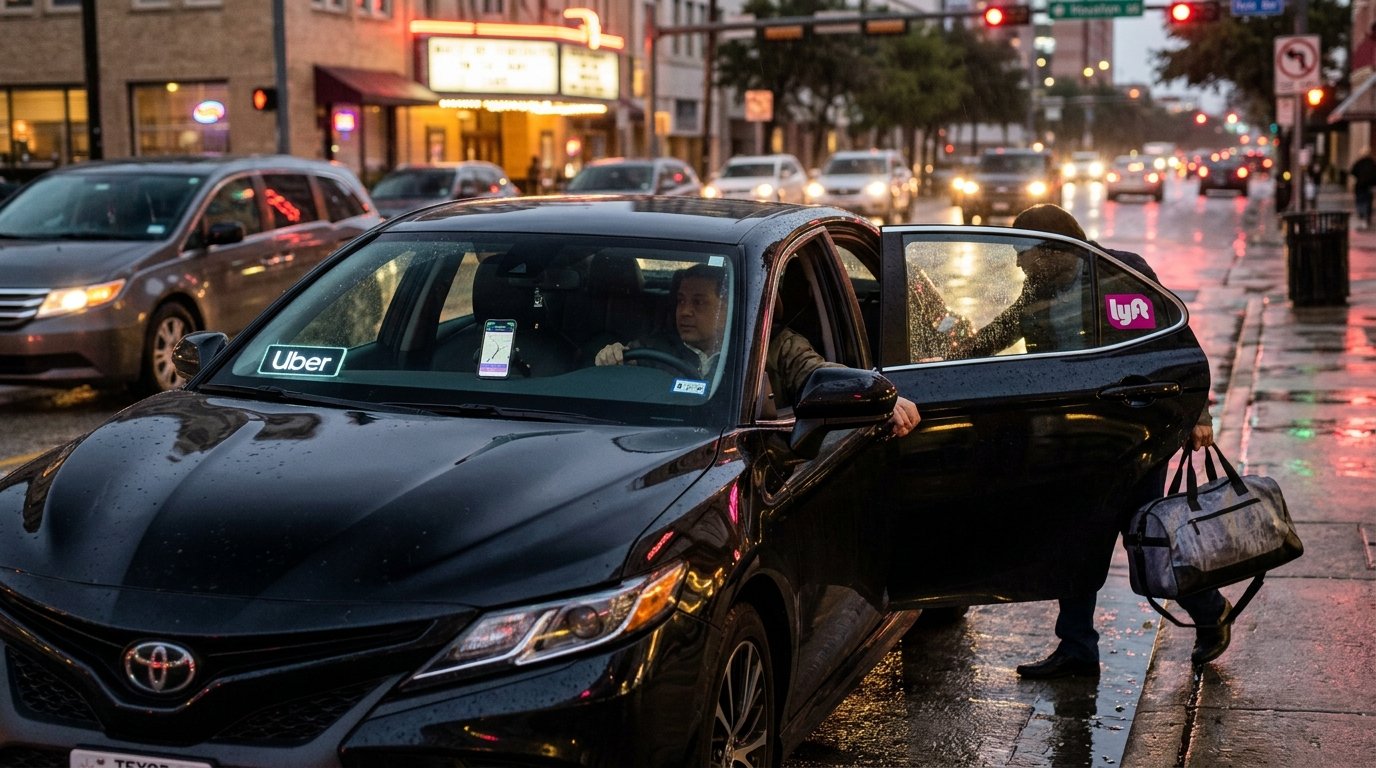
The period surrounding morning drop-off and afternoon pick-up tends to concentrate the highest risk of a school zone pedestrian accident. Traffic is heaviest during these narrow windows, with parents, buses, and rideshare vehicles often competing for limited space along the same stretch of road. Children may dart between parked cars, cross mid-block instead of at a marked crosswalk, or step into the roadway before a driver has fully stopped. Drivers, meanwhile, are often distracted by the logistics of the drop-off process itself, running behind schedule, or unfamiliar with a particular school’s traffic pattern.
This combination of congestion, distraction, and unpredictable child pedestrians is part of why school zones require heightened caution beyond simply obeying the posted speed limit.
Crossing Guard and School District Responsibility Questions
When a child is hurt near a school, a natural question is whether the school, the school district, or a crossing guard bears some responsibility. This is one of the more legally complex parts of a school zone case. Texas school districts, as governmental entities, generally have broad immunity from lawsuits under the Texas Tort Claims Act. That immunity is narrowly waived in certain circumstances, most notably when an injury results from the negligent operation of a motor vehicle by a district employee acting within the scope of their job under Texas Civil Practice and Remedies Code § 101.021. Outside of that kind of exception, holding a school district directly liable for a pedestrian accident is generally difficult, even when a lack of supervision or a missing crossing guard is part of what a family believes went wrong.
Crossing guard programs are staffed differently depending on the district and city, sometimes through the school district’s own police department and sometimes through a separate municipal program. That structure can add another layer to determining who, if anyone, bears responsibility for a gap in coverage or a guard’s specific actions. Government entities generally require formal written notice of a claim. Six months is the default under Texas law, but many cities set shorter deadlines by charter. The City of Houston, for example, requires notice within 90 days. Because these deadlines vary by entity and immunity questions are fact-specific, this is an area where getting an early legal assessment matters more than in a typical car accident case.
Driver Liability for School Zone Speeding and Failure to Yield
Apart from questions involving the school itself, the driver who struck the child is usually the central focus of a school zone accident claim. Texas law requires drivers to stop and yield to pedestrians crossing in a marked or unmarked crosswalk at an intersection when no traffic signal is controlling the crossing under Texas Transportation Code § 552.003. Separately, Texas law imposes a general duty on drivers to exercise due care to avoid colliding with a pedestrian, and specifically calls for added caution when the pedestrian is a child under § 552.008. A driver who was speeding through a posted school zone, distracted, or who simply failed to see a child in a crosswalk may be found negligent under these standards, and a documented speeding or right-of-way violation can be significant evidence in a resulting claim. To the extent a school zone incident involves a vehicle rather than a pedestrian being struck directly, our car accidents page covers how fault is generally evaluated in a collision.
Special Considerations When a Child Is the Victim
Claims involving an injured child differ from adult injury claims in several important ways. Texas courts generally do not hold very young children to the same standard of care as an adult, and in some circumstances a young child may be considered incapable of the kind of contributory negligence that could reduce or bar a claim, an important protection given how unpredictably children can move near traffic. A minor also cannot bring a lawsuit on their own behalf; a parent or legal guardian generally must file the claim on the child’s behalf.
Texas generally provides a two-year statute of limitations for personal injury claims. Special rules can affect how that period applies when the injured person is a minor. Texas law generally pauses, or tolls, the statute of limitations while the injured person is a minor under Texas Civil Practice and Remedies Code § 16.001, meaning the usual filing deadlines can work differently than they would for an adult. Because these rules are fact-specific and can affect a family’s options significantly, they are worth understanding when evaluating a claim involving an injured child.
Steps Parents Can Take After a School Zone Incident
In these cases, prompt medical evaluation and thorough documentation tend to matter a great deal, including photographs of the scene and relevant signage, witness information, the police report, and surveillance footage from the area, which is often overwritten quickly if it isn’t requested. An attorney evaluating a school zone case will typically move quickly to gather this kind of evidence before it is lost, which is part of why an early conversation with a lawyer can make a meaningful difference in how a claim is ultimately supported.
Frequently Asked Questions
What is the speed limit in a Texas school zone?
There isn’t one statewide number. Texas law allows each municipality to set its own reduced speed limit for a school crossing zone, typically following a traffic engineering study, so the specific limit and the hours it applies are shown on posted signs and vary from school to school.
When are school zones most dangerous?
Morning drop-off and afternoon pick-up windows tend to see the highest risk, since heavy traffic, driver distraction, and unpredictable child movement near vehicles all overlap during these concentrated periods.
Is the school district ever liable?
It’s possible, but Texas school districts generally have broad governmental immunity. That immunity is narrowly waived mainly when an injury results from a district employee’s negligent operation of a motor vehicle under the circumstances covered by the Texas Tort Claims Act. Other circumstances, including supervision or staffing questions, are generally more difficult to pursue directly against a district.
What if a driver was speeding through a school zone?
Speeding through a posted school zone, or failing to yield to a pedestrian in a crosswalk, can support a negligence claim against the driver. Texas law imposes a specific duty on drivers to exercise added caution around child pedestrians.
What should parents do after a school zone accident?
Evidence such as medical records, photographs of the scene, witness information, police reports, and available surveillance footage can be important in determining how a school zone accident occurred and who may be responsible. Because evidence can become unavailable over time, its availability and relevance can be important when evaluating a claim.
This article is provided for general informational purposes and does not constitute legal advice. Every pedestrian accident case depends on its own specific facts, and reading this article does not create an attorney-client relationship with Herrera PLLC. If your child, or someone you know, was hurt near a Houston school, Jonathan Herrera offers a free, confidential consultation to help you understand your options. Call 832-891-3210 or visit the contact page to get started.
Jonathan Herrera, J.D.
Jonathan Herrera is the founder of Herrera PLLC, a Houston, Texas law firm representing individuals in serious personal injury, insurance law, and civil litigation matters. Before becoming an attorney, he spent over a decade as a licensed insurance adjuster handling high-exposure casualty and property claims before practicing insurance defense and founding Herrera PLLC.