

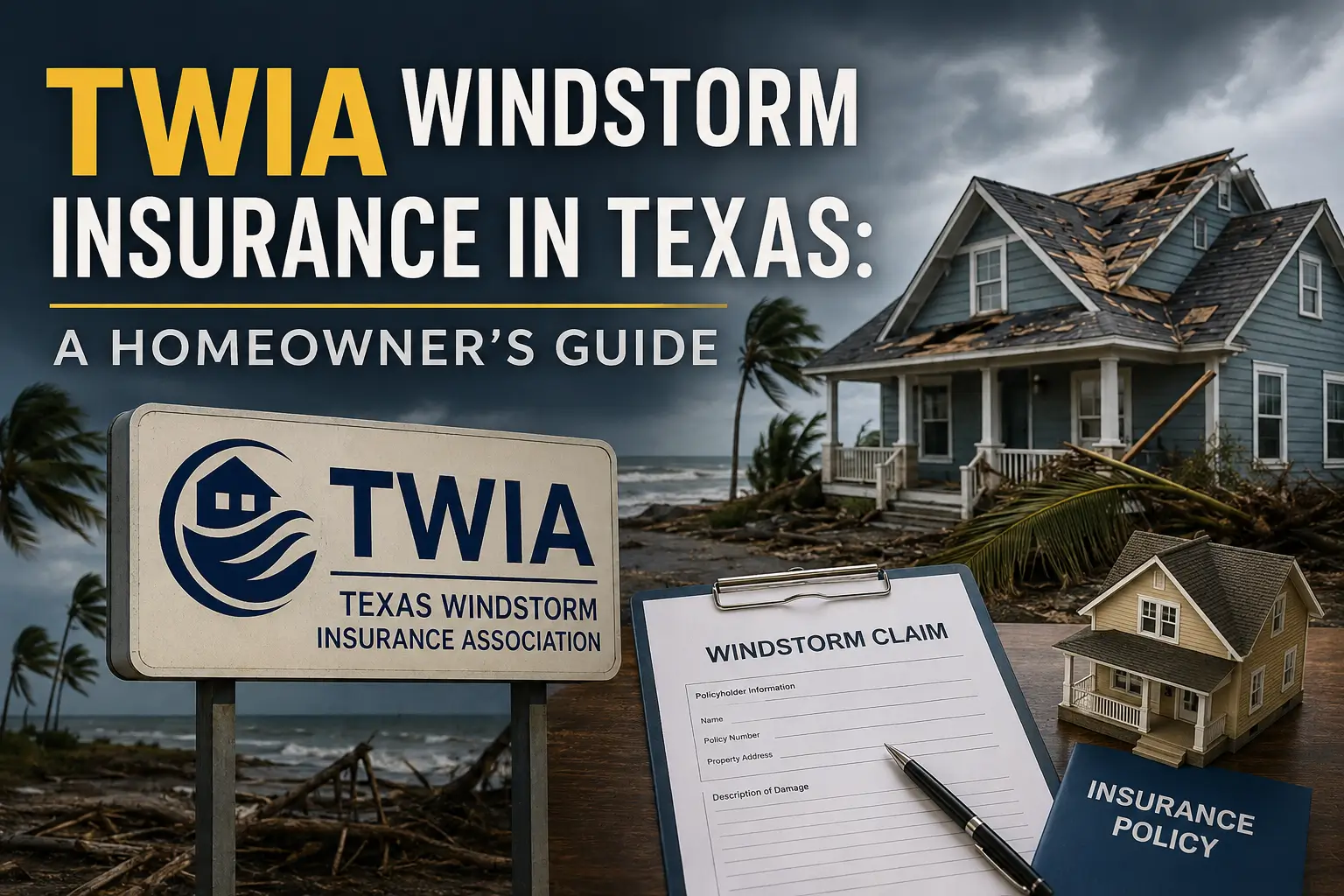

If you own a home along the Texas Gulf Coast, in Galveston, Brazoria, or one of the other coastal counties, there is a decent chance your wind and hail coverage does not come from the same company that insures the rest of your house. It comes from TWIA, the Texas Windstorm Insurance Association, and a lot of homeowners do not fully understand how it works until the moment they need it most, in the days after a hurricane or major hailstorm.
TWIA coverage got renewed attention in 2026 as reporting on the association’s catastrophe reserve fund and rising claims volume made clear how many coastal Texas homeowners are relying on it without a clear picture of how a TWIA claim actually gets filed, evaluated, and paid. Understanding what TWIA is, how it differs from a standard homeowners policy, and what your options are if a claim is denied or underpaid can make a real difference when you are standing in front of storm damage and trying to figure out what happens next. At Herrera PLLC, this is the kind of dispute Jonathan Herrera works on regularly with Gulf Coast homeowners.
What TWIA Is and Who Actually Needs It
TWIA was created by the Texas Legislature under Texas Insurance Code Chapter 2210 to provide windstorm and hail insurance to property owners in designated catastrophe areas along the Texas Gulf Coast who cannot obtain that coverage through the private insurance market. It functions as an insurer of last resort, meaning it exists specifically for homeowners and business owners in coastal counties where private insurers have limited their windstorm exposure or declined to offer wind and hail coverage at all.
TWIA is not available to every Texas homeowner. It applies within a defined catastrophe area covering the first tier coastal counties and portions of Harris County designated under state law. If your property falls inside that boundary and you were unable to secure wind and hail coverage through a standard private carrier, TWIA may be the mechanism through which that portion of your coverage is provided. exact list of eligible counties for current-year publication
It is common for a coastal homeowner to have what is effectively a split insurance situation, meaning a standard homeowners policy from a private carrier that covers most perils, alongside a separate TWIA policy that covers wind and hail specifically. This split arrangement is a direct source of confusion after a storm, because a single event, like a hurricane that brings both wind damage and flooding, can trigger claims against two entirely different insurers with two different sets of rules, and figuring out which policy covers which portion of the damage is not always straightforward.
How TWIA Differs From a Standard Homeowners Policy
A TWIA policy is not the same product as a traditional homeowners policy, and the differences matter when damage occurs. TWIA coverage is limited specifically to windstorm and hail perils. It does not provide the broader coverage a standard homeowners policy includes for things like fire, theft, or liability, and it does not cover flood damage under any circumstances, since flood coverage in Texas is handled separately through the National Flood Insurance Program or private flood policies.
Because TWIA is a state created association rather than a conventional private insurer, its claims process, funding structure, and governance operate under rules set out in Chapter 2210 of the Texas Insurance Code, which is different from the regulatory framework that governs a typical private homeowners carrier. TWIA contracts with independent adjusters and third party administrators to handle claims rather than relying exclusively on in-house staff, and the volume of claims TWIA receives after a major hurricane can be substantial, since a single storm event can generate claims from thousands of coastal properties simultaneously.
Homeowners should also understand that a TWIA policy typically carries its own separate deductible structure, often tied specifically to windstorm and hail events, which can be different from the deductible on a homeowner’s separate private policy covering other perils. Reviewing both policies together, rather than assuming they work identically, helps homeowners understand what they are actually responsible for out of pocket after a storm.
Filing a Windstorm or Hail Claim Through TWIA
Filing a claim with TWIA follows a process similar in outline to filing with any property insurer, but the practical experience can look different, particularly after a major catastrophic event when claim volume spikes across the entire coastal region at once. After wind or hail damage occurs, a homeowner reports the claim to TWIA, and an adjuster, often an independent adjuster contracted by TWIA rather than a TWIA employee, is assigned to inspect the property and document the damage.
Thorough documentation matters enormously in a TWIA claim, just as it does with any property insurance claim, including the kind of underpaid wind, hail, and roof damage claims that show up repeatedly along the Gulf Coast after a major storm. Photographing damage before any repairs or cleanup begins, keeping records of any temporary repairs made to prevent further damage, and retaining receipts for those temporary measures all help support the claim. Because TWIA adjusters are evaluating high volumes of claims after a major storm, a homeowner’s own documentation can become an important reference point if there is ever a dispute about the extent or cause of damage.
Homeowners should also understand that after a widespread catastrophic event, TWIA’s claims process can involve longer wait times for inspections and payment simply due to the sheer number of properties affected across the coast at the same time. This is a structural reality of how a catastrophe insurer of last resort operates during a major storm, and it is worth factoring into expectations without assuming that a delay by itself means something has gone wrong with a specific claim.
Why the Catastrophe Reserve Trust Fund Matters After a Major Storm
TWIA is funded in part through the Catastrophe Reserve Trust Fund, a reserve built from TWIA premiums and investment income that is intended to help pay claims after a major hurricane or windstorm event without immediately triggering assessments on the broader Texas insurance market. The size and health of this reserve fund became a subject of renewed public attention in 2026 as coastal exposure and claims volume drew scrutiny of whether the fund is adequately positioned to handle a severe hurricane season.
For homeowners, the practical relevance of the reserve fund is this: TWIA’s ability to pay claims promptly and fully after a catastrophic storm depends in part on how well funded that reserve is relative to the scale of the event. When a storm is severe enough to exceed what the reserve fund and TWIA’s other funding layers, including reinsurance and bonding authority under Chapter 2210, can cover, the process for how claims are ultimately paid can become more complicated and, in some circumstances, delayed. current reserve fund balance and funding layer figures for accurate 2026 reference
This is not a reason for a coastal homeowner to assume their claim will not be paid, but it is a reason to understand that TWIA operates within a defined funding structure that is different from a large private national insurer, and that structure can influence timing and process after a truly major hurricane strikes the Texas coast.
What to Do When TWIA Underpays or Denies a Claim
A denied homeowners insurance claim or a TWIA claim that comes back underpaid leaves a homeowner in a familiar but frustrating position, needing to repair storm damage while a state created insurer of last resort has determined that little or nothing is owed, or has offered an amount that does not come close to covering the actual cost of repairs. This happens for a range of reasons, including disputes over whether damage was caused by wind versus pre-existing conditions, disagreements about the scope of repairs needed, and disputes over the actual cost of materials and labor required to restore the property.
If a TWIA claim is denied or underpaid, requesting the complete claim file, including the adjuster’s inspection notes, photographs, and the basis for the coverage decision, is an important early step in understanding exactly what TWIA is basing its position on. Comparing that file against a homeowner’s own documentation and, where appropriate, an independent contractor estimate can reveal whether the denial or underpaid claim reflects a genuine coverage limitation or a claim that was not fully or accurately evaluated.
Texas law provides certain rights and remedies to policyholders dealing with disputed windstorm claims, and depending on the facts of a specific situation, options may include requesting reconsideration, pursuing the appraisal process described below, or, where circumstances warrant, further legal action. An attorney familiar with how TWIA specifically operates, as distinct from a standard private insurer, can evaluate whether a denial or underpayment reflects a fair reading of the policy and the damage, or whether it is worth challenging further.
Appraisal Rights Under a TWIA Policy
Like many property insurance policies, a TWIA policy generally includes an appraisal provision, which offers a structured path for resolving a dispute specifically over the amount of a covered loss, separate from a dispute over whether the loss is covered at all. Under a typical appraisal process, each side selects an independent appraiser, those two appraisers then select a neutral umpire, and the panel works to reach agreement on the actual value of the damage.
Appraisal can be a useful tool for a homeowner who agrees that TWIA owes something under the policy but disagrees sharply with the amount TWIA has offered, since it provides a defined process for resolving that specific disagreement without necessarily requiring litigation. It is generally not the right tool for a dispute over whether coverage exists at all, since appraisal addresses the value of a loss rather than the underlying coverage question.
Understanding whether invoking appraisal makes sense in a given situation depends on the specific facts of the claim, the language of the policy, and the nature of the disagreement with TWIA. Because the appraisal process has its own procedural requirements and strategic considerations, homeowners considering this option often benefit from having an attorney review the claim file and the policy language before moving forward.
Frequently Asked Questions About TWIA Windstorm Insurance
What is TWIA?
TWIA, the Texas Windstorm Insurance Association, is a state created insurer of last resort established under Texas Insurance Code Chapter 2210 to provide wind and hail coverage to property owners in designated Texas Gulf Coast catastrophe areas who cannot obtain that coverage through the private insurance market.
Who is eligible for TWIA coverage?
Eligibility generally depends on whether a property is located within TWIA’s designated catastrophe area along the first tier coastal counties and parts of Harris County, and whether the property owner was unable to obtain wind and hail coverage through a private insurer.
How is a TWIA claim different from a regular homeowners claim?
A TWIA claim covers wind and hail damage specifically, under a policy issued by a state created association rather than a private carrier, following a claims process that operates under rules set out in Chapter 2210. Coastal homeowners often carry a separate private policy for other perils in addition to their TWIA windstorm coverage, which can make a single storm event involve two different claims processes.
What if TWIA denies or underpays my claim?
Depending on the facts, options may include requesting the complete claim file, obtaining an independent damage assessment, pursuing appraisal if the dispute is over the amount of loss, or consulting an attorney about further options. An attorney can evaluate the specifics of a denial or underpayment to determine what steps may be available.
Does TWIA cover flood damage?
No. TWIA coverage is limited to windstorm and hail damage. Flood damage is a separate peril handled through the National Flood Insurance Program or a private flood insurance policy, and is not covered under a TWIA windstorm policy.
Disclaimer: This article is for general informational purposes only and does not constitute legal advice. TWIA policies, eligibility rules, and claims procedures can change and depend on the specific facts of a property and a claim. If you have questions about a TWIA claim, an attorney can evaluate the specifics of your situation.
If your TWIA windstorm or hail claim has been denied or underpaid, or if you are dealing with a disputed homeowners insurance claim anywhere in the Houston area or along the Texas Gulf Coast, Herrera PLLC can help you understand your options. Contact us or call 832-891-3210 for a free, confidential consultation.
Jonathan Herrera, J.D. is a Houston based attorney and the founder of Herrera PLLC, representing Texas homeowners in insurance law and property claim disputes. Before practicing law, he spent over a decade as a licensed insurance adjuster managing high exposure casualty and property claims for carriers and third party administrators, giving him firsthand insight into how windstorm and property claims are documented, valued, and sometimes disputed. He is a member of the Texas Trial Lawyers Association and the American Association for Justice.